

Aquarium Medications and Treatments Part 1
How They Work & Use
How They Work & Use
Overview
I also strongly urge reader to read the companion article:
• A Healthy Aquarium; Disease Prevention
The above article is based on many years of hands on experienced and controlled experiments. Following the steps outlined will provide the reader the highest chance of success with their aquarium keeping endeavors.
This article (Aquarium Medications; How to Use), has information about different aquarium and pond treatments. A gram negative or gram-positive application is given where they apply. It is also noteworthy that not all human medications or veterinary are practical in aquarium or pond applications. A good example is Penicillin and Ampicillin (Please reference each of the sub articles above for more in depth information about different treatments).
Most bacteria which infect fish are gram-negative, including Aeromonas Salmonicida, Flavobacterium Columnare (Columnaris) Vibrio, and Pseudomonas species. The major group of gram-positive bacteria which cause disease in fish are Streptococcus.
More about Gram Positive Streptococcus:
• Aquarium Answers, Streptococcus, Eye Infections
When you have fish that are sick (bacterial, fungal, or parasites), you want to try and isolate the fish in a hospital aquarium whenever possible. Of course, this should not be done if the infection is systemic.
This is often seen with Ich or gram-positive infections such as Streptococcus.
Regular water changes before each treatment allows for a more effective treatment, especially when treated in the main display aquarium. These water changes will lower dissolved organics, which could be a result of a previous treatment and not only absorb your latest medication dose (rendering it less effective) but can increase the toxic side effects of the treatment. The bottom line is that water changes need to be done before each treatment dose for the best results!
Sponge Filters work great in hospital aquariums. Remember to remove any carbon, as carbon will remove many medications. Also note that silicone in the aquarium will absorb Malachite Green, Methylene Blue, and Copper Sulfate (because they are a dye). Most corals crushed or similar, and ceramic decorations will also absorb medications.
Sponge Filter Resource:
• Premium Sponge Filters from AAP
Please see more on quarantine/hospital tanks in the Aquarium Disease Prevention Article:
• Aquarium Disease Prevention; Hospital and Quarantine Aquariums
Correct calcium content (positively charged calcium ions) levels are important (newer research shows this more than ever), as calcium helps in healing and stress. Without proper calcium levels healing may be difficult or impossible.
As well, the addition of antibiotics, such as Tetracycline, will lower calcium absorption. The opposite is also true, calcium in an aquarium will lower the effectiveness of any antibiotic in the Tetracycline family such as Minocycline.
• A Healthy Aquarium; Disease Prevention
The above article is based on many years of hands on experienced and controlled experiments. Following the steps outlined will provide the reader the highest chance of success with their aquarium keeping endeavors.
This article (Aquarium Medications; How to Use), has information about different aquarium and pond treatments. A gram negative or gram-positive application is given where they apply. It is also noteworthy that not all human medications or veterinary are practical in aquarium or pond applications. A good example is Penicillin and Ampicillin (Please reference each of the sub articles above for more in depth information about different treatments).
Most bacteria which infect fish are gram-negative, including Aeromonas Salmonicida, Flavobacterium Columnare (Columnaris) Vibrio, and Pseudomonas species. The major group of gram-positive bacteria which cause disease in fish are Streptococcus.
More about Gram Positive Streptococcus:
• Aquarium Answers, Streptococcus, Eye Infections
When you have fish that are sick (bacterial, fungal, or parasites), you want to try and isolate the fish in a hospital aquarium whenever possible. Of course, this should not be done if the infection is systemic.
This is often seen with Ich or gram-positive infections such as Streptococcus.
Regular water changes before each treatment allows for a more effective treatment, especially when treated in the main display aquarium. These water changes will lower dissolved organics, which could be a result of a previous treatment and not only absorb your latest medication dose (rendering it less effective) but can increase the toxic side effects of the treatment. The bottom line is that water changes need to be done before each treatment dose for the best results!
Sponge Filters work great in hospital aquariums. Remember to remove any carbon, as carbon will remove many medications. Also note that silicone in the aquarium will absorb Malachite Green, Methylene Blue, and Copper Sulfate (because they are a dye). Most corals crushed or similar, and ceramic decorations will also absorb medications.
Sponge Filter Resource:
• Premium Sponge Filters from AAP
Please see more on quarantine/hospital tanks in the Aquarium Disease Prevention Article:
• Aquarium Disease Prevention; Hospital and Quarantine Aquariums
Correct calcium content (positively charged calcium ions) levels are important (newer research shows this more than ever), as calcium helps in healing and stress. Without proper calcium levels healing may be difficult or impossible.
As well, the addition of antibiotics, such as Tetracycline, will lower calcium absorption. The opposite is also true, calcium in an aquarium will lower the effectiveness of any antibiotic in the Tetracycline family such as Minocycline.
Initial Steps
Initial steps that MUST be followed for best results. Know and correct your Water Parameters! WITHOUT maintaining these parameters, your treatment is unlikely to succeed:
• A stable pH.
• An established and maintained KH (usually 50 ppm or higher depending upon fish kept).
• 0 (or near 0) ammonia and nitrites.
• 50 ppm nitrate or less (30 or less is better).
• Positive mineral ions (Cal/Mag) in CONSTANT supply, which can only be present if some level of GH is maintained (although a GH reading does not guarantee positive mineral ions/electrolytes any more than have a battery means it is charged).
Similar to above; a Balance Redox which includes adequate Redox oxidation (including dissolved oxygen) but also Redox reduction provided by mineral Cations and possibly level one or higher UV Sterilization
As well a healthy bio filter is a must to provide a stable environment (such as an AAP Hydro Sponge Filter)
Similar to above; Good Circulation including adequate dissolved oxygen. Even adding an air stone can make a large difference in effectiveness of the treatment.
Make sure there is no decomposing organic matter/mulm in the substrate, under rocks in filters (this is common in canister and wet/dry filters). This can harbor pathogens including Saprolegnia or Aeromonas.
PLEASE READ:
• Fish Diseases | How to Treat Sick Fish
• Aquarium Chemistry; GH, pH, KH
• Aquarium Nitrogen Cycle
Utilize a Fish Bath, Swab, or Dip whenever practical. These are proven effective and help with in-tank treatments (& fish food soaks, more later in the article) and sometimes even replace in-tank treatments.
An example: Potassium Permanganate in a bath & swabbing of effected, non-exposed tissue areas of the fish with Aeromonas. Another example is the effectiveness of Methylene Blue ONLY with red reddened gills which indicates exposure to high ammonia. This parameter needs to be watched and further in tank treatment likely will do more harm if water parameters are not in check!
Further Information:
• Fish Bath, Swab, Dips
Identify your disease or ailment as best possible. Keep in mind you may be dealing with multiple ailments such as Ich with secondary infections such as fin rot or even Ich with fungus, AND even dangerous water parameters.
Please note the tools available to the average fish keeper, all we can do is make an educated guess.
Even most primary care human doctors only make educated guesses until blood tests, biopsies, etc. are performed.
Please read on for further elaboration. Do not perform half-way treatments or ignore some aspects of treatment such as a healthy water parameters! I cannot tell you how many times I prescribed a treatment regime online or to a client only for this to be followed halfway for whatever reason. The result was often failure and even when the full treatment regime was followed later, by then it would be too late, and treatment would fail permanently (often due to treatment resistance by pathogen involved).
This can be particularly problematic with systemic infections that are both internal and external such as many Aeromonas infections.
• A stable pH.
• An established and maintained KH (usually 50 ppm or higher depending upon fish kept).
• 0 (or near 0) ammonia and nitrites.
• 50 ppm nitrate or less (30 or less is better).
• Positive mineral ions (Cal/Mag) in CONSTANT supply, which can only be present if some level of GH is maintained (although a GH reading does not guarantee positive mineral ions/electrolytes any more than have a battery means it is charged).
Similar to above; a Balance Redox which includes adequate Redox oxidation (including dissolved oxygen) but also Redox reduction provided by mineral Cations and possibly level one or higher UV Sterilization
As well a healthy bio filter is a must to provide a stable environment (such as an AAP Hydro Sponge Filter)
Similar to above; Good Circulation including adequate dissolved oxygen. Even adding an air stone can make a large difference in effectiveness of the treatment.
Make sure there is no decomposing organic matter/mulm in the substrate, under rocks in filters (this is common in canister and wet/dry filters). This can harbor pathogens including Saprolegnia or Aeromonas.
PLEASE READ:
• Fish Diseases | How to Treat Sick Fish
• Aquarium Chemistry; GH, pH, KH
• Aquarium Nitrogen Cycle
Utilize a Fish Bath, Swab, or Dip whenever practical. These are proven effective and help with in-tank treatments (& fish food soaks, more later in the article) and sometimes even replace in-tank treatments.
An example: Potassium Permanganate in a bath & swabbing of effected, non-exposed tissue areas of the fish with Aeromonas. Another example is the effectiveness of Methylene Blue ONLY with red reddened gills which indicates exposure to high ammonia. This parameter needs to be watched and further in tank treatment likely will do more harm if water parameters are not in check!
Further Information:
• Fish Bath, Swab, Dips
Identify your disease or ailment as best possible. Keep in mind you may be dealing with multiple ailments such as Ich with secondary infections such as fin rot or even Ich with fungus, AND even dangerous water parameters.
Please note the tools available to the average fish keeper, all we can do is make an educated guess.
Even most primary care human doctors only make educated guesses until blood tests, biopsies, etc. are performed.
Please read on for further elaboration. Do not perform half-way treatments or ignore some aspects of treatment such as a healthy water parameters! I cannot tell you how many times I prescribed a treatment regime online or to a client only for this to be followed halfway for whatever reason. The result was often failure and even when the full treatment regime was followed later, by then it would be too late, and treatment would fail permanently (often due to treatment resistance by pathogen involved).
This can be particularly problematic with systemic infections that are both internal and external such as many Aeromonas infections.
Important Finish Treatment
Make sure that when you do treat with antibiotics, you follow the recommended course including all recommended does and FULL treatment amounts (for all fish), especially when fish improve. This is a point that many aquarists do not follow.
Well-meaning aquarists will purchase just enough medication for one or two doses when three or four are the minimum required. Then, the fish may improve somewhat, and the aquarist assumes all is good, but then the fish goes “downhill”. Subsequent treatments with the same antibiotic are now not as effective due to the disease pathogen building up an immunity to this antibiotic.
I've had aquarists confront me stating “I thought you said this medication would work, the fish got better, but then they got sick again and now they're worse than before”. When I dug deeper, I found that only one or two treatments had been used and this is the common result when one treats with most antibiotics this way. An exception is Triple Sulfa (or any Sulfa) which are not true antibiotics, rather Sulfas are antimicrobials. That said about Sulfas, they too are much more effective when the full course is followed.
Well-meaning aquarists will purchase just enough medication for one or two doses when three or four are the minimum required. Then, the fish may improve somewhat, and the aquarist assumes all is good, but then the fish goes “downhill”. Subsequent treatments with the same antibiotic are now not as effective due to the disease pathogen building up an immunity to this antibiotic.
I've had aquarists confront me stating “I thought you said this medication would work, the fish got better, but then they got sick again and now they're worse than before”. When I dug deeper, I found that only one or two treatments had been used and this is the common result when one treats with most antibiotics this way. An exception is Triple Sulfa (or any Sulfa) which are not true antibiotics, rather Sulfas are antimicrobials. That said about Sulfas, they too are much more effective when the full course is followed.
Change Medication when Ineffective
Since fish treatment is far from an exact science. It's important to try another antibiotic if after three treatments no results are seen (not 3 full treatment regimens). Also, if some results are seen, but the fish goes backwards as to remission of symptoms, I would recommend changing antibiotics/antimicrobials as there may be bacterial resistance. Weaker treatments such as Melafix or Pimafix may result this way, as while these can be good products for mild infections, these are generally poor for more serious infections.
Sometimes where there was effectiveness, but not a full cure that a second treatment regimen often at a stronger dose may be called for (keep in mind as an example that fin healing takes some time, so do not confuse this with suppression of the actual infection). I do not recommend a 3rd treatment regimen, even if a different medication without a 7–10-day pause.
As I noted earlier, the majority of aquatic diseases are gram negative which make treatments with antibiotics such as Kanamycin or other gram-negative antibiotics a good choice. This though is no guarantee that the disease pathogen will respond. Sometimes combinations of Kanamycin and Nitrofurazone give a wide spectrum treatment, and for really difficult treatments, these can be combined with the Parasite/Fungal treatment "ParaGuard". Other times you may have to try very different antibiotics such as Erythromycin or Metronidazole (Erythromycin is a good choice for usually aerobic gram-positive eye infections.
Further information about eye infections:
• Streptococcus, Eye Infections in Fish
Metronidazole is sometimes a better choice than Kanamycin or Minocycline for anaerobic (NOT aerobic) gram positive bacterial infections (especially internal) with the side benefit of mild effectiveness for internal and some external parasites.
Product Resources:
• AAP/SeaChem Kanamycin (Kanaplex)
• AAP/SeaChem Metronidazole
• AAP Yellow Powder PREMIUM Nitrofuarazone (vastly superior to non pharamceutical grade Furan 2)
The bottom line is to read the other pages of this article such as Aquarium Medications Two, antimicrobials, antibiotics (LINK) to UNDERSTAND the strengths and weaknesses of each antibiotic used.
You need to know whether aerobic, anaerobic, gram negative, or gram positive are what you will need for treatment.
For instance, after finding some success in treatment with subsequent backslide with a mild aerobic gram positive treatment such as Melafix, the next course may be a treatment with a stronger gram positive medication such as Tetracycline or Erythromycin. Even with Erythromycin, best use would be Erythromycin Phosphate as in AAP Myacin rather than the less effective and less broad spectrum Erythromycin sulfate popular sold by API and others.
Product Resources:
• AAP Myacin Premium Erythromycin
• Doxycycline from AAP (the best choice of Tetracycline products for aquarium fish use)
The previous example is just that, an example and a case of a less common gram-positive infection. The use of Erythromycin for example with no effectiveness would likely indicate a totally wrong medication choice, which would not be too unlikely since gram negative infections such as Aeromonas, Vibrio, Columnaris are much more common in aquariums.
Using Erythromycin as an example again, if it is effective for a suspected case of Columnaris, the facts are your fish did NOT have Columnaris since Columnaris is gram negative and Erythromycin is almost strictly gram positive (with the exception of nitrifying bacteria) and I have never seen Erythromycin ever be effective for a CONFIRMED case of Columnaris!!!
In the case of a gram negative infection that responding poorly to a treatment such as Triple Sulfa, sometimes using a combination treatment such as the before mentioned combination of Nitrofurazone (AAP Furacyn is best) and Kanamycin (especially if treating for Columnaris).
Also as noted earlier, sometimes combinations will allow for better effectiveness than each medication by itself (I would call this the cocktail effect which is employed in human treatments as well). Combinations are especially effective when applied to Fish Baths.
See these articles for more about Fish Baths:
• Aquarium Disease Prevention; Fish Baths
• Fish Baths, Dips, Swabs
This principle also applies to chemical treatments for suspected protozoan infestations: One point that I often use for both me and clients when microscopic evaluation is not possible is how the fish responded to a medication often is a determining factor in what the disease actually is. Three diseases often get confused (for good reason), however treatment effectiveness is often a determining factor, see below.
• COSTIA: Formaldehyde.
• VELVET: Copper Sulfate, Acriflavin, Methylene Blue.
• SPOROZOA: Nitrofurazone (if anything).
Finally, often diseases are mis-identified, such as Fungus. A good example is the use of Nitrofurazone which is found in different forms in many brands of Fungus treatment. HOWEVER, this is not usually effective for true Fungus/Saprolegnia cases. If you're treating for Fungus and switch to a product containing Nitrofurazone, likely your aquarium has Aeromonas, and care should be taken to prevent this in the future.
See:
• Aquarium Aeromonas
Sometimes where there was effectiveness, but not a full cure that a second treatment regimen often at a stronger dose may be called for (keep in mind as an example that fin healing takes some time, so do not confuse this with suppression of the actual infection). I do not recommend a 3rd treatment regimen, even if a different medication without a 7–10-day pause.
As I noted earlier, the majority of aquatic diseases are gram negative which make treatments with antibiotics such as Kanamycin or other gram-negative antibiotics a good choice. This though is no guarantee that the disease pathogen will respond. Sometimes combinations of Kanamycin and Nitrofurazone give a wide spectrum treatment, and for really difficult treatments, these can be combined with the Parasite/Fungal treatment "ParaGuard". Other times you may have to try very different antibiotics such as Erythromycin or Metronidazole (Erythromycin is a good choice for usually aerobic gram-positive eye infections.
Further information about eye infections:
• Streptococcus, Eye Infections in Fish
Metronidazole is sometimes a better choice than Kanamycin or Minocycline for anaerobic (NOT aerobic) gram positive bacterial infections (especially internal) with the side benefit of mild effectiveness for internal and some external parasites.
Product Resources:
• AAP/SeaChem Kanamycin (Kanaplex)
• AAP/SeaChem Metronidazole
• AAP Yellow Powder PREMIUM Nitrofuarazone (vastly superior to non pharamceutical grade Furan 2)
The bottom line is to read the other pages of this article such as Aquarium Medications Two, antimicrobials, antibiotics (LINK) to UNDERSTAND the strengths and weaknesses of each antibiotic used.
You need to know whether aerobic, anaerobic, gram negative, or gram positive are what you will need for treatment.
For instance, after finding some success in treatment with subsequent backslide with a mild aerobic gram positive treatment such as Melafix, the next course may be a treatment with a stronger gram positive medication such as Tetracycline or Erythromycin. Even with Erythromycin, best use would be Erythromycin Phosphate as in AAP Myacin rather than the less effective and less broad spectrum Erythromycin sulfate popular sold by API and others.
Product Resources:
• AAP Myacin Premium Erythromycin
• Doxycycline from AAP (the best choice of Tetracycline products for aquarium fish use)
The previous example is just that, an example and a case of a less common gram-positive infection. The use of Erythromycin for example with no effectiveness would likely indicate a totally wrong medication choice, which would not be too unlikely since gram negative infections such as Aeromonas, Vibrio, Columnaris are much more common in aquariums.
Using Erythromycin as an example again, if it is effective for a suspected case of Columnaris, the facts are your fish did NOT have Columnaris since Columnaris is gram negative and Erythromycin is almost strictly gram positive (with the exception of nitrifying bacteria) and I have never seen Erythromycin ever be effective for a CONFIRMED case of Columnaris!!!
In the case of a gram negative infection that responding poorly to a treatment such as Triple Sulfa, sometimes using a combination treatment such as the before mentioned combination of Nitrofurazone (AAP Furacyn is best) and Kanamycin (especially if treating for Columnaris).
Also as noted earlier, sometimes combinations will allow for better effectiveness than each medication by itself (I would call this the cocktail effect which is employed in human treatments as well). Combinations are especially effective when applied to Fish Baths.
See these articles for more about Fish Baths:
• Aquarium Disease Prevention; Fish Baths
• Fish Baths, Dips, Swabs
This principle also applies to chemical treatments for suspected protozoan infestations: One point that I often use for both me and clients when microscopic evaluation is not possible is how the fish responded to a medication often is a determining factor in what the disease actually is. Three diseases often get confused (for good reason), however treatment effectiveness is often a determining factor, see below.
• COSTIA: Formaldehyde.
• VELVET: Copper Sulfate, Acriflavin, Methylene Blue.
• SPOROZOA: Nitrofurazone (if anything).
Finally, often diseases are mis-identified, such as Fungus. A good example is the use of Nitrofurazone which is found in different forms in many brands of Fungus treatment. HOWEVER, this is not usually effective for true Fungus/Saprolegnia cases. If you're treating for Fungus and switch to a product containing Nitrofurazone, likely your aquarium has Aeromonas, and care should be taken to prevent this in the future.
See:
• Aquarium Aeromonas
Water Conditions
Often when multiple medications are used, often in strong mixed "cocktails", this can damage the aquarium (or pond) ecosystem/chemistry. More Importantly often these problems pre-existed long before any treatments were started.
Checking ALL these parameters is a must, often before a treatment regimen, but especially if "nothing seems to work".
Check the following parameters:
• Ammonia and/or Nitrites
• Nitrates
• pH
• KH
• GH
• Dissolved Oxygen below 5 ppm
My experience has often shown:
• Ammonia and/or nitrite levels are spiking.
• Or client has an unstable pH due to the lack of adequate KH buffers.
• Or positive mineral ions are missing (GH partly tests for these, although Redox is also part of this equation).
• The usual causes of these are lack of established bio filtration, poorly treated tap water, or incorrect use of RO water.
• Another cause I have observed over the years is the use of home water softeners for filling aquariums (which should never be done).
Please read these articles for some overview of these problems:
• Aquarium Nitrogen Cycle
• Aquarium Chemistry
• Use of RO or Water Softener in Aquarium
Checking ALL these parameters is a must, often before a treatment regimen, but especially if "nothing seems to work".
Check the following parameters:
• Ammonia and/or Nitrites
• Nitrates
• pH
• KH
• GH
• Dissolved Oxygen below 5 ppm
My experience has often shown:
• Ammonia and/or nitrite levels are spiking.
• Or client has an unstable pH due to the lack of adequate KH buffers.
• Or positive mineral ions are missing (GH partly tests for these, although Redox is also part of this equation).
• The usual causes of these are lack of established bio filtration, poorly treated tap water, or incorrect use of RO water.
• Another cause I have observed over the years is the use of home water softeners for filling aquariums (which should never be done).
Please read these articles for some overview of these problems:
• Aquarium Nitrogen Cycle
• Aquarium Chemistry
• Use of RO or Water Softener in Aquarium
When Not to use Medication
Many readers of my articles both here at American Aquarium Information and Aquarium/Pond Answers might think I'm very pro medication use based on how much information is about medications and their use.
HOWEVER, in actual application over the years, I rarely use medications, in part based on practicing what I preach in article such as "Aquarium Disease Prevention". Even when a fish might be a candidate for medication use, I still will attempt basic baths as a starting point or simply not treat in the case of an older or genetically weak fish where a medication might actually do more harm than good.
Here are some very simple points as to when NOT to medicate your fish (this includes organic remedies, as these too have side effects, despite the popularity and aura of "natural" around these treatments):
As already noted, genetically weak or old/geriatric fish often do not benefit from medications/treatments, even in hospital or bath treatments. Sometime medications might actually do more harm such as lowering red blood cell count or damaging kidneys in an already weak fish.
After two attempts with different treatment regimens (generally no more than 10-14 days of combined treatments), the fish are still not responding, and assuming water parameters are good (including often forgotten mineral Cations), it is generally best to give your fish and aquarium a break of at least 10 days. This break INCLUDES in tank, fish baths, and medicated foods. This failure could also constitute a virus (or even internal cancer) that is not treatable, a bacteria that is resistant, or simply a fish that has a genetic issue.
Continued use of the same medication therapy or formula, even if fish do respond in a positive manner.
Just as it is discouraged in humans, constant use of antibiotics can induce resistant bacterial strains and cause auto-immune or other issues within the fish' physiology. This includes my own popular treatment combinations such as Kanamycin/Nitrofurazone or ParaGuard/Nitrofurazone/Metronidazole. Do NOT use these combinations over and over on the same fish or aquarium. Use another treatment in between or maybe nothing at all!
Chemical treatments such as copper or malachite green do not count in the same way as do antibiotics.
HOWEVER, in actual application over the years, I rarely use medications, in part based on practicing what I preach in article such as "Aquarium Disease Prevention". Even when a fish might be a candidate for medication use, I still will attempt basic baths as a starting point or simply not treat in the case of an older or genetically weak fish where a medication might actually do more harm than good.
Here are some very simple points as to when NOT to medicate your fish (this includes organic remedies, as these too have side effects, despite the popularity and aura of "natural" around these treatments):
As already noted, genetically weak or old/geriatric fish often do not benefit from medications/treatments, even in hospital or bath treatments. Sometime medications might actually do more harm such as lowering red blood cell count or damaging kidneys in an already weak fish.
After two attempts with different treatment regimens (generally no more than 10-14 days of combined treatments), the fish are still not responding, and assuming water parameters are good (including often forgotten mineral Cations), it is generally best to give your fish and aquarium a break of at least 10 days. This break INCLUDES in tank, fish baths, and medicated foods. This failure could also constitute a virus (or even internal cancer) that is not treatable, a bacteria that is resistant, or simply a fish that has a genetic issue.
Continued use of the same medication therapy or formula, even if fish do respond in a positive manner.
Just as it is discouraged in humans, constant use of antibiotics can induce resistant bacterial strains and cause auto-immune or other issues within the fish' physiology. This includes my own popular treatment combinations such as Kanamycin/Nitrofurazone or ParaGuard/Nitrofurazone/Metronidazole. Do NOT use these combinations over and over on the same fish or aquarium. Use another treatment in between or maybe nothing at all!
Chemical treatments such as copper or malachite green do not count in the same way as do antibiotics.
Back up Bio Filtration
As noted earlier, water changes before each dose are important to the effectiveness of treatment. The other aspect which may be important is the use of backup bio filtration. This is especially important when using medications such as Erythromycin which is hard on aerobic gram-positive bacteria and nitrifying bacteria.
Having on hand separate sponge filter, bio media, even gravel in a healthy tank that can be added as needed to the tank under treatment, can go a long way in making a treatment effective. A soaring ammonia level in an aquarium can cancel the benefits of any treatment. I recommend testing ammonia during a treatment, especially with Erythromycin and Tetracyclines. Then add this bio media at the first sign of an ammonia increase. If this is not possible or in addition the above suggestion, the use of SeaChem Stability or similar facultative bacterial aids should be added approximately 12 hours after each medication treatment dosing to aid in maintaining your bio filter.
A SeaChem Resource:
• SeaChem Stability
Having on hand separate sponge filter, bio media, even gravel in a healthy tank that can be added as needed to the tank under treatment, can go a long way in making a treatment effective. A soaring ammonia level in an aquarium can cancel the benefits of any treatment. I recommend testing ammonia during a treatment, especially with Erythromycin and Tetracyclines. Then add this bio media at the first sign of an ammonia increase. If this is not possible or in addition the above suggestion, the use of SeaChem Stability or similar facultative bacterial aids should be added approximately 12 hours after each medication treatment dosing to aid in maintaining your bio filter.
A SeaChem Resource:
• SeaChem Stability
Remove Carbon
Although most experienced keepers are aware of this, many “newbies” are not. The use of activated carbon and most other absorbing media in filters can and will remove most aquarium treatment medications. Examples of absorbing media that should be removed include Chemi-Pure, The Poly Pad, Bio-Chem Zorb, & Purigen (this is NOT an exhaustive list). If the carbon in your filter has not been changed in over 8 weeks, it likely will not be too effective at removing the medication from your aquarium or pond.
If you use filter cartridges, the answer is simple in most instances. Simply & carefully slit the back of the cartridge and pour out the carbon so that the mechanical part of your filter cartridge can still be used.
You can also simply remove the cartridge, assuming you have other back up filtration without carbon or other chemical filter material. Then after medication is complete, rinse it well in TAP water to destroy bacteria and place it back in (unless it is old, then just add a new one). My personal preference still is to simply to slit the back and remove the carbon.
HOWEVER, NEVER simply turn off a filter when adding medication just because there is carbon or other chemical filter media inside this filter. This is the last thing you want to do and will only make toxic effects of any medication likely worse and the medication less effective due to deteriorating water conditions and lack of oxygen from less or no filters running.
Also note that some other types of chemical filter media such as Boyd’s Chemi-Pure or Filstar's Bio-Chem Zorb can also remove medications and should be temporarily discontinued during use of aquarium medication treatments.
Carbon or other similar chemical filter media can be replaced after treatment is finished or added to the filter temporarily for 2 hours prior to each subsequent treatment, then removed again.
SeaChem Purigen is another good product to use during treatment intervals or after treatment, more to the point, I STRONGLY suggests its use for a couple hours just prior to EACH treatment and then after treatment is complete!!! This product can be used with Carbon and compliments carbon in that Purigen removes many organic compounds carbon cannot remove which are toxic and often interfere with treatments.
The purpose of this is to remove any residual toxins that may have built up during each treatment dose which Purigen is uniquely able to perform. However, this is not required and is only an option to improve water conditions during treatment.
Mineral treatments (such as Regular Wonder Shells), buffers, or similar water chemistry additives can safely be used during aquarium medication treatments.
If bio filtration additives, such as SeaChem Stability are required due to ammonia or nitrite issues, these can be added about 50% of the time between each treatment dose.
Carbon Further References:
• Carbon Use in Aquariums, Aquarium Answers
• Filter Media Types, Aquarium Answers
Product Resources:
• SeaChem Purigen
• Wonder Shells; Unique Versions only from AAP
If you use filter cartridges, the answer is simple in most instances. Simply & carefully slit the back of the cartridge and pour out the carbon so that the mechanical part of your filter cartridge can still be used.
You can also simply remove the cartridge, assuming you have other back up filtration without carbon or other chemical filter material. Then after medication is complete, rinse it well in TAP water to destroy bacteria and place it back in (unless it is old, then just add a new one). My personal preference still is to simply to slit the back and remove the carbon.
HOWEVER, NEVER simply turn off a filter when adding medication just because there is carbon or other chemical filter media inside this filter. This is the last thing you want to do and will only make toxic effects of any medication likely worse and the medication less effective due to deteriorating water conditions and lack of oxygen from less or no filters running.
Also note that some other types of chemical filter media such as Boyd’s Chemi-Pure or Filstar's Bio-Chem Zorb can also remove medications and should be temporarily discontinued during use of aquarium medication treatments.
Carbon or other similar chemical filter media can be replaced after treatment is finished or added to the filter temporarily for 2 hours prior to each subsequent treatment, then removed again.
SeaChem Purigen is another good product to use during treatment intervals or after treatment, more to the point, I STRONGLY suggests its use for a couple hours just prior to EACH treatment and then after treatment is complete!!! This product can be used with Carbon and compliments carbon in that Purigen removes many organic compounds carbon cannot remove which are toxic and often interfere with treatments.
The purpose of this is to remove any residual toxins that may have built up during each treatment dose which Purigen is uniquely able to perform. However, this is not required and is only an option to improve water conditions during treatment.
Mineral treatments (such as Regular Wonder Shells), buffers, or similar water chemistry additives can safely be used during aquarium medication treatments.
If bio filtration additives, such as SeaChem Stability are required due to ammonia or nitrite issues, these can be added about 50% of the time between each treatment dose.
Carbon Further References:
• Carbon Use in Aquariums, Aquarium Answers
• Filter Media Types, Aquarium Answers
Product Resources:
• SeaChem Purigen
• Wonder Shells; Unique Versions only from AAP
Change Water & Lower Water Level
Changing water immediately prior to each treatment or every 48 hours can improve effectiveness and lower the possible toxicity of treatment. For food soaks, once every 48 hours is also suggested. A 20% + water change can cut back on organics in the water column that can often absorb many medications, thus lowering effectiveness. However, do NOT change water in the middle of a treatment dosing as this will dilute the medication and possibly render it ineffective. An example is if on day one and three a dosing is called for, the water change should NOT be on day two, rather on day three immediately before the new dosing.
As well some medications break down after 24-48 hours and can leave mildly to moderately toxic chemicals behind which a water change prior to the next treatment can help lower or remove completely. As noted in the previous section, placing carbon or similar products such as SeaChem Purigen in a filter for an hour or two prior to a treatment can help remove ineffective or exhausted medications. The use of small water changes and short-term carbon, Purigen, etc. can also allow for longer use of many medications. This is especially important if using a medication such as Triple Sulfa to buffer malachite green medications and treat secondary infections of an Ich outbreak.
Tetracycline and Malachite Green are two examples of treatment medications that can be both more effective and less toxic if water changes (and/or carbon filtration) are performed immediately prior to a new or follow up treatment.
The use of the professional medicated slime coat water conditioner. During times of stress, a follow up with AAP/SeaChem StressGuard is also suggested.
Resource:
• AAP/SeaChem StressGuard
Be aware that many chemical dyes such as Malachite Green can be at least partially removed by most water conditioners such as Prime, Start Right, AAP Shieldex & Res-Q, Amquel+, etc. I suggest using the water conditioners after a water change, then waiting 15-30 minutes prior to adding a chemical dye medication treatment such as ParaGuard or AAP Super Ich Plus.
See:
• Aquarium Water Conditioner Use and Information.
However, we want to be careful to not change TOO MUCH WATER, as this can dilute medications, in particular the use Medicated Wonder Shells or similar slow-release medications.
Often a reason to change water is to prevent toxic buildup of ammonia or nitrites in a treatment tank. However, if your ammonia never exceeds .5 ppm your need for a water change for this reason is basically nil. It is also noteworthy, that in a hospital tank in particular, if you have a fish that is not eating and/or being fed, normal respiration will add little to the nitrogen cycle.
As an example; I have made medication recommendations to many over the years, in particular non contract (non regular) service customers where by I set up a treatment regimen that in the end failed. In investigating, I found that they were changing 50% to 100% per day with no testing of ammonia to see if necessary. The result is the medications were not at therapeutic levels the proper amount of time to be effective.
The bottom line is stick to the 20% water changes and only go higher if ammonia/nitrites are climbing. If using a slow-release medication, NO water change should be used unless absolutely necessary due to dangerous ammonia/nitrite levels (of course having a seeded sponge filter to introduce during treatments is something I strongly recommend any serious aquarium keeper always have on hand).
Product Resource:
• AAP Hydro Sponge Filters
As well some medications break down after 24-48 hours and can leave mildly to moderately toxic chemicals behind which a water change prior to the next treatment can help lower or remove completely. As noted in the previous section, placing carbon or similar products such as SeaChem Purigen in a filter for an hour or two prior to a treatment can help remove ineffective or exhausted medications. The use of small water changes and short-term carbon, Purigen, etc. can also allow for longer use of many medications. This is especially important if using a medication such as Triple Sulfa to buffer malachite green medications and treat secondary infections of an Ich outbreak.
Tetracycline and Malachite Green are two examples of treatment medications that can be both more effective and less toxic if water changes (and/or carbon filtration) are performed immediately prior to a new or follow up treatment.
The use of the professional medicated slime coat water conditioner. During times of stress, a follow up with AAP/SeaChem StressGuard is also suggested.
Resource:
• AAP/SeaChem StressGuard
Be aware that many chemical dyes such as Malachite Green can be at least partially removed by most water conditioners such as Prime, Start Right, AAP Shieldex & Res-Q, Amquel+, etc. I suggest using the water conditioners after a water change, then waiting 15-30 minutes prior to adding a chemical dye medication treatment such as ParaGuard or AAP Super Ich Plus.
See:
• Aquarium Water Conditioner Use and Information.
However, we want to be careful to not change TOO MUCH WATER, as this can dilute medications, in particular the use Medicated Wonder Shells or similar slow-release medications.
Often a reason to change water is to prevent toxic buildup of ammonia or nitrites in a treatment tank. However, if your ammonia never exceeds .5 ppm your need for a water change for this reason is basically nil. It is also noteworthy, that in a hospital tank in particular, if you have a fish that is not eating and/or being fed, normal respiration will add little to the nitrogen cycle.
As an example; I have made medication recommendations to many over the years, in particular non contract (non regular) service customers where by I set up a treatment regimen that in the end failed. In investigating, I found that they were changing 50% to 100% per day with no testing of ammonia to see if necessary. The result is the medications were not at therapeutic levels the proper amount of time to be effective.
The bottom line is stick to the 20% water changes and only go higher if ammonia/nitrites are climbing. If using a slow-release medication, NO water change should be used unless absolutely necessary due to dangerous ammonia/nitrite levels (of course having a seeded sponge filter to introduce during treatments is something I strongly recommend any serious aquarium keeper always have on hand).
Product Resource:
• AAP Hydro Sponge Filters
Why Not to use Diagnostic Charts
Readers of my Aquarium Information sites might also note that I do not use diagnostic charts. The reason is simple. Most of the diagnostic charts that are posted on the internet or elsewhere are way over simplified and can mislead an average aquarist into miss-diagnosis. This often results in frustration.
I will admit I've seen a few charts that have better flow than others, however even these do not take other variables into account. This often includes water conditions/parameters that can affect correct diagnosis of disease pathogen. My point is a simple understanding of each medication and how it works is an important starting point. Know when and when it won't work. Knowing more about the possible disease pathogens is far more important than a “one chart fits all” diagnostic chart.
For example, A fish with a Red Sore:
• First one needs to determine whether this was caused by another fish.
• If not, one should find out water parameters and note tank conditions.
• If this tank has poor circulation with a high bio load/DOC (dissolved organic compounds) it is likely caused by Aeromonas or similar since this can be an anaerobic bacteria that thrives in these kinds of water conditions.
Columnaris can also cause similar symptoms. It also is an opportunistic bacteria where improving electrolytes would also help (Calcium/Magnesium positive mineral ions). With Aeromonas you would want to address the water conditions foremost before treatment otherwise your medication results may be poor, leading one to believe that they used the wrong medication when in fact the medication could not help the fish overcome the perfect conditions (poor circulation) for this bacteria.
This is an important point. When medications do not work, it is often not a problem with the medications which is often assumed, but with water parameters and the choice of medication that was used for the problem.
For example, you cannot use Neomycin for a severe Aeromonas infection also having poor water conditions and then say medications do not work. In this case Aeromonas is a gram-negative aerobic AND anaerobic bacteria that is much more resilient in low circulation, low oxygen water which is low in electrolytes. It also requires a gram-negative treatment such as Kanamycin as at least part of the treatment regimen. While Neomycin is an excellent fish treatment is primarily gram-positive treatment.
Where Neomycin is best used is in the food to deliver medication to the gut where it likely will be more effective against anaerobic bacteria common to the gut (including some strains of Aeromonas within the gut).
This point also extends to parasitic diseases such as “Ich”. Medications such as Malachite Green are not only more effective in water with pH above 7.2 and a GH over 150 ppm. It's less stressful to the fish and the necessary electrolytes such as Calcium further buffer and aid in osmoregulation which further helps the fish resist an infestation.
Much more information on diseases referenced:
• Aeromonas, Vibrio, Septicemia, Furunculosis bacterial infections
• Columnaris, Fungus, Saprolegnia
To further summarize why diagnostic charts should be avoided is that they are simply people's opinions which are often vague. Even true medical doctors (per my Mentor in fish treatment who was in the medical profession) often make educated guesses based on a lot more information on hand than the average aquarist has at their disposal (myself included). Not to mention, medical doctors have a lot more training than most aquarists have. This is important as several studies of online human diagnostic web sites have found the vast majority to be highly inaccurate when put to the test with real subjects where a true medical diagnosis has been confirmed.
How can we expect an aquatic diagnostic chart to be any more accurate when we have less tools and vastly less money for diagnosis at our disposal?
I will admit I've seen a few charts that have better flow than others, however even these do not take other variables into account. This often includes water conditions/parameters that can affect correct diagnosis of disease pathogen. My point is a simple understanding of each medication and how it works is an important starting point. Know when and when it won't work. Knowing more about the possible disease pathogens is far more important than a “one chart fits all” diagnostic chart.
For example, A fish with a Red Sore:
• First one needs to determine whether this was caused by another fish.
• If not, one should find out water parameters and note tank conditions.
• If this tank has poor circulation with a high bio load/DOC (dissolved organic compounds) it is likely caused by Aeromonas or similar since this can be an anaerobic bacteria that thrives in these kinds of water conditions.
Columnaris can also cause similar symptoms. It also is an opportunistic bacteria where improving electrolytes would also help (Calcium/Magnesium positive mineral ions). With Aeromonas you would want to address the water conditions foremost before treatment otherwise your medication results may be poor, leading one to believe that they used the wrong medication when in fact the medication could not help the fish overcome the perfect conditions (poor circulation) for this bacteria.
This is an important point. When medications do not work, it is often not a problem with the medications which is often assumed, but with water parameters and the choice of medication that was used for the problem.
For example, you cannot use Neomycin for a severe Aeromonas infection also having poor water conditions and then say medications do not work. In this case Aeromonas is a gram-negative aerobic AND anaerobic bacteria that is much more resilient in low circulation, low oxygen water which is low in electrolytes. It also requires a gram-negative treatment such as Kanamycin as at least part of the treatment regimen. While Neomycin is an excellent fish treatment is primarily gram-positive treatment.
Where Neomycin is best used is in the food to deliver medication to the gut where it likely will be more effective against anaerobic bacteria common to the gut (including some strains of Aeromonas within the gut).
This point also extends to parasitic diseases such as “Ich”. Medications such as Malachite Green are not only more effective in water with pH above 7.2 and a GH over 150 ppm. It's less stressful to the fish and the necessary electrolytes such as Calcium further buffer and aid in osmoregulation which further helps the fish resist an infestation.
Much more information on diseases referenced:
• Aeromonas, Vibrio, Septicemia, Furunculosis bacterial infections
• Columnaris, Fungus, Saprolegnia
To further summarize why diagnostic charts should be avoided is that they are simply people's opinions which are often vague. Even true medical doctors (per my Mentor in fish treatment who was in the medical profession) often make educated guesses based on a lot more information on hand than the average aquarist has at their disposal (myself included). Not to mention, medical doctors have a lot more training than most aquarists have. This is important as several studies of online human diagnostic web sites have found the vast majority to be highly inaccurate when put to the test with real subjects where a true medical diagnosis has been confirmed.
How can we expect an aquatic diagnostic chart to be any more accurate when we have less tools and vastly less money for diagnosis at our disposal?
Effect of Water Parameters
Make sure all your water parameters are where they should be. For example, if your ammonia levels are high and all the medication in the world will not help, make sure you have proper water circulation, dissolved oxygen, and low waste particulates. Otherwise, your Redox Balance can be adversely affected (Redox Potential does not need to be worried about for the average aquarist). Adequate calcium levels (which can be partially measured by kH) are very important to proper osmotic function.
For more information see this article:
• CALCIUM, KH, AND MAGNESIUM IN AQUARIUMS
More information on Redox:
• Redox Balance
If any of the above parameters are out of sorts, you will have trouble affecting a cure, even with proper medication.
Also important, proper efficient water changes (with proper electrolytes; salt magnesium, calcium) can do wonders without medication, so use ALL medications sparingly!!!
For more information see this article:
• CALCIUM, KH, AND MAGNESIUM IN AQUARIUMS
More information on Redox:
• Redox Balance
If any of the above parameters are out of sorts, you will have trouble affecting a cure, even with proper medication.
Also important, proper efficient water changes (with proper electrolytes; salt magnesium, calcium) can do wonders without medication, so use ALL medications sparingly!!!
Aquarium Medication Information
I would like to address the common anecdotal comments made by many people about the harmful side effects of medications. While almost every medication has a side effect which can harm or kill a fish, only overuse or misuse can result in harm. Even in human treatments, what can cure can also harm.
A comment often stated is the use of antibiotics will kill your nitrifying bacteria. While this is true, it is ONLY true with new bio filters with many antibiotics (newly established aquariums). This only can happen with gram positive antibiotics or overuse of others. Although true nitrifying bacteria (Autotrophic bacteria) are gram negative, these bacteria are seriously impacted by gram positive rather than gram negative medications, possibly due to the bio films they produce (but the answer is not clear).
Reference:
• Aquarium Nitrogen Cycle; Nitrification
The majority of aquarium infections (especially in marine aquaria) are gram negative. So, the use of gram-negative antibiotics such as Kanamycin (which is primarily gram negative) have a lower risk of a nitrifying bacteria die-off than when used properly/carefully in an established aquarium. Some antibiotics are more mixed such as the Tetracycline families which are often equally divided such as Minocycline. However, Tetracycline Hydrochloride is primarily gram positive.
An example of medication overuse: Kanamycin Sulfate, this antibiotic can be very harmful on the Kidneys, HOWEVER this is one of the better kidney disease treatments available over the counter for fish. You just do not want to abuse or over use it.
Another example is Malachite Green. This has been shown in studies to be carcinogenic when used in large quantities. Yet in studies using this chemical at established therapeutic levels, Malachite Green has not shown to pose this danger.
Reference:
• Aquarium Medications 3; Malachite Green)
Here's another of piece medication misinformation or what I consider jumping to conclusions. In this area of two products by API; Melafix and Pimafix have recently fallen victim to aquarists and forums making assumptions based on poor scientific method.
I recommend reading page four of this article specifically dealing with these treatments:
• ORGANIC TREATMENTS, Melafix, TTO, Pimafix, Usnea.
Basically, I have read aquarists in forums stating Pimafix should not be used due to Clove Oil being in this product, however this is the same as stating a human should never use Tylenol as overuse (especially with alcohol) can lead to liver failure. If any problems have happened (I have never had an issue in 100s of correct uses) it is not likely used properly with normal water changes between doses (which I recommend with all medications).
Melafix has been blamed for the death of Labyrinth/Pencil fish, which I am not doubting the sources (such as Fish Lore) are reputable, but since I and others have conducted tests with Melafix at double dose with Labyrinth fish with no ill effects, I think we have to look scientifically at what the trigger may be (I explore this problem further on page four of the Medications article as noted earlier).
Another common problem is many will use only part of a treatment regimen, leaving out key synergistic combinations such as Nitrofurazone AND Kanamycin (such as the use of AAP Yellow Powder and Kanaplex).
Other steps are also left out such as correcting water parameters (stating their ammonia & pH are OK when there are other issues) or failing to use topical treatments when called for such as use of AAP MethyBlu or Wound Control.
The common end result is failure or just partial success and then the aquarium keeper blaming the treatment for not working when in fact this was not the issue. Unfortunately, many popular Facebook forums are guilty of giving only partial advice based on anecdotal results, furthering this problem.
Product resources:
• Yellow Powder Premium Nitrofurazone
• SeaChem Kanaplex (Kanamycin)
• Aquatronics MethyBlu
• Aquatronics Wound Control
A comment often stated is the use of antibiotics will kill your nitrifying bacteria. While this is true, it is ONLY true with new bio filters with many antibiotics (newly established aquariums). This only can happen with gram positive antibiotics or overuse of others. Although true nitrifying bacteria (Autotrophic bacteria) are gram negative, these bacteria are seriously impacted by gram positive rather than gram negative medications, possibly due to the bio films they produce (but the answer is not clear).
Reference:
• Aquarium Nitrogen Cycle; Nitrification
The majority of aquarium infections (especially in marine aquaria) are gram negative. So, the use of gram-negative antibiotics such as Kanamycin (which is primarily gram negative) have a lower risk of a nitrifying bacteria die-off than when used properly/carefully in an established aquarium. Some antibiotics are more mixed such as the Tetracycline families which are often equally divided such as Minocycline. However, Tetracycline Hydrochloride is primarily gram positive.
An example of medication overuse: Kanamycin Sulfate, this antibiotic can be very harmful on the Kidneys, HOWEVER this is one of the better kidney disease treatments available over the counter for fish. You just do not want to abuse or over use it.
Another example is Malachite Green. This has been shown in studies to be carcinogenic when used in large quantities. Yet in studies using this chemical at established therapeutic levels, Malachite Green has not shown to pose this danger.
Reference:
• Aquarium Medications 3; Malachite Green)
Here's another of piece medication misinformation or what I consider jumping to conclusions. In this area of two products by API; Melafix and Pimafix have recently fallen victim to aquarists and forums making assumptions based on poor scientific method.
I recommend reading page four of this article specifically dealing with these treatments:
• ORGANIC TREATMENTS, Melafix, TTO, Pimafix, Usnea.
Basically, I have read aquarists in forums stating Pimafix should not be used due to Clove Oil being in this product, however this is the same as stating a human should never use Tylenol as overuse (especially with alcohol) can lead to liver failure. If any problems have happened (I have never had an issue in 100s of correct uses) it is not likely used properly with normal water changes between doses (which I recommend with all medications).
Melafix has been blamed for the death of Labyrinth/Pencil fish, which I am not doubting the sources (such as Fish Lore) are reputable, but since I and others have conducted tests with Melafix at double dose with Labyrinth fish with no ill effects, I think we have to look scientifically at what the trigger may be (I explore this problem further on page four of the Medications article as noted earlier).
Another common problem is many will use only part of a treatment regimen, leaving out key synergistic combinations such as Nitrofurazone AND Kanamycin (such as the use of AAP Yellow Powder and Kanaplex).
Other steps are also left out such as correcting water parameters (stating their ammonia & pH are OK when there are other issues) or failing to use topical treatments when called for such as use of AAP MethyBlu or Wound Control.
The common end result is failure or just partial success and then the aquarium keeper blaming the treatment for not working when in fact this was not the issue. Unfortunately, many popular Facebook forums are guilty of giving only partial advice based on anecdotal results, furthering this problem.
Product resources:
• Yellow Powder Premium Nitrofurazone
• SeaChem Kanaplex (Kanamycin)
• Aquatronics MethyBlu
• Aquatronics Wound Control
False Assumptions
This is similar to the section above, however here I'm referring to aquarium and pond keepers use of medications vs. the previous section dealing with anecdotal advice.
A good example is the use of Erythromycin or Melafix for treating Columnaris which is gram negative and then assuming your use of Erythromycin cured this ailment when laboratory tests prove this impossible (although Erythromycin Phosphate is wider spectrum than the commonly used Erythromycin Sulfate used in products such as Mardel Maracyn & AAP Erythromycin). What likely happened is some other part of your tank maintenance procedure took care of this opportunistic infection OR quite simply your fish did not even have Columnaris, rather Streptococcus or FNT Disease or other gram-positive diseases.
More information on:
• Streptococcus
• FNT Disease
Changing water or otherwise improving water conditions can often allow a fish to overcome an opportunistic infection (such as Aeromonas). This easily allows the aquarium keeper to assume that a treatment cured his/her fish.
My point is that this hobby is often driven by anecdotal assumptions that I would like readers to avoid by thinking more scientifically. A controlled study of medication use would include control groups, exact maintenance/water change procedures and more to keep different medication tests accurate.
Obviously the aquarium or pond keeper when confronted with sick fish does not have time or multiple aquariums/ponds to perform these tests.
However, by changing water before treatments (even before each additional treatment), keeping water parameters where they should be for the fish kept, and knowing what each treatment method can and cannot affect, as well as proven/known effective treatments for bacterial & parasitic pathogens can allow an aquarist to know when an infection treatment is the best possible to utilize. So please understand the importance of healthy water parameters, and knowing what a medication can and cannot do rather than listening to or making your own anecdotal assumptions.
A good example is the use of Erythromycin or Melafix for treating Columnaris which is gram negative and then assuming your use of Erythromycin cured this ailment when laboratory tests prove this impossible (although Erythromycin Phosphate is wider spectrum than the commonly used Erythromycin Sulfate used in products such as Mardel Maracyn & AAP Erythromycin). What likely happened is some other part of your tank maintenance procedure took care of this opportunistic infection OR quite simply your fish did not even have Columnaris, rather Streptococcus or FNT Disease or other gram-positive diseases.
More information on:
• Streptococcus
• FNT Disease
Changing water or otherwise improving water conditions can often allow a fish to overcome an opportunistic infection (such as Aeromonas). This easily allows the aquarium keeper to assume that a treatment cured his/her fish.
My point is that this hobby is often driven by anecdotal assumptions that I would like readers to avoid by thinking more scientifically. A controlled study of medication use would include control groups, exact maintenance/water change procedures and more to keep different medication tests accurate.
Obviously the aquarium or pond keeper when confronted with sick fish does not have time or multiple aquariums/ponds to perform these tests.
However, by changing water before treatments (even before each additional treatment), keeping water parameters where they should be for the fish kept, and knowing what each treatment method can and cannot affect, as well as proven/known effective treatments for bacterial & parasitic pathogens can allow an aquarist to know when an infection treatment is the best possible to utilize. So please understand the importance of healthy water parameters, and knowing what a medication can and cannot do rather than listening to or making your own anecdotal assumptions.
Best Use By or Exp Date
Despite common belief, 95% of medications AND Fish Foods are still quite effective well past their expiration/best used by dates printed on packages (generally an antibiotic is at least 90% + effective 6-12 months after said date). The exception is Tetracycline Hydrochloride which can become toxic past its expiration date, although even then it takes well over a year for this to happen (generally years).
Many organic treatments such as Melafix can last for years past their expiration dates (I used some Melafix that was two years past its date with positive and measured results). Most Chemical Treatments such as Cupramine (Copper based) or Quick Cure (Malachite Green, Formalin) have no practical expiration date. By Practical, I mean chances are the medication will outlast you and your fish. At most the copper in Cupramine might precipitate out of the solution, but often a good shaking can remix the product.
These “dates” are in part made by regulations (often under false assumptions) as well as companies which manufacture these products who know when you discard a medication, you will likely purchase a replacement.
In fact, I've used many medications past these "best used or expiration dates" including products such as AAP Marex containing Chloroquine Phosphate which gets less effective quicker than many medications, yet while results were slightly reduced, they still worked quite well. The problem of late is the internet is now flooded with anecdotal forums where members have little practical experience and do not allow for any mentoring such as I have had with Dr. Herzog many years back (he was a Harvard grad Endocrinologist who was also very active in the fish hobby and added a lot to my education along with the scientists at Aquatronics many years back too).
Either way, neither reason is based on good science which includes many studies, as well as my own multiple controlled tests over the years.
If you doubt this, a quick search on the internet, including medical sites will prove this correct. Don't believe what you read on Yahoo Answers or similar anecdotal sites.
Reference:
• The Big Myth, Food Expiration Dates
Many organic treatments such as Melafix can last for years past their expiration dates (I used some Melafix that was two years past its date with positive and measured results). Most Chemical Treatments such as Cupramine (Copper based) or Quick Cure (Malachite Green, Formalin) have no practical expiration date. By Practical, I mean chances are the medication will outlast you and your fish. At most the copper in Cupramine might precipitate out of the solution, but often a good shaking can remix the product.
These “dates” are in part made by regulations (often under false assumptions) as well as companies which manufacture these products who know when you discard a medication, you will likely purchase a replacement.
In fact, I've used many medications past these "best used or expiration dates" including products such as AAP Marex containing Chloroquine Phosphate which gets less effective quicker than many medications, yet while results were slightly reduced, they still worked quite well. The problem of late is the internet is now flooded with anecdotal forums where members have little practical experience and do not allow for any mentoring such as I have had with Dr. Herzog many years back (he was a Harvard grad Endocrinologist who was also very active in the fish hobby and added a lot to my education along with the scientists at Aquatronics many years back too).
Either way, neither reason is based on good science which includes many studies, as well as my own multiple controlled tests over the years.
If you doubt this, a quick search on the internet, including medical sites will prove this correct. Don't believe what you read on Yahoo Answers or similar anecdotal sites.
Reference:
• The Big Myth, Food Expiration Dates
Gram Negative & Gram Positive
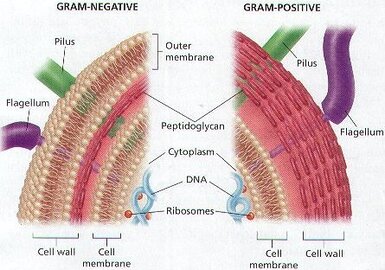
Here are a few terms: Gram-negative bacteria are pathogenic, as they can cause disease in a host organism and have a thin cell wall. Gram negative bacterial infections are much more common in fish, especially marine. These bacteria that will NOT retain a crystal violet dye during the Gram stain process.
Here are some Gram-Negative Bacteria:
• Aeromonas (anaerobic)
• Furunculosis; Aeromonas-salmonicida (anaerobic)
• Vibrio (anaerobic)
• Flavobacterium (Columnaris) (aerobic)
• Pseudomonas (aerobic)
• Streptobacillus (anaerobic)
• Salmonella (anaerobic)
Aerobic Chemolithotrophic Bacteria:
• Nitrifying bacteria
• Nitrobacteraceae (aerobic)
• Nitrobacter (aerobic)
• Nitrococcus (aerobic)
• Nitrospina (aerobic)
• Nitrospira (aerobic)
• Nitrosococcus (aerobic)
• Nitrosolobus (aerobic)
• Nitrosomonas (aerobic)
Anaerobic Chemotrophic Bacteria:
• Erythrobacter (anaerobic)
• Cyanobacteria (Oxygenic Phototrophic)
Gram-positive bacteria do not always cause a disease in the host organism and have a very thick cell wall.
Gram positive infections are less common in fish (or aquaria in general). These are the bacteria that retain a crystal violet dye during the Gram stain process.
Here are some Gram-Positive Bacteria:
• Mycobacterium (aquatic tuberculosis)
• Streptococcus (Pyogenic Hemolytic Streptococci, Oral Streptococci,Enterococci, Lactic Acid Streptococci, Anaerobic Streptococci)
• Pseudonocardia (anaerobic)
• Staphylococcus (aerobic)
Of the above bacteria noted, Flavobacterium (Columnaris), Vibrio, Aeromonas, & Pseudomonas cause the vast majority of diseases in aquariums/ponds AND these are gram negative. It should also be noted that Aeromonas and Vibrio are generally anaerobic, so keeping a well circulated/oxygenated aquarium or pond is important for their prevention and treatment. Mycobacterium is an occasional problem that is gram positive.
Here are some Gram-Negative Bacteria:
• Aeromonas (anaerobic)
• Furunculosis; Aeromonas-salmonicida (anaerobic)
• Vibrio (anaerobic)
• Flavobacterium (Columnaris) (aerobic)
• Pseudomonas (aerobic)
• Streptobacillus (anaerobic)
• Salmonella (anaerobic)
Aerobic Chemolithotrophic Bacteria:
• Nitrifying bacteria
• Nitrobacteraceae (aerobic)
• Nitrobacter (aerobic)
• Nitrococcus (aerobic)
• Nitrospina (aerobic)
• Nitrospira (aerobic)
• Nitrosococcus (aerobic)
• Nitrosolobus (aerobic)
• Nitrosomonas (aerobic)
Anaerobic Chemotrophic Bacteria:
• Erythrobacter (anaerobic)
• Cyanobacteria (Oxygenic Phototrophic)
Gram-positive bacteria do not always cause a disease in the host organism and have a very thick cell wall.
Gram positive infections are less common in fish (or aquaria in general). These are the bacteria that retain a crystal violet dye during the Gram stain process.
Here are some Gram-Positive Bacteria:
• Mycobacterium (aquatic tuberculosis)
• Streptococcus (Pyogenic Hemolytic Streptococci, Oral Streptococci,Enterococci, Lactic Acid Streptococci, Anaerobic Streptococci)
• Pseudonocardia (anaerobic)
• Staphylococcus (aerobic)
Of the above bacteria noted, Flavobacterium (Columnaris), Vibrio, Aeromonas, & Pseudomonas cause the vast majority of diseases in aquariums/ponds AND these are gram negative. It should also be noted that Aeromonas and Vibrio are generally anaerobic, so keeping a well circulated/oxygenated aquarium or pond is important for their prevention and treatment. Mycobacterium is an occasional problem that is gram positive.
Contraindications & Mixing Medications
What are "Contraindication"? From Wikipedia https://en.wikipedia.org/wiki/Contraindication:
"In medicine, a contraindication is a condition or factor that serves as a reason to withhold a certain medical treatment. Some contraindications are absolute, meaning that there are no reasonable circumstances for undertaking a course of action. Other contraindications are relative, meaning that the patient is at higher risk of complications."
With this in mind I have added a "Contraindications" section under many explanations of each medication treatment on page 2 and page 3 of this article.
Knowing some of these contraindications will help determine whether it is advisable or at all safe to mix certain medications or chemical treatments. As well, the mix of medication and volume depends on the disease you are trying to treat and the inhabitants of your tank.
Here are some examples of medications that can or cannot be mixed:
• Tetracycline, NEVER mix Tetracycline with any other medication. The reason for this is that it is a very harsh treatment and lowers the red blood cell count in your aquarium fish.
• Potassium Permanganate can be mixed with salt ONLY and is used to aid in the treatment of external parasites such as Anchor Worms.
• Triple Sulfa can be mixed with AAP Super Ich Plus or Paraguard as it aids with secondary infections and lowers the ricks of infections caused by the irritation of malachite green with certain sensitive fish such as Cory Catfish or Clown Loaches.
• Paraguard, Furan 2, and Kanaplex can be mixed and this combination aids in the treatment of a wider spectrum of diseases.
"In medicine, a contraindication is a condition or factor that serves as a reason to withhold a certain medical treatment. Some contraindications are absolute, meaning that there are no reasonable circumstances for undertaking a course of action. Other contraindications are relative, meaning that the patient is at higher risk of complications."
With this in mind I have added a "Contraindications" section under many explanations of each medication treatment on page 2 and page 3 of this article.
Knowing some of these contraindications will help determine whether it is advisable or at all safe to mix certain medications or chemical treatments. As well, the mix of medication and volume depends on the disease you are trying to treat and the inhabitants of your tank.
Here are some examples of medications that can or cannot be mixed:
• Tetracycline, NEVER mix Tetracycline with any other medication. The reason for this is that it is a very harsh treatment and lowers the red blood cell count in your aquarium fish.
• Potassium Permanganate can be mixed with salt ONLY and is used to aid in the treatment of external parasites such as Anchor Worms.
• Triple Sulfa can be mixed with AAP Super Ich Plus or Paraguard as it aids with secondary infections and lowers the ricks of infections caused by the irritation of malachite green with certain sensitive fish such as Cory Catfish or Clown Loaches.
• Paraguard, Furan 2, and Kanaplex can be mixed and this combination aids in the treatment of a wider spectrum of diseases.
Food Delivery
For many internal infections soaking medications in food or the use of prepared medicated food is the best course of action in freshwater, however marine fish do not usually require delivery of medication via food due to their constant drinking of water around them. I find frozen foods often absorb medications better, such as Blood worms or Brine Shrimp (sometimes FD Brine Shrimp. AAP NutraShots are a unique highly desirable semi dry fish food that performs more like a frozen fish food and would be a great choice for a fish food to use for soaking medications into.
Product resource:
• AAP/Gamma Nutrashots; Fish, Corals Premium Fish Food
I soak these foods in a few tablespoons of water with the medication for about 15-30 minutes then add everything to the aquarium or pond. Prepared frozen foods (such as by Ocean Nutrition can be used too.
Pellets tend to be worse at absorbing medications, but this can be overcome by longer soaks.
If your fish food falls apart with the soak (flakes and especially high fiber dehydrated crumbles have more issues here), this can be overcome by than pouring "feeding rations" into custom foil pouches and frozen for easy feeding later. I did this for many of my professional aquarium maintenance clients who did not have time or were not willing to prepare medicated fish foods.
Even for external infections such as sores, injuries, etc, this may be the more simple coarse of action for very large aquariums or ponds over 500 gallons as "in tank" or fish removal is cost prohibitive or nearly impossible.
These are the medications I find work well for internal infections/infestations when soaked in a fish food "slurry"; Metronidazole, Neomycin, Oxytetracycline, Piperazine, Praziquantel, Levamisol, and possibly Kanamycin. Be careful of overuse of Kanamycin in a fish food delivery; do not use for more than 7 days or kidney damage could result, otherwise up to 10 days for the other suggested medications.
For internal gut infections that often result in bloating or swim bladder infections, I have found the combination of Metronidazole with Neomycin to be most effective since one is effective against aerobic while the other is effective against anaerobic bacterium (this combination also addresses mild intestinal parasitic infections). Please be aware that often swim bladder infections have an osmoregulation factor involved too so failure to address this such as poor mineral Cation levels can make successful treatment often impossible.
Reference:
• Do Fish Drink; Osmoregulation in Fish
For suspected intestinal worms, the combination of Metronidazole & Praziquantel can be useful. For more serious intestinal parasite infections Piperazine/Pipzine is a better choice and safer than just Levamisol.
Product resource:
• AAP/Gamma Nutrashots; Fish, Corals Premium Fish Food
I soak these foods in a few tablespoons of water with the medication for about 15-30 minutes then add everything to the aquarium or pond. Prepared frozen foods (such as by Ocean Nutrition can be used too.
Pellets tend to be worse at absorbing medications, but this can be overcome by longer soaks.
If your fish food falls apart with the soak (flakes and especially high fiber dehydrated crumbles have more issues here), this can be overcome by than pouring "feeding rations" into custom foil pouches and frozen for easy feeding later. I did this for many of my professional aquarium maintenance clients who did not have time or were not willing to prepare medicated fish foods.
Even for external infections such as sores, injuries, etc, this may be the more simple coarse of action for very large aquariums or ponds over 500 gallons as "in tank" or fish removal is cost prohibitive or nearly impossible.
These are the medications I find work well for internal infections/infestations when soaked in a fish food "slurry"; Metronidazole, Neomycin, Oxytetracycline, Piperazine, Praziquantel, Levamisol, and possibly Kanamycin. Be careful of overuse of Kanamycin in a fish food delivery; do not use for more than 7 days or kidney damage could result, otherwise up to 10 days for the other suggested medications.
For internal gut infections that often result in bloating or swim bladder infections, I have found the combination of Metronidazole with Neomycin to be most effective since one is effective against aerobic while the other is effective against anaerobic bacterium (this combination also addresses mild intestinal parasitic infections). Please be aware that often swim bladder infections have an osmoregulation factor involved too so failure to address this such as poor mineral Cation levels can make successful treatment often impossible.
Reference:
• Do Fish Drink; Osmoregulation in Fish
For suspected intestinal worms, the combination of Metronidazole & Praziquantel can be useful. For more serious intestinal parasite infections Piperazine/Pipzine is a better choice and safer than just Levamisol.
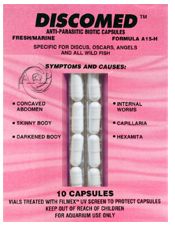
For a real "ace in the hole" treatment that covers most all internal parasitic infections along with many internal bacterial infections (especially if secondary opportunistic infections), NOTHING BEATS "AAP Discomed". AAP Discomed contains Levamisol, NaCl, Piperazine, Magnesium Sulfate and Neomycin Sulfate Activity (all pharmaceutical grade).
The use of Medicated Wonder Shells may be helpful to address the above issues in tank as well as supply important mineral Cations often necessary during any treatment and often missing if RO water is used.
Product Resource:
• Medicated Wonder Shells (patent pending from AAP only)
Generally, a dose intended for 2-5 gallons of water treatment will work for a 15–30-minute fish food soak.
For instance, with Neomycin, this would mean .10 grams (or one measure) of the brand "SeaChem Neoplex" per each fish food soak twice per day (usually for 7-10 days).
Please see:
• SeaChem Neomycin Aquarium Treatment
The only negative to medicated food is that often the problem that we are needing to treat has also taken away the appetite of the fish. The use of products such as AAP/SeaChem Garlic Guard is an excellent appetite stimulant, however my experience in my decades of using medicated foods with my many clients is that if a fish will not eat, nothing generally helps, even Garlic Guard. If the fish is still eating, in very rare cases, adding the proper amounts of meds such as AAP Discomed is enough to stop the fish from eating and here Garlic Guard might be tried, but even here, if done correctly, my experience has shown that in 95% of cases a fish still eating will accept the medicated food slurry, if even with less interest.
Recommended Resources to support this free information provided here:
• AAP Discomed
• AAP Piperazine/Pipzine
• Metronidazole/Metroplex from AAP
• Neoplex/Neomycin from AAP
• General Cure from AAP (contains Metronidazole & Praziquantel)
For a pond or very large aquarium, I would suggest a dose intended for 10 gallons, then pour the food, water, & medication mix all directly into the pond.
A 20% water change every other day (48 hours) is also suggested (reference water change section above)
FOR EACH MEDICATION ARTICLE, PLEASE CLICK THE TOP LINKS, OR BELOW:
• ANTIBIOTICS/ ANTIMICROBIALS - Page 2
• PARASITE & CHEMICAL TREATMENTS - Page 3
• ORGANIC TREATMENTS - Page 4
The use of Medicated Wonder Shells may be helpful to address the above issues in tank as well as supply important mineral Cations often necessary during any treatment and often missing if RO water is used.
Product Resource:
• Medicated Wonder Shells (patent pending from AAP only)
Generally, a dose intended for 2-5 gallons of water treatment will work for a 15–30-minute fish food soak.
For instance, with Neomycin, this would mean .10 grams (or one measure) of the brand "SeaChem Neoplex" per each fish food soak twice per day (usually for 7-10 days).
Please see:
• SeaChem Neomycin Aquarium Treatment
The only negative to medicated food is that often the problem that we are needing to treat has also taken away the appetite of the fish. The use of products such as AAP/SeaChem Garlic Guard is an excellent appetite stimulant, however my experience in my decades of using medicated foods with my many clients is that if a fish will not eat, nothing generally helps, even Garlic Guard. If the fish is still eating, in very rare cases, adding the proper amounts of meds such as AAP Discomed is enough to stop the fish from eating and here Garlic Guard might be tried, but even here, if done correctly, my experience has shown that in 95% of cases a fish still eating will accept the medicated food slurry, if even with less interest.
Recommended Resources to support this free information provided here:
• AAP Discomed
• AAP Piperazine/Pipzine
• Metronidazole/Metroplex from AAP
• Neoplex/Neomycin from AAP
• General Cure from AAP (contains Metronidazole & Praziquantel)
For a pond or very large aquarium, I would suggest a dose intended for 10 gallons, then pour the food, water, & medication mix all directly into the pond.
A 20% water change every other day (48 hours) is also suggested (reference water change section above)
FOR EACH MEDICATION ARTICLE, PLEASE CLICK THE TOP LINKS, OR BELOW:
• ANTIBIOTICS/ ANTIMICROBIALS - Page 2
• PARASITE & CHEMICAL TREATMENTS - Page 3
• ORGANIC TREATMENTS - Page 4
How to Make a Percent-% Solution
Sometimes it is necessary to mix your own chemical solutions such as Methylene Blue, Malachite Green, Potassium Permanganate, etc.
Simply put - to make a 1% Malachite Green aqueous solution, use a 100 ml bottle. Then add 1 gram of Malachite Green to your bottle and bring the volume up to 100 ml. As another example, to make a 2.30% Methylene Blue aqueous solution, use a 100 ml bottle, then add 2.3 grams of Methylene Blue to your bottle and bring the volume up to 100 ml.
See this equation:
• % solution = (dry mass in grams / volume in ml) * 100
Simply put - to make a 1% Malachite Green aqueous solution, use a 100 ml bottle. Then add 1 gram of Malachite Green to your bottle and bring the volume up to 100 ml. As another example, to make a 2.30% Methylene Blue aqueous solution, use a 100 ml bottle, then add 2.3 grams of Methylene Blue to your bottle and bring the volume up to 100 ml.
See this equation:
• % solution = (dry mass in grams / volume in ml) * 100
Summary
I have stated this in other articles as well. I personally have resisted adding disease charts as these just show up all over the internet, many are very “cookie cutter” in their descriptions. I feel first understanding prevention methods followed then by a knowledge of antibiotics, chemical treatments, and organic treatments will go much further in treatment and disease prevention than any disease chart that has a one size fits all approach. I recommend reading this companion article about Aquarium Disease Prevention for more information that will help you make an educated choice when treatment of fish is required, rather than a “dart on the wall” approach.
Make sure to check out more information on:
• Aquarium Disease Prevention
Also, I recommend reading some of the specific disease articles:
• Columnaris/ Saprolegnia
• Ichthyophonus
And many others found here:
• Aquatic Information, Resources
• Aquarium & Pond Answers
Make sure to check out more information on:
• Aquarium Disease Prevention
Also, I recommend reading some of the specific disease articles:
• Columnaris/ Saprolegnia
• Ichthyophonus
And many others found here:
• Aquatic Information, Resources
• Aquarium & Pond Answers
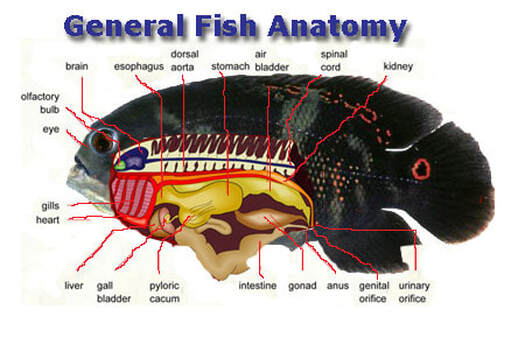
For some pictures of fish anatomy that may be useful in disease recognition, please visit this article: • Aquarium Answers; Fish Anatomy
Reference:
• Use of Antibiotics in Ornamental Fish Aquaculture
TERMS:
• Systemic = "Spread throughout or affecting the entire aquarium system."
Medication References:
• Doxycycline (Fin & Body Cure)
• Potassium Permanganate
• AAP Spectrogram (PREMIUM Kanamycin/Nitrofuarzone Combination)
• API Triple Sulfa
• SeaChem Paraguard
• API Furan 2
• SeaChem Kanaplex
Reference:
• Use of Antibiotics in Ornamental Fish Aquaculture
TERMS:
• Systemic = "Spread throughout or affecting the entire aquarium system."
Medication References:
• Doxycycline (Fin & Body Cure)
• Potassium Permanganate
• AAP Spectrogram (PREMIUM Kanamycin/Nitrofuarzone Combination)
• API Triple Sulfa
• SeaChem Paraguard
• API Furan 2
• SeaChem Kanaplex