

Spirulina Algae
Health Benefits for Tropical, Marine & Goldfish
Health Benefits for Tropical, Marine & Goldfish
Overview
Spirulina Arthrospira is a planktonic blue-green algae (Cyanobacteria) found in warm water alkaline volcanic lakes and is rich in raw protein and seven major vitamins: A1, B1, B2, B6, B12 (one of the best natural sources for B12, although the bioavailability its B12 is in dispute by many researchers), C and E.
It naturally contains beta-carotene, color enhancing pigments, and whole range of minerals. In addition, Spirulina has a 62% amino acid content and contains all essential fatty acids and eight amino acids required for complete nutrition. Evidence as recent as 2007 shows even more proof as to the profound antioxidant properties of Spirulina.
The primary species of Spirulina are Arthrospira platensis and Arthrospira maxima. Another species is Spirulina fusiformis; it is a freshwater algae as opposed to Marine/Saltwater species of the commonly harvested/aquacultured species noted earlier. It used to be classified as Spirulina platensis.
Arthrospira fusiformis is capable of a great deal of polymorphism, it changes its shape, color and other characteristics in adapting to its environment. This freshwater species thrives in waters that are loaded with various minerals such as sodium, magnesium, carbonates, sulfates and chlorides. It does not usually thrive in water, which is suitable for watering crops, drinking or raising fish. Most commercial Spirulina used for human and fish food consumption primarily is grown in the USA, Thailand, India and China.
For Freshwater Aquarium Care, please see this resource:
• Freshwater Aquarium Care
Spirulina is different from other algae and is similar to bacteria in many ways, occupying a niche between plants and bacteria. Spirulina is similar to cyanobacteria in structure, which can be toxic. Both have a spiral shape, unlike true plant plankton. Spirulina Blue-Green algae are recognized by the "body" (fish in particular) as a bacterium, causing an increase in antibodies, which in turn increases disease resistance.
Spirulina is not Chlorella; Chlorella is a green micro-algae and does not have the same anti-viral, anti-cancer and immune stimulating properties of Spirulina. The Chlorella cell wall is made of indigestible cellulose, just like green grass, WHILE the cell wall of Spirulina is made of complexed proteins and sugars.
As noted, Spirulina has a soft cell wall made of complex sugars and protein and is different from most other algae in that it is more easily digested. This is just one of the reasons for high digestibility of Spirulina, and why for weak or older fish it is a MUST for their diet!!!
Spirulina is also high in usable or digestible amino acids (the building blocks of proteins); proteins from cereal and soy are not as digestible by fish as the amino acids found in spirulina. Spirulina provides all the required amino acids, and in a form that is five times easier to digest than terrestrial meat or soy protein.
An analogy used at a pet food seminar I attended was this: You can achieve the protein analysis on many pet foods with a used pair of leather shoes, but leather shoes contain little usable proteins.
Aphanizomenon Flos-Aquae is a related algae found in Klamath Lake Oregon (see References). Like Spirulina, this Klamath Lake blue green algae has been shown to be very nutritionally dense, diverse and absolutely non-toxic. It is a unique single cell organism that has characteristics of plants, animals and bacteria. Like plants, it has chlorophyll and through photosynthesis produces oxygen. Like bacteria, it has a fragile cell wall. Like animals, there are times when it uses oxygen and produces carbon dioxide.
It naturally contains beta-carotene, color enhancing pigments, and whole range of minerals. In addition, Spirulina has a 62% amino acid content and contains all essential fatty acids and eight amino acids required for complete nutrition. Evidence as recent as 2007 shows even more proof as to the profound antioxidant properties of Spirulina.
The primary species of Spirulina are Arthrospira platensis and Arthrospira maxima. Another species is Spirulina fusiformis; it is a freshwater algae as opposed to Marine/Saltwater species of the commonly harvested/aquacultured species noted earlier. It used to be classified as Spirulina platensis.
Arthrospira fusiformis is capable of a great deal of polymorphism, it changes its shape, color and other characteristics in adapting to its environment. This freshwater species thrives in waters that are loaded with various minerals such as sodium, magnesium, carbonates, sulfates and chlorides. It does not usually thrive in water, which is suitable for watering crops, drinking or raising fish. Most commercial Spirulina used for human and fish food consumption primarily is grown in the USA, Thailand, India and China.
For Freshwater Aquarium Care, please see this resource:
• Freshwater Aquarium Care
Spirulina is different from other algae and is similar to bacteria in many ways, occupying a niche between plants and bacteria. Spirulina is similar to cyanobacteria in structure, which can be toxic. Both have a spiral shape, unlike true plant plankton. Spirulina Blue-Green algae are recognized by the "body" (fish in particular) as a bacterium, causing an increase in antibodies, which in turn increases disease resistance.
Spirulina is not Chlorella; Chlorella is a green micro-algae and does not have the same anti-viral, anti-cancer and immune stimulating properties of Spirulina. The Chlorella cell wall is made of indigestible cellulose, just like green grass, WHILE the cell wall of Spirulina is made of complexed proteins and sugars.
As noted, Spirulina has a soft cell wall made of complex sugars and protein and is different from most other algae in that it is more easily digested. This is just one of the reasons for high digestibility of Spirulina, and why for weak or older fish it is a MUST for their diet!!!
Spirulina is also high in usable or digestible amino acids (the building blocks of proteins); proteins from cereal and soy are not as digestible by fish as the amino acids found in spirulina. Spirulina provides all the required amino acids, and in a form that is five times easier to digest than terrestrial meat or soy protein.
An analogy used at a pet food seminar I attended was this: You can achieve the protein analysis on many pet foods with a used pair of leather shoes, but leather shoes contain little usable proteins.
Aphanizomenon Flos-Aquae is a related algae found in Klamath Lake Oregon (see References). Like Spirulina, this Klamath Lake blue green algae has been shown to be very nutritionally dense, diverse and absolutely non-toxic. It is a unique single cell organism that has characteristics of plants, animals and bacteria. Like plants, it has chlorophyll and through photosynthesis produces oxygen. Like bacteria, it has a fragile cell wall. Like animals, there are times when it uses oxygen and produces carbon dioxide.
Health Benefits
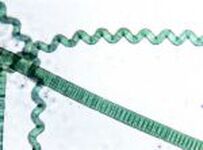
Minerals: Besides the above-mentioned high protein content and digestibility, Spirulina come from waters with minerals deposited from ancient soils and mountains. No other plants can live in these areas due to the mineral content. Due to the fact that Spirulina thrives in such alkaline waters, it incorporates and synthesizes many minerals and derivative compounds into its cell structure.
Transformed into natural organic forms by Spirulina (Arthrospira), minerals become chelated with amino acids and are therefore more easily assimilated by the body. Fish can ingest high amounts of 'artificially' added inorganic minerals without benefit to health because the fish body (or other aquatic organism such as shrimp) does not know what to do with these incompatible forms.
In fact, evidence is accumulating that the inorganic minerals can block absorption of the organic forms, leading ultimately to mineral deficiency diseases (most fish foods are low in natural calcium and need added calcium to meet requirements). I have found in early fish food tests (in the early 1980s), that when fish fed primarily foods very high in Spirulina (first couple of ingredients), these fish had less osmoregulation issues and a MUCH LOWER incidence of curvature of the spine and related conditions.
Transformed into natural organic forms by Spirulina (Arthrospira), minerals become chelated with amino acids and are therefore more easily assimilated by the body. Fish can ingest high amounts of 'artificially' added inorganic minerals without benefit to health because the fish body (or other aquatic organism such as shrimp) does not know what to do with these incompatible forms.
In fact, evidence is accumulating that the inorganic minerals can block absorption of the organic forms, leading ultimately to mineral deficiency diseases (most fish foods are low in natural calcium and need added calcium to meet requirements). I have found in early fish food tests (in the early 1980s), that when fish fed primarily foods very high in Spirulina (first couple of ingredients), these fish had less osmoregulation issues and a MUCH LOWER incidence of curvature of the spine and related conditions.
Its importance as an antioxidant
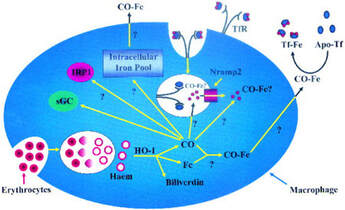
Spirulina provides phycocyanin, a source of biliverdin which is among the most potent of all intra-cellular antioxidants. Spirulina is a powerful tonic for the immune system. In scientific studies of mice, hamsters, chickens, turkeys, cats and fish, Spirulina consistently improves immune system function.
An animal (fish for our purposes) produces unconjugated biliverdin, a yellow-colored breakdown product of normal heme catabolism, formed by failing red blood cells. Heme (also called Haem in the UK) is composed of iron plus amino acids from globin of hemoglobin. A circulating erythrocyte is little more than a container for hemoglobin; Erythrocytes which have a 120-day life span transport oxygen and carbon dioxide between the gills/lungs and all the tissues of the body are broken down utilizing these Heme via the tetrapyrrole; biliverdin, which is then converted to bilirubin and carried to the liver by the plasma protein.
Bilirubin is excreted in bile, and its levels are elevated in certain diseases and is then transported into the cytoplasm of every cell in the body of the animal (fish). As stated earlier, an enzyme called biliverdin reductase, converts the biliverdin to unconjugated bilirubin. The bilirubin quickly oxidizes back into biliverdin, and just as quickly biliverdin reductase recycles it back again into bilirubin. This form of bilirubin, (similar to the bilin in hemoglobin or bile.), has been shown to be 10,000 times as powerful an antioxidant as is glutathione. The unconjugated bilirubin is also a powerful inhibitor of NADPH Oxidase (nicotinamide adenine dinucleotide phosphate-oxidase).
This enzyme is a major source of Super Oxide in an animal’s body and is involved in dozens of degenerative processes involved in disease resistance, aging and similar processes in fish and other animals (including humans)! There is now strong evidence that Spirulina supplements the amount of unconjugated biliverdin which the fish or other animals are born with, providing profound protection from oxidative stress. Scientists also find Spirulina not only stimulates the immune system through before described process, but it also actually enhances the animal’s body’s ability to generate new blood cells.
THIS REASON ALONE is why Spirulina should be part of EVERY fish’ aquatic diet, INCLUDING carnivores where it should be fed via gut loading of worms, feeder fish, or crickets (which I have done for my clients Arowanas diet).
As well, Spirulina fusiformis has been shown to provide Antioxidant/Hepatoprotective (Liver function)
In a study VIT University evaluated the hepatoprotective and antioxidant effects of Spirulina fusiformis against acetaminophen-induced hepatotoxicity in mice. For comparison purposes, results were compared with those for silymarin, a standard hepatoprotective drug. The study clearly demonstrated that Spirulina fusiformis shows hepatoprotective effect through its antioxidant activity on acetaminophen-induced hepatotoxicity.
Spirulina aids in building red blood cells and stem cells: Spirulina is rich in a brilliant blue polypeptide called Phycocyanin. Studies show that Phycocyanin affects the stem cells found in bone marrow. Stem cells are "Grandmother" to both the white blood cells that make up the cellular immune system and red blood cells that oxygenate the body. “Chinese scientists document Phycocyanin stimulating hematopoiesis, (the creation of blood), emulating the effect of the hormone erythropoietin, (EPO). EPO is produced by healthy kidneys and regulates bone marrow stem cell production of red blood cells. Chinese scientists claim Phycocyanin also regulates production of white blood cells, even when bone marrow stem cells are damaged by toxic chemicals or radiation."
An animal (fish for our purposes) produces unconjugated biliverdin, a yellow-colored breakdown product of normal heme catabolism, formed by failing red blood cells. Heme (also called Haem in the UK) is composed of iron plus amino acids from globin of hemoglobin. A circulating erythrocyte is little more than a container for hemoglobin; Erythrocytes which have a 120-day life span transport oxygen and carbon dioxide between the gills/lungs and all the tissues of the body are broken down utilizing these Heme via the tetrapyrrole; biliverdin, which is then converted to bilirubin and carried to the liver by the plasma protein.
Bilirubin is excreted in bile, and its levels are elevated in certain diseases and is then transported into the cytoplasm of every cell in the body of the animal (fish). As stated earlier, an enzyme called biliverdin reductase, converts the biliverdin to unconjugated bilirubin. The bilirubin quickly oxidizes back into biliverdin, and just as quickly biliverdin reductase recycles it back again into bilirubin. This form of bilirubin, (similar to the bilin in hemoglobin or bile.), has been shown to be 10,000 times as powerful an antioxidant as is glutathione. The unconjugated bilirubin is also a powerful inhibitor of NADPH Oxidase (nicotinamide adenine dinucleotide phosphate-oxidase).
This enzyme is a major source of Super Oxide in an animal’s body and is involved in dozens of degenerative processes involved in disease resistance, aging and similar processes in fish and other animals (including humans)! There is now strong evidence that Spirulina supplements the amount of unconjugated biliverdin which the fish or other animals are born with, providing profound protection from oxidative stress. Scientists also find Spirulina not only stimulates the immune system through before described process, but it also actually enhances the animal’s body’s ability to generate new blood cells.
THIS REASON ALONE is why Spirulina should be part of EVERY fish’ aquatic diet, INCLUDING carnivores where it should be fed via gut loading of worms, feeder fish, or crickets (which I have done for my clients Arowanas diet).
As well, Spirulina fusiformis has been shown to provide Antioxidant/Hepatoprotective (Liver function)
In a study VIT University evaluated the hepatoprotective and antioxidant effects of Spirulina fusiformis against acetaminophen-induced hepatotoxicity in mice. For comparison purposes, results were compared with those for silymarin, a standard hepatoprotective drug. The study clearly demonstrated that Spirulina fusiformis shows hepatoprotective effect through its antioxidant activity on acetaminophen-induced hepatotoxicity.
Spirulina aids in building red blood cells and stem cells: Spirulina is rich in a brilliant blue polypeptide called Phycocyanin. Studies show that Phycocyanin affects the stem cells found in bone marrow. Stem cells are "Grandmother" to both the white blood cells that make up the cellular immune system and red blood cells that oxygenate the body. “Chinese scientists document Phycocyanin stimulating hematopoiesis, (the creation of blood), emulating the effect of the hormone erythropoietin, (EPO). EPO is produced by healthy kidneys and regulates bone marrow stem cell production of red blood cells. Chinese scientists claim Phycocyanin also regulates production of white blood cells, even when bone marrow stem cells are damaged by toxic chemicals or radiation."
Spirulina Anti-Viral and Anti-Cancer
Calcium-Spirulan is a polymerized sugar molecule unique to Spirulina containing both Sulfur and Calcium (another important element often missing from many aquariums). In studies hamsters treated with this water-soluble extract had better recovery rates when infected with what would be a lethal Herpes virus. This works because Calcium-Spirulan does not allow the virus to penetrate the cell membrane to infect the cell. The virus is stuck, unable to replicate. It is eventually eliminated by the body's natural defenses.
Several studies show Spirulina, or its extracts can prevent or inhibit cancers in humans, animals, and fish. Some forms of cancer are the result of damaged cell DNA “out of control”, causing uncontrolled cell growth. Cellular biologists have defined a system of special enzymes called Endonuclease which repair damaged DNA to keep cells alive and healthy. When these enzymes are deactivated by oxidation, radiation or toxins, errors in DNA go un-repaired and, cancer may develop.
In vitro studies suggest the unique polysaccharides of Spirulina enhance cell nucleus enzyme activity and DNA repair synthesis. This may be why several scientific studies, observing experimental cancers in animals, report high levels of suppression of several important types of cancer.
A study published by the US National Library of Medicine has also demonstrated that Spirulina fusiformis has substantial potential to reverse the pre-cancerous lesions or wounds of the mouth known as leukoplakia.
Reference:
• Evaluation of chemoprevention of oral cancer with Spirulina fusiformis
Several studies show Spirulina, or its extracts can prevent or inhibit cancers in humans, animals, and fish. Some forms of cancer are the result of damaged cell DNA “out of control”, causing uncontrolled cell growth. Cellular biologists have defined a system of special enzymes called Endonuclease which repair damaged DNA to keep cells alive and healthy. When these enzymes are deactivated by oxidation, radiation or toxins, errors in DNA go un-repaired and, cancer may develop.
In vitro studies suggest the unique polysaccharides of Spirulina enhance cell nucleus enzyme activity and DNA repair synthesis. This may be why several scientific studies, observing experimental cancers in animals, report high levels of suppression of several important types of cancer.
A study published by the US National Library of Medicine has also demonstrated that Spirulina fusiformis has substantial potential to reverse the pre-cancerous lesions or wounds of the mouth known as leukoplakia.
Reference:
• Evaluation of chemoprevention of oral cancer with Spirulina fusiformis
Spirulina Analysis
Here is the general analysis of pure Spirulina Algae:
• Protein: 55% - 70%
• Carbohydrates: 15% - 25% (an excellent low ratio for fish)
• Fats (lipids): 6% - 8%
• Minerals: 6 - 13%
• Fiber: 8% - 10%
Natural Pigment Enhancers:
• Phycocyanin (Blue): 14%
• Chlorophyll (Green): 1%
• Carotenoids (Orange/Red): 47%
Important Trace Minerals (many of these are essential for proper electrolyte balance and osmotic function):
• Calcium (1,315 mg/kg)
• Iron
• Phosphorus (15,400 mg/kg)
• Iodine
• Magnesium
• Zinc
• Selenium
• Copper
• Manganese
• Chromium
• Molybdenum
• Sodium
• Chloride
• Potassium
• Germanium
• Boron
Essential Amino Acids:
• ISOLEUCINE (4.130/o): Required for optimal growth, nitrogen equilibrium in the body Used to synthesize other non-essential amino acids.
• LEUCINE (5.8001o): increases muscular energy levels.
• LYSINE (4.000/o): Building block of blood antibodies, strengthens circulatory system and maintains normal growth of cells.
• METHIONINE (2.170/o): Vital lipotropic (fat and lipid metabolizing) amino acid that maintains liver health. An anti-stress factor.
• PHENYLALANINE (3.950/o): Stimulates metabolic rate.
• THREONINE (4.170/o): Improves intestinal competence and digestive assimilation.
• TRYPTOPHANE (1.1301o): Increases utilization of B vitamins, improves nerve health.
• VALINE (6.0001o): Stimulates muscle coordination.
• Protein: 55% - 70%
• Carbohydrates: 15% - 25% (an excellent low ratio for fish)
• Fats (lipids): 6% - 8%
• Minerals: 6 - 13%
• Fiber: 8% - 10%
Natural Pigment Enhancers:
• Phycocyanin (Blue): 14%
• Chlorophyll (Green): 1%
• Carotenoids (Orange/Red): 47%
Important Trace Minerals (many of these are essential for proper electrolyte balance and osmotic function):
• Calcium (1,315 mg/kg)
• Iron
• Phosphorus (15,400 mg/kg)
• Iodine
• Magnesium
• Zinc
• Selenium
• Copper
• Manganese
• Chromium
• Molybdenum
• Sodium
• Chloride
• Potassium
• Germanium
• Boron
Essential Amino Acids:
• ISOLEUCINE (4.130/o): Required for optimal growth, nitrogen equilibrium in the body Used to synthesize other non-essential amino acids.
• LEUCINE (5.8001o): increases muscular energy levels.
• LYSINE (4.000/o): Building block of blood antibodies, strengthens circulatory system and maintains normal growth of cells.
• METHIONINE (2.170/o): Vital lipotropic (fat and lipid metabolizing) amino acid that maintains liver health. An anti-stress factor.
• PHENYLALANINE (3.950/o): Stimulates metabolic rate.
• THREONINE (4.170/o): Improves intestinal competence and digestive assimilation.
• TRYPTOPHANE (1.1301o): Increases utilization of B vitamins, improves nerve health.
• VALINE (6.0001o): Stimulates muscle coordination.
Use as a Fish Food, including gut loading for carnivores
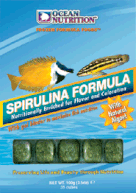
It is possible to have a staple fish food that has spirulina algae as a major ingredient and be an effective diet for most fish. Even carnivores can benefit by feeding spirulina-based flakes to feeder fish before feeding as most carnivores in the wild obtain many nutrients from the intestinal tract of the fish they consume.
The key aspect is that too much Spirulina in the diet/fish food will cause the fish' immune system to go on over drive and add stress, while too little will not provide the benefits that Spirulina algae can provide.
This is why 20% works as the "magic number" in a fish food, which most if not all fish foods containing spirulina seem to miss, unlike AAP Spirulina 20.
What is important to note is that most commercial fish foods that call themselves Spirulina Flakes (Spirulina 20 the exception) have spirulina quite far down on their lists of ingredients (Tetra in particular). You need a food that is 10-20% spirulina to obtain these benefits, but not more than 20% either as noted earlier. Even some of the so-called quality brands of fish food that are often recommended (such as Omega) do NOT have Spirulina at an optimum level, so beware!
Product Resource:
• Spirulina 20 from AAP (NOT Clearance product sold via discounters such as eBay)
Along with adequate calcium and magnesium in the water (especially for marine organisms), Spirulina helps ensure proper electrolyte function, calcium levels over calcium and other minerals that are added to fish food as an afterthought to make up for poor quality ingredients.
Further Reference:
• Aquarium Chemistry; Including Calcium & Magnesium
The one negative with Spirulina is often many fish do not like the "taste". However, in an optimum formula of between 10- 20% along with otherwise highly palatable ingredients such as Whole Menhaden Fish Meal, acceptance is 99% of the time quite good. I have even had carnivores such as Oscars eat foods with optimum Spirulina levels.
The key aspect is that too much Spirulina in the diet/fish food will cause the fish' immune system to go on over drive and add stress, while too little will not provide the benefits that Spirulina algae can provide.
This is why 20% works as the "magic number" in a fish food, which most if not all fish foods containing spirulina seem to miss, unlike AAP Spirulina 20.
What is important to note is that most commercial fish foods that call themselves Spirulina Flakes (Spirulina 20 the exception) have spirulina quite far down on their lists of ingredients (Tetra in particular). You need a food that is 10-20% spirulina to obtain these benefits, but not more than 20% either as noted earlier. Even some of the so-called quality brands of fish food that are often recommended (such as Omega) do NOT have Spirulina at an optimum level, so beware!
Product Resource:
• Spirulina 20 from AAP (NOT Clearance product sold via discounters such as eBay)
Along with adequate calcium and magnesium in the water (especially for marine organisms), Spirulina helps ensure proper electrolyte function, calcium levels over calcium and other minerals that are added to fish food as an afterthought to make up for poor quality ingredients.
Further Reference:
• Aquarium Chemistry; Including Calcium & Magnesium
The one negative with Spirulina is often many fish do not like the "taste". However, in an optimum formula of between 10- 20% along with otherwise highly palatable ingredients such as Whole Menhaden Fish Meal, acceptance is 99% of the time quite good. I have even had carnivores such as Oscars eat foods with optimum Spirulina levels.
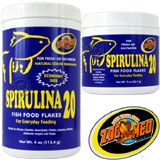
SPIRULINA 20, the only balanced fish food flake with a full 20% spirulina. Spirulina 20 flakes contain a full 20% Spirulina and provide a complete high protein diet for freshwater, saltwater fish, goldfish, crustaceans, and invertebrates. Spirulina 20 is a particularly ideal food for the vegetative needs of African Cichlids, Livebearers, in addition to Saltwater Tangs and Angels.
Research has shown that fresh and saltwater fish exhibit superior growth, maturity, energetic behavior, and more elegant coloring when fed Spirulina. It is also well documented that Spirulina improves egg production and hatching rates, stimulates the reproductive processes, increases survival rates of younger fish, and arouses the appetite of fish.
The use of Spirulina as a major ingredient has been of interest to me since some of my earlier days in the Aquarium Trade. In this case I have conducted my own side by side comparisons (with scientific control groups) over the years using Spirulina based foods. This research of mine is among my oldest dating back into the late 1970s. An aquatic supplier (Aquatronics) even nicknamed me the "Green Flake Man" (after the name food that was sold that had Spirulina Algae as its #1 ingredient). I was an early believer of this ingredient based on my tests.
Ingredients for Spirulina 20 Flake Food: Salmon Fish Meal, Spirulina Algae Meal, Soy Flour, ground Whole Wheat flour, Brewers dried yeast, Corn Starch, Dried Krill Meal, Shrimp Meal, Plankton Meal, lecithin, vegetable oil, vitamin A supplement, vitamin B12 supplement, vitamin D3 supplement, vitamin E supplement, L-Ascorbyl-2-Polyphoshate (stabilized vitamin C).
GUARANTEED ANALYSIS:
• Min. Crude Protein - 45%
• Min. Crude Fat - 4%
• Max Crude Fiber - 3%
• Max Moisture - 8%
Other excellent sources for Spirulina that uses Spirulina Algae as its primary ingredient are:
• Spirulina Enhanced FD Brine Shrimp from AAP
• Ocean Nutrition Frozen Spirulina Formula
Be aware of otherwise good fish foods that advertise Spirulina or “Veggie”. There are many brands available in the aquarium trade, some that have good ingredients, some that do not. Unfortunately, many of these that do have good ingredients have Spirulina way down on the ingredient list. This unfortunately does not make them a good source of one of the best fish food ingredients for your fish; Spirulina (and an expensive one which is why many of these companies do this).
Also, a problem with these foods is that they are too high in ingredients that are maybe good for some fish (such as Silver Dollars for instance), but not for many fish that need higher amounts of vegetable matter such as Mollies, Platties, Tangs (marine), and many more fish. Even fish such as the before mentioned Silver Dollar (or most all fish in the Characin family which include Tetras) benefit from a food high in Spirulina due to its high digestibility even in more predatory carnivores (assuming of course they will eat it).
Here are two examples of Foods that imply high Spirulina content, but are not high in Spirulina:
• Cobalt Spirulina + Flake: SALMON MEAL, WHEAT FLOUR, SOY FLOUR, BREWERS DRIED YEAST, CORN STARCH, DRIED SPIRULINA ALGAE, FREEZE DRIED PLANKTON, FREEZE DRIED KRILL, DRIED KELP, FISH OIL, LECITHIN, GARLIC POWDER, DRIED EARTHWORM POWDER, VITAMIN A ACETATE, VITAMIN D-3 SUPPLEMENT, CHOLINE CHLORIDE, DRIED BRINE SHRIMP, L-ASCORBYL-2 POLYPHOSPHATE (SOURCE OF STABILIZED VITAMIN C), DRIED EGG PRODUCT, GARLIC POWDER, CALCIUM CARBONATE, VITAMIN E SUPPLEMENT, CALCIUM PANTOTHENATE, NIACIN, BIOTIN, RIBOFLAVIN, MENADIONE SODIUM BISULFITE COMPLEX, PYRIDOXINE HYDROCHLORIDE, FOLIC ACID, DRIED BACILLUS SUBTILIS FERMENTATION PRODUCT, DRIED BACILLUS LICHENIFORMIS FERMENTATION PRODUCT, DL-METHIONINE, NATURAL COLOR - NATURALLY CONTAINS ASTAXANTHIN.
It is noteworthy that the energy levels due to the use of Krill & Plankton are also too high for this fish food that is all about the marketing.
Reference:
• Fish Nutrition; Energy Levels
• Omega Veggie Flake: Salmon, Black Cod, Halibut, Whole Herring, Fresh Kelp, Spirulina, Wheat Flour, Lecithin, Astaxanthin, L-Ascorbyl-2-Phosphate (Source of Vitamin C), Natural and Artificial Colors, Vitamin A Acetate, Vitamin D3 Supplement, Vitamin E Supplement, Vitamin B12 Supplement, Riboflavin, Niacin, Pantothenic Acid, Folic Acid, Biotin, Inositol, Tocopherol (Preservative), Ethoxyquin (Preservative).
Research has shown that fresh and saltwater fish exhibit superior growth, maturity, energetic behavior, and more elegant coloring when fed Spirulina. It is also well documented that Spirulina improves egg production and hatching rates, stimulates the reproductive processes, increases survival rates of younger fish, and arouses the appetite of fish.
The use of Spirulina as a major ingredient has been of interest to me since some of my earlier days in the Aquarium Trade. In this case I have conducted my own side by side comparisons (with scientific control groups) over the years using Spirulina based foods. This research of mine is among my oldest dating back into the late 1970s. An aquatic supplier (Aquatronics) even nicknamed me the "Green Flake Man" (after the name food that was sold that had Spirulina Algae as its #1 ingredient). I was an early believer of this ingredient based on my tests.
Ingredients for Spirulina 20 Flake Food: Salmon Fish Meal, Spirulina Algae Meal, Soy Flour, ground Whole Wheat flour, Brewers dried yeast, Corn Starch, Dried Krill Meal, Shrimp Meal, Plankton Meal, lecithin, vegetable oil, vitamin A supplement, vitamin B12 supplement, vitamin D3 supplement, vitamin E supplement, L-Ascorbyl-2-Polyphoshate (stabilized vitamin C).
GUARANTEED ANALYSIS:
• Min. Crude Protein - 45%
• Min. Crude Fat - 4%
• Max Crude Fiber - 3%
• Max Moisture - 8%
Other excellent sources for Spirulina that uses Spirulina Algae as its primary ingredient are:
• Spirulina Enhanced FD Brine Shrimp from AAP
• Ocean Nutrition Frozen Spirulina Formula
Be aware of otherwise good fish foods that advertise Spirulina or “Veggie”. There are many brands available in the aquarium trade, some that have good ingredients, some that do not. Unfortunately, many of these that do have good ingredients have Spirulina way down on the ingredient list. This unfortunately does not make them a good source of one of the best fish food ingredients for your fish; Spirulina (and an expensive one which is why many of these companies do this).
Also, a problem with these foods is that they are too high in ingredients that are maybe good for some fish (such as Silver Dollars for instance), but not for many fish that need higher amounts of vegetable matter such as Mollies, Platties, Tangs (marine), and many more fish. Even fish such as the before mentioned Silver Dollar (or most all fish in the Characin family which include Tetras) benefit from a food high in Spirulina due to its high digestibility even in more predatory carnivores (assuming of course they will eat it).
Here are two examples of Foods that imply high Spirulina content, but are not high in Spirulina:
• Cobalt Spirulina + Flake: SALMON MEAL, WHEAT FLOUR, SOY FLOUR, BREWERS DRIED YEAST, CORN STARCH, DRIED SPIRULINA ALGAE, FREEZE DRIED PLANKTON, FREEZE DRIED KRILL, DRIED KELP, FISH OIL, LECITHIN, GARLIC POWDER, DRIED EARTHWORM POWDER, VITAMIN A ACETATE, VITAMIN D-3 SUPPLEMENT, CHOLINE CHLORIDE, DRIED BRINE SHRIMP, L-ASCORBYL-2 POLYPHOSPHATE (SOURCE OF STABILIZED VITAMIN C), DRIED EGG PRODUCT, GARLIC POWDER, CALCIUM CARBONATE, VITAMIN E SUPPLEMENT, CALCIUM PANTOTHENATE, NIACIN, BIOTIN, RIBOFLAVIN, MENADIONE SODIUM BISULFITE COMPLEX, PYRIDOXINE HYDROCHLORIDE, FOLIC ACID, DRIED BACILLUS SUBTILIS FERMENTATION PRODUCT, DRIED BACILLUS LICHENIFORMIS FERMENTATION PRODUCT, DL-METHIONINE, NATURAL COLOR - NATURALLY CONTAINS ASTAXANTHIN.
It is noteworthy that the energy levels due to the use of Krill & Plankton are also too high for this fish food that is all about the marketing.
Reference:
• Fish Nutrition; Energy Levels
• Omega Veggie Flake: Salmon, Black Cod, Halibut, Whole Herring, Fresh Kelp, Spirulina, Wheat Flour, Lecithin, Astaxanthin, L-Ascorbyl-2-Phosphate (Source of Vitamin C), Natural and Artificial Colors, Vitamin A Acetate, Vitamin D3 Supplement, Vitamin E Supplement, Vitamin B12 Supplement, Riboflavin, Niacin, Pantothenic Acid, Folic Acid, Biotin, Inositol, Tocopherol (Preservative), Ethoxyquin (Preservative).
Summary
As earlier noted, the tests on Spirulina based fish foods are my oldest, dating back to the late 70s where I used a Restaurant (the Bahooka Restaurant) with over 100 aquariums that I had full control maintenance contract to perform side by side comparisons of different fish foods including a Spirulina based food called “Green Flake Plus” by Aquatronics. I later earned the nickname, “Green Flake Man” due to this research and the amount of this product I used and sold.
My point in mentioning this is that I have received some rather nasty comments in forums (Yahoo Answers in particular) when I mention that I recommend this over TetraMin or others. The comments usually will state that “I have reared many fish over the years exclusively on TetraMin and they have done fine”. That is fine, so have I, HOWEVER scientifically controlled tests state that you can do MUCH better with your fish food flake. Of the results I noted (in BOTH saltwater and Freshwater): Improved color, slightly better longevity, but most notably, an easily noted lesser incidence of disease.
Another comment that is very anecdotal and without real nutritional basis is “My fish love fish food xyz so much, this must mean this is a good food”. This is about as bad an argument as it gets for fish food quality! My children will take a piece of candy almost every time over a carrot, but that does not make the candy better. An even better comparison is I once read a study at a pet nutrition seminar that showed a dog will almost always prefer cat food over dog food, yet if you took this to heart and fed your dog nothing but cat food, you would have a very sick dog over time.
Spirulina based foods (and I mean Spirulina as one of the primary ingredients) have lower appetite appeal, however this is usually overcome once fish adjust to the new Spirulina based flake.
The bottom line as to Spirulina, is that this is an area where I have seen noticeable differences in fish health (including carnivores fed gut loaded food with Spirulina Algae) and very new scientific research especially into biliverdin and its antioxidant properties further make the point that Spirulina based fish foods are a MUST for aquatic diets despite some of the misinformation I have read in many places such as Yahoo Answers. This includes Goldfish, Livebearers, African Cichlids, Community freshwater fish, most marine fish (tangs and angels in particular), and gut loading/soaking of fish foods in a spirulina "slurry" for fish such as Bettas, Arowanas, Oscars, etc.! This importance is amplified for weak or older fish.
Other Product Resource:
• Aquarium and Pond Fish Food at AAP
Further reading; references:
• Klamath’s Blue Green Algae (Aphanizomenon flos-aquae)
• Spirulina Analysis
1. Lu HK, Hsieh CC, Hsu JJ, Yang YK, Chou HN. Preventive effects of Spirulina platensis on skeletal muscle damage under exercise-induced oxidative stress. Eur J Appl Physiol. 2006 Sep;98.
2. Hirahashi T, Matsumoto M, Hazeki K, Saeki Y, Ui M, Seya T. Activation of the human innate immune system by Spirulina: augmentation of interferon production and NK cytotoxicity by oral administration of hot water extract of Spirulina platensis. Int Immunopharmacol. 2002 Mar;2.
3. Mao TK, Van de Water J, Gershwin ME. Effects of a Spirulina- based dietary supplement on cytokine production from allergic rhinitis patients. J Med Food. 2005 Spring 8.
4. Gershwin ME, Belay A. Spirulina in Human Nutrition and Health. CRC Press Taylor & Francis Group ISBN 13:978-1-4200-5256-5.
5. Sedlak TW, Snyder SH. Bilirubin benefits: cellular protection by a biliverdin reductase antioxidant cycle. Pediatrics. 2004 Jun;113.
6. McCarty MF. Clinical potential of Spirulina as a source of phycocyanobilin. J Med Food. 2007 Dec;10(4):566-70.
7. McCarty MF. 'Iatrogenic Gilbert syndrome'' - a strategy for reducing vascular and cancer risk by increasing plasma unconjugated bilirubin. Med Hypotheses. 2007;69.
8. Riss J, Décordé K, Sutra T, Delage M, Baccou JC, Jouy N, Brune JP, Oréal H, Cristol JP, Rouanet JM. Phycobiliprotein C - phycocyanin from Spirulina platensis is powerfully responsible for reducing oxidative stress and NADPH oxidase expression induced by an atherogenic diet in hamsters. J Agric Food Chem. 2007 Sep 19;55.
9. Strömberg I, Gemma C, Vila J, Bickford PC. Blueberry- and spirulina-enriched diets enhance striatal dopamine recovery andinduce a rapid, transient microglia activation after injury of the rat nigrostriatal dopamine system. Exp Neurol. 2005 Dec; 307. Epub 2005 Sep 19.
10. Reddy CM, Bhat VB, Kiranmai G, Reddy MN, Reddanna P. Madyastha KM. Selective inhibition of cyclooxygenase-2 by C-phycocyanin, a biliprotein from Spirulina platensis. Biochem Biophys Res Commun. 2000 Nov 2.
My point in mentioning this is that I have received some rather nasty comments in forums (Yahoo Answers in particular) when I mention that I recommend this over TetraMin or others. The comments usually will state that “I have reared many fish over the years exclusively on TetraMin and they have done fine”. That is fine, so have I, HOWEVER scientifically controlled tests state that you can do MUCH better with your fish food flake. Of the results I noted (in BOTH saltwater and Freshwater): Improved color, slightly better longevity, but most notably, an easily noted lesser incidence of disease.
Another comment that is very anecdotal and without real nutritional basis is “My fish love fish food xyz so much, this must mean this is a good food”. This is about as bad an argument as it gets for fish food quality! My children will take a piece of candy almost every time over a carrot, but that does not make the candy better. An even better comparison is I once read a study at a pet nutrition seminar that showed a dog will almost always prefer cat food over dog food, yet if you took this to heart and fed your dog nothing but cat food, you would have a very sick dog over time.
Spirulina based foods (and I mean Spirulina as one of the primary ingredients) have lower appetite appeal, however this is usually overcome once fish adjust to the new Spirulina based flake.
The bottom line as to Spirulina, is that this is an area where I have seen noticeable differences in fish health (including carnivores fed gut loaded food with Spirulina Algae) and very new scientific research especially into biliverdin and its antioxidant properties further make the point that Spirulina based fish foods are a MUST for aquatic diets despite some of the misinformation I have read in many places such as Yahoo Answers. This includes Goldfish, Livebearers, African Cichlids, Community freshwater fish, most marine fish (tangs and angels in particular), and gut loading/soaking of fish foods in a spirulina "slurry" for fish such as Bettas, Arowanas, Oscars, etc.! This importance is amplified for weak or older fish.
Other Product Resource:
• Aquarium and Pond Fish Food at AAP
Further reading; references:
• Klamath’s Blue Green Algae (Aphanizomenon flos-aquae)
• Spirulina Analysis
1. Lu HK, Hsieh CC, Hsu JJ, Yang YK, Chou HN. Preventive effects of Spirulina platensis on skeletal muscle damage under exercise-induced oxidative stress. Eur J Appl Physiol. 2006 Sep;98.
2. Hirahashi T, Matsumoto M, Hazeki K, Saeki Y, Ui M, Seya T. Activation of the human innate immune system by Spirulina: augmentation of interferon production and NK cytotoxicity by oral administration of hot water extract of Spirulina platensis. Int Immunopharmacol. 2002 Mar;2.
3. Mao TK, Van de Water J, Gershwin ME. Effects of a Spirulina- based dietary supplement on cytokine production from allergic rhinitis patients. J Med Food. 2005 Spring 8.
4. Gershwin ME, Belay A. Spirulina in Human Nutrition and Health. CRC Press Taylor & Francis Group ISBN 13:978-1-4200-5256-5.
5. Sedlak TW, Snyder SH. Bilirubin benefits: cellular protection by a biliverdin reductase antioxidant cycle. Pediatrics. 2004 Jun;113.
6. McCarty MF. Clinical potential of Spirulina as a source of phycocyanobilin. J Med Food. 2007 Dec;10(4):566-70.
7. McCarty MF. 'Iatrogenic Gilbert syndrome'' - a strategy for reducing vascular and cancer risk by increasing plasma unconjugated bilirubin. Med Hypotheses. 2007;69.
8. Riss J, Décordé K, Sutra T, Delage M, Baccou JC, Jouy N, Brune JP, Oréal H, Cristol JP, Rouanet JM. Phycobiliprotein C - phycocyanin from Spirulina platensis is powerfully responsible for reducing oxidative stress and NADPH oxidase expression induced by an atherogenic diet in hamsters. J Agric Food Chem. 2007 Sep 19;55.
9. Strömberg I, Gemma C, Vila J, Bickford PC. Blueberry- and spirulina-enriched diets enhance striatal dopamine recovery andinduce a rapid, transient microglia activation after injury of the rat nigrostriatal dopamine system. Exp Neurol. 2005 Dec; 307. Epub 2005 Sep 19.
10. Reddy CM, Bhat VB, Kiranmai G, Reddy MN, Reddanna P. Madyastha KM. Selective inhibition of cyclooxygenase-2 by C-phycocyanin, a biliprotein from Spirulina platensis. Biochem Biophys Res Commun. 2000 Nov 2.
Video