

Basic Saltwater Aquarium Set Up
Marine Tank Diagrams | Equipment
Marine Tank Diagrams | Equipment
Overview
The purpose of this article is to give SEVERAL viable options for setting up a saltwater aquarium that WORK, but not necessarily the more popular/well known methods!
Please note that this is a very basic article, that is intended to give just a few viable options for those looking to keep marine fish or even reef aquariums, but are not interested in over complicating their life just to share in this exciting and fun hobby.
So if you are unfamiliar with some of these suggestions, it does not mean that these ideas do not work, as I have tested/used these methods. Just be aware that often in forums, groups, etc. persons will repost the same methods and often those that do not fit nicely into what is "accepted" will be quickly banned from discussion.
Several of the options are well known, others are not as well known, but just as workable and often times even better than those set out by the anecdotal standards of many in the hobby that will not think outside the box.
This includes methods such as a drilled canister filter that is set up with Volcanic rock, Crushed coral crumbles, or SeaChem Matrix so as to not become the nitrate factories that is often common with Canister filter installations in marine aquariums.
Again, this article is NOT intended to be an exhaustive reference for all effective methods to set up a marine or reef aquarium, rather allow many to think outside the box for methods many are not aware of, yet are proven to work.
This article is not intended to provide complete saltwater/reef set-up and care information, rather equipment options (some familiar, but many not in our fad driven aquarium hobby).
For a more complete saltwater basics guide, please read this article:
Saltwater Basics, Care, Information
Please also read the many excellent links to yet even more in depth articles such as Lighting and Redox.
Please note that this is a very basic article, that is intended to give just a few viable options for those looking to keep marine fish or even reef aquariums, but are not interested in over complicating their life just to share in this exciting and fun hobby.
So if you are unfamiliar with some of these suggestions, it does not mean that these ideas do not work, as I have tested/used these methods. Just be aware that often in forums, groups, etc. persons will repost the same methods and often those that do not fit nicely into what is "accepted" will be quickly banned from discussion.
Several of the options are well known, others are not as well known, but just as workable and often times even better than those set out by the anecdotal standards of many in the hobby that will not think outside the box.
This includes methods such as a drilled canister filter that is set up with Volcanic rock, Crushed coral crumbles, or SeaChem Matrix so as to not become the nitrate factories that is often common with Canister filter installations in marine aquariums.
Again, this article is NOT intended to be an exhaustive reference for all effective methods to set up a marine or reef aquarium, rather allow many to think outside the box for methods many are not aware of, yet are proven to work.
This article is not intended to provide complete saltwater/reef set-up and care information, rather equipment options (some familiar, but many not in our fad driven aquarium hobby).
For a more complete saltwater basics guide, please read this article:
Saltwater Basics, Care, Information
Please also read the many excellent links to yet even more in depth articles such as Lighting and Redox.
Marine Filter Suggestions
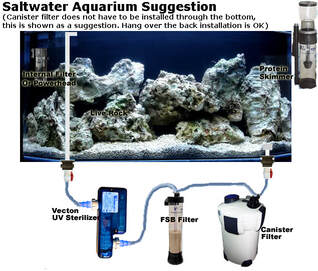
Canister/FSB Filter Suggestion:
The simple diagram to the left is intended only as ONE way to set up a saltwater aquarium. This setup includes a Protein Skimmer and Fluidized Sand Bed Filter/Reactor along with a level one UV Sterilizer for disease prevention and improving Redox Balance.
Product Resources:
AAP Reactors/FSB Filters
AAP Vecton Category 'A' True Level One UV Sterilizers
I strongly recommend using live rock crumbles, or products such as SeaChem Matrix which is even more effective, in place of ceramic bio media, plastic bio balls, bio stars, or similar for de-nitrification as these other filter medium only provide aerobic bio filtration, thus creating high nitrates.
When live rock crumbles and/or Matrix are used this can avoid the “nitrate factory” aspect that these filters have been labeled with (often volcanic rock can be substituted, although not quite as effective, but very economical pound per pound).
The use of Purigen can further help with Nitrate & Phosphate Control. This filter can then often take the place of refugiums or similar when run with a Fluidized Sand Bed filter that is also running with nitrate removing NPX Bioplastics (see the next section for more).
Product Resources:
AAP Matrix; Premium Aerobic and Anaerobic Filter Media
AAP/SeaChem Purigen for Nitrate Control
This is in fact a system that can and does work, maintaining parameters including nitrates and phosphate. I have set up many high end aquariums in this manner, where the client would NOT appreciate a low quality set up!
Be wary of those who slam these or similar systems, as they have probably have not done their homework or are trying to sell you more than you might need!!
Saying this another way, you do NOT have a to have a complex marine aquarium system with dosers, reactors, and more just to enjoy a healthy marine fish or reef aquariums!!
This set up is recommended for a beginner OR advanced aquarist and also allows expansion into a reef set up provided proper lighting is added later such as MH, SHO, T5, or LED (especially for sps corals,, clams, or nudibranchs).
I suggest the Balling Method or SeaChem/AAP Reef Advantage Calcium for calcium/trace element/alkalinity maintenance for simplicity.
Reference:
Reef Aquarium Chemistry Maintenance
A MUST READ FOR THOSE WANTING TO BREAK OUT FROM THE DISCOUNTER FAD METHODS OF REEF AQUARIUM MAINTENANCE!
The simple diagram to the left is intended only as ONE way to set up a saltwater aquarium. This setup includes a Protein Skimmer and Fluidized Sand Bed Filter/Reactor along with a level one UV Sterilizer for disease prevention and improving Redox Balance.
Product Resources:
AAP Reactors/FSB Filters
AAP Vecton Category 'A' True Level One UV Sterilizers
I strongly recommend using live rock crumbles, or products such as SeaChem Matrix which is even more effective, in place of ceramic bio media, plastic bio balls, bio stars, or similar for de-nitrification as these other filter medium only provide aerobic bio filtration, thus creating high nitrates.
When live rock crumbles and/or Matrix are used this can avoid the “nitrate factory” aspect that these filters have been labeled with (often volcanic rock can be substituted, although not quite as effective, but very economical pound per pound).
The use of Purigen can further help with Nitrate & Phosphate Control. This filter can then often take the place of refugiums or similar when run with a Fluidized Sand Bed filter that is also running with nitrate removing NPX Bioplastics (see the next section for more).
Product Resources:
AAP Matrix; Premium Aerobic and Anaerobic Filter Media
AAP/SeaChem Purigen for Nitrate Control
This is in fact a system that can and does work, maintaining parameters including nitrates and phosphate. I have set up many high end aquariums in this manner, where the client would NOT appreciate a low quality set up!
Be wary of those who slam these or similar systems, as they have probably have not done their homework or are trying to sell you more than you might need!!
Saying this another way, you do NOT have a to have a complex marine aquarium system with dosers, reactors, and more just to enjoy a healthy marine fish or reef aquariums!!
This set up is recommended for a beginner OR advanced aquarist and also allows expansion into a reef set up provided proper lighting is added later such as MH, SHO, T5, or LED (especially for sps corals,, clams, or nudibranchs).
I suggest the Balling Method or SeaChem/AAP Reef Advantage Calcium for calcium/trace element/alkalinity maintenance for simplicity.
Reference:
Reef Aquarium Chemistry Maintenance
A MUST READ FOR THOSE WANTING TO BREAK OUT FROM THE DISCOUNTER FAD METHODS OF REEF AQUARIUM MAINTENANCE!
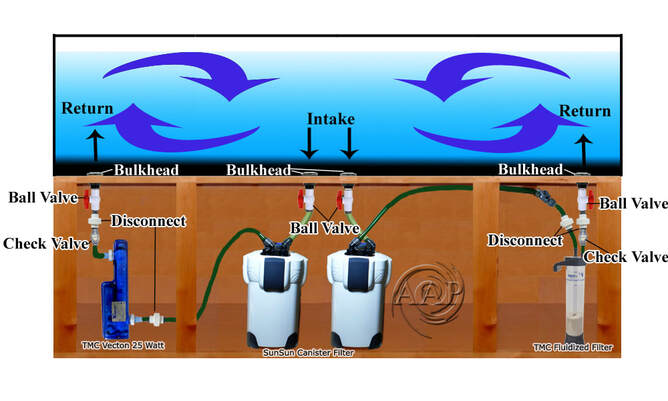
Similar to the first picture, this diagram/picture displays one way I have set upset up a 250 gallon aquarium utilizing bulkheads, canister filters, heavy duty quick disconnect unions, ball valves, a Premium AAP/TMC Vecton UV Sterilizer, and high bio capacity FSB filter.
Generally I would set up one canister filter more "traditionally" out of the box (usually the one "feeding" the FSB filter), while the other would be set up with nothing but Matrix, Crushed Coral Crumbles, Volcanic Rock, or a mix of all three thus providing awesome bio filtration when combined with the FSB filter utilizing AAP Bioplastics for nitrate control.
Generally I would set up one canister filter more "traditionally" out of the box (usually the one "feeding" the FSB filter), while the other would be set up with nothing but Matrix, Crushed Coral Crumbles, Volcanic Rock, or a mix of all three thus providing awesome bio filtration when combined with the FSB filter utilizing AAP Bioplastics for nitrate control.
Fluidized Sand Bed/Reactor Filter Suggestions:
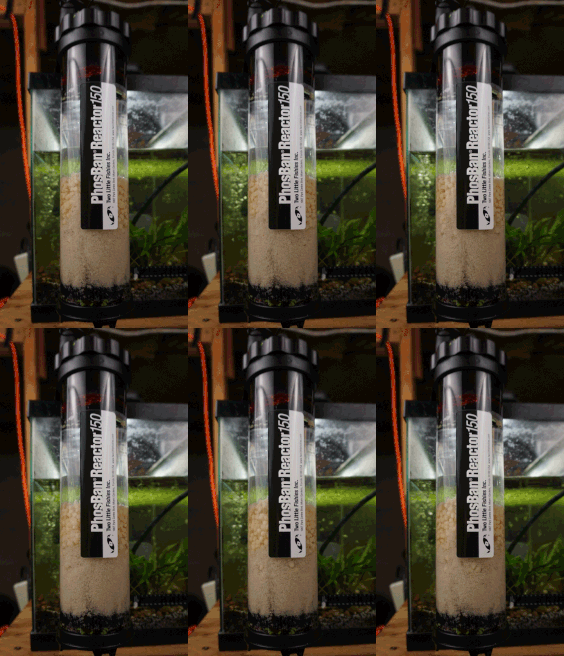
FSB/Reactor Filters can be used alone or in addition to other filters as shown earlier to increase aerobic (nitrification) and even nitrate removal.
The advantage of a Reactor/Fluidized bed filter when used with oolitic sand is the self cleaning of the surface area of the sand grains by the constant churning and mixing of sand suspended within the filtration chamber. This same oolitic sand also aids in adding essential minerals and aiding in alkalinity buffering (similar to a calcium reactor).
This type of filter when used with oolitic sand provides high amounts of surface area for unsurpassed nitrifying bio-filtration capacity. As well, when a used with nitrate removal products such as AAP Bioplastics, these Reactors/FSB filters can be an excellent part of nitrate & phosphate management.
I prefer to run the Reactor/FSB filter either off the main aquarium (using a water pump with a pre-filter) or out of the sump. As well I still recommend the use of Live Rock both in the tank and in the sump (if you have a sump on your set up)
Further References:
Aquarium Filtration; Use of Fluidized Bed Filters
Aquarium Nitrogen Cycle
The advantage of a Reactor/Fluidized bed filter when used with oolitic sand is the self cleaning of the surface area of the sand grains by the constant churning and mixing of sand suspended within the filtration chamber. This same oolitic sand also aids in adding essential minerals and aiding in alkalinity buffering (similar to a calcium reactor).
This type of filter when used with oolitic sand provides high amounts of surface area for unsurpassed nitrifying bio-filtration capacity. As well, when a used with nitrate removal products such as AAP Bioplastics, these Reactors/FSB filters can be an excellent part of nitrate & phosphate management.
I prefer to run the Reactor/FSB filter either off the main aquarium (using a water pump with a pre-filter) or out of the sump. As well I still recommend the use of Live Rock both in the tank and in the sump (if you have a sump on your set up)
Further References:
Aquarium Filtration; Use of Fluidized Bed Filters
Aquarium Nitrogen Cycle
As noted earlier, another option if you utilize a Reactor Filter is the use of AAP Bioplastics.
Our professional aquarium maintenance company has found AAP/NPX Bioplastics superior to Vodka Dosing Methods to reduce Nitrates & Phosphates in Marine Aquariums.
Product Resource:
AAP Bioplastics
Our professional aquarium maintenance company has found AAP/NPX Bioplastics superior to Vodka Dosing Methods to reduce Nitrates & Phosphates in Marine Aquariums.
Product Resource:
AAP Bioplastics
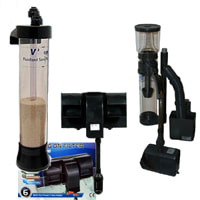
IN FACT: these VERY simple Reactors/filters can be used in a combination for say a 60 gallon Reef/Saltwater aquarium that would be hard pressed to beat in performance with more complicated sump systems, YET would be much less costly and much more simple to maintain for those who enjoy marine reef aquariums, but do not want the system to take over their life:
*Reactor Filter such as the "AAP V2 Bio React 500 Multi-Purpose Reactor" or "AAP PhosBan Reactor 150" utilizing Oolitic sand & Bioplastics powered by an AAP HJ-1542 pump with includes a sponge prefilter
*A typical HOB filter such as the Aqua Clear or AAP/SeaChem Tidal Filter, with the bio grids or sponges removed and SeaChem Matrix and/or Purigen in their place
*A good Protein Skimmer such as the V2 Skim 400 .
*Live Rock inside the aquarium
Product Resources:
AAP/SeaChem Tidal PREMIUM HOB Filters with Surface Skimmer
AAP Reactors/FSB Filters
SeaChem Purigen
SeaChem Matrix
*Reactor Filter such as the "AAP V2 Bio React 500 Multi-Purpose Reactor" or "AAP PhosBan Reactor 150" utilizing Oolitic sand & Bioplastics powered by an AAP HJ-1542 pump with includes a sponge prefilter
*A typical HOB filter such as the Aqua Clear or AAP/SeaChem Tidal Filter, with the bio grids or sponges removed and SeaChem Matrix and/or Purigen in their place
*A good Protein Skimmer such as the V2 Skim 400 .
*Live Rock inside the aquarium
Product Resources:
AAP/SeaChem Tidal PREMIUM HOB Filters with Surface Skimmer
AAP Reactors/FSB Filters
SeaChem Purigen
SeaChem Matrix
Sump Suggestions:
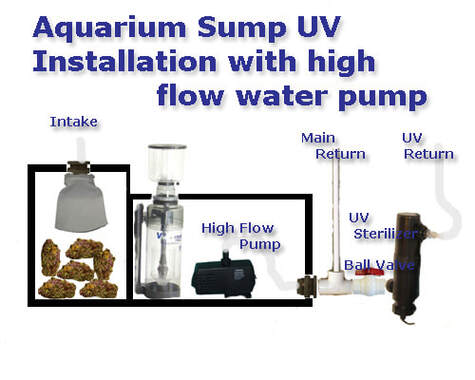
Here is simple diagram of another way to set up a marine tank using a sump, micron filer bag, live rock, a skimmer, high performance pump, and UV Sterilizer (please click to enlarge).
This is a variation on the wet dry system, but without the bio balls which, like the common filter media used in canister filters, can cause high amounts of nitrates (often referred to as a nitrate factory). In this method the live rock is both a nitrifying AND de-nitrifying filter. This also employs a micron media bag for added filtration.
Here is simple diagram of another way to set up a marine tank using a sump, micron filer bag, live rock, a skimmer, high performance pump, and UV Sterilizer (please click to enlarge).
This is a variation on the wet dry system, but without the bio balls which, like the common filter media used in canister filters, can cause high amounts of nitrates (often referred to as a nitrate factory). In this method the live rock is both a nitrifying AND de-nitrifying filter. This also employs a micron media bag for added filtration.
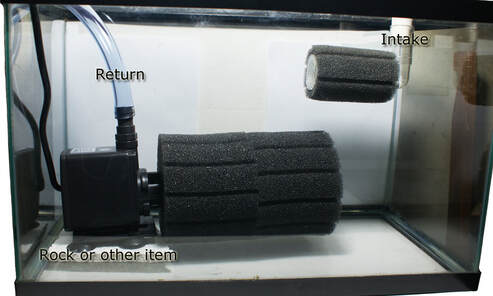
The Sump to the left is another very simple sump method that uses premium Hydro Sponge Filters and Pre-Filters.
This set up includes a Hydro Pond #4 (this filter is excellent for high capacity aquarium systems), and the intake consists of a Filter Max #3 or #2.
Our Aquarium maintenance experience has show this method of mechanical filtration VASTLY superior to the use of "Socks" in the sump (as pictured in the diagram above), in part because the mechanical filtration capacity is much higher, especially when both standard patented Hydro Sponge Filters are combined with PRO reticulated Hydro Sponge Filters, but also for added bio filtration which these unfortunately popular socks to not perform.
Live Rock, Matrix, and/or volcanic rock can and should be added around the sponge filter pick up for added de-nitrification.
Finally this set up can include a Protein Skimmer in the sump (which can have an added ozonizer for even better efficiency) and a UV Sterilizer such as the TMC Vecton UV to the outflow.
Please Click to Enlarge.
Product Resources:
Hydro-Pond; Large Sponge Filters for Ponds or Large Aquarium Bio Systems
AAP/TMC Patented Bio React Multi-Purpose Reactor/FSB Filter
AAP/TMC Vecton High Dwell Time, Performance UV-C Sterilizer
Filter Max, Sponge Pre Filters
This set up includes a Hydro Pond #4 (this filter is excellent for high capacity aquarium systems), and the intake consists of a Filter Max #3 or #2.
Our Aquarium maintenance experience has show this method of mechanical filtration VASTLY superior to the use of "Socks" in the sump (as pictured in the diagram above), in part because the mechanical filtration capacity is much higher, especially when both standard patented Hydro Sponge Filters are combined with PRO reticulated Hydro Sponge Filters, but also for added bio filtration which these unfortunately popular socks to not perform.
Live Rock, Matrix, and/or volcanic rock can and should be added around the sponge filter pick up for added de-nitrification.
Finally this set up can include a Protein Skimmer in the sump (which can have an added ozonizer for even better efficiency) and a UV Sterilizer such as the TMC Vecton UV to the outflow.
Please Click to Enlarge.
Product Resources:
Hydro-Pond; Large Sponge Filters for Ponds or Large Aquarium Bio Systems
AAP/TMC Patented Bio React Multi-Purpose Reactor/FSB Filter
AAP/TMC Vecton High Dwell Time, Performance UV-C Sterilizer
Filter Max, Sponge Pre Filters
More Advanced Sumps/ Pure Berlin Method:
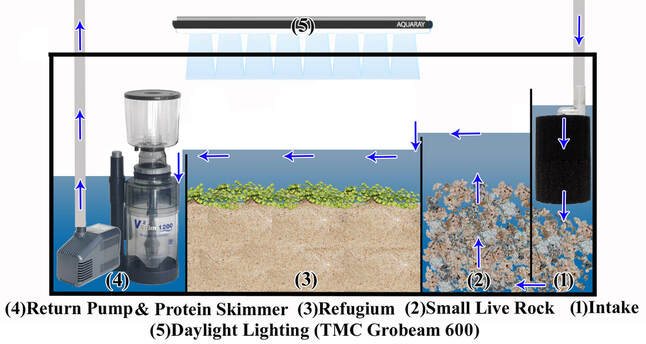
This diagram displays a more advanced marine aquarium sump.
Please note this can be utilized for freshwater too, simply a freshwater refugium and use of a FSB Filter only in slot 4.
This sump includes:
Glass or acrylic plates mounted to provide an optimum flow pattern
An AAP Hydro Pond Pre-Filter in the first chamber
Crushed Coral crumbles for bio filtration, both aerobic and anaerobic (as well as some mechanical filtration)
A combination deep sand bed and refugium for further nitrate control
Final chamber with AAP Rio HF Pump for circulation as well as an AAP/TMC Premium V2 Skim marine protein skimmer and/or a FSB Filter Reactor
An AAP/TMC GroBeam or Marine White Premium High efficiency/high output LED light is also employed for refugium.
This is a new trend/diversion from Refugiums & similar older Berlin Methods that many find excellent results such as nearly non existent nitrate levels. This can also be combined with further filtration, including Sponges and UV/Germicidal Filtration
This diagram displays a more advanced marine aquarium sump.
Please note this can be utilized for freshwater too, simply a freshwater refugium and use of a FSB Filter only in slot 4.
This sump includes:
Glass or acrylic plates mounted to provide an optimum flow pattern
An AAP Hydro Pond Pre-Filter in the first chamber
Crushed Coral crumbles for bio filtration, both aerobic and anaerobic (as well as some mechanical filtration)
A combination deep sand bed and refugium for further nitrate control
Final chamber with AAP Rio HF Pump for circulation as well as an AAP/TMC Premium V2 Skim marine protein skimmer and/or a FSB Filter Reactor
An AAP/TMC GroBeam or Marine White Premium High efficiency/high output LED light is also employed for refugium.
This is a new trend/diversion from Refugiums & similar older Berlin Methods that many find excellent results such as nearly non existent nitrate levels. This can also be combined with further filtration, including Sponges and UV/Germicidal Filtration
For more about Algae Scrubbers, Refugiums, or Mud filters, please visit this article about Aquarium Filtration:
Aquarium Filtration
The Pure Berlin Method is often promoted by Reef purists, however I do not generally recommend this for beginners as this method does not allow for poor feeding habits (as well as many other mistakes common to newbies) and since UV Sterilizers are often not employed; germicidal filtration as well as the very important benefits of improved Redox are missing.
A common statement by the purists that recommend this system over any other method is unfortunately based on some false assumptions:
Any filtration in the end produces nitrates:
Answer NOT if live rock or volcanic rock crumbles are used in filters (in place of the usual media that only attracts aerobic bacteria) as well as proper cleaning (& vacuuming) procedures and regular rinsing of pre filters (sponges are very simple and quick to rinse).
The live rock, live sand and protein skimmer will handle all waste problems:
Answer NOT true as I too have set up MANY of these systems for clients that have then overwhelmed their aquariums with over feeding or other poor maintenance issues often resulting in large amounts of detritus on the bottom of the aquarium and worse (this is not to say this will happen, however I have observed this often especially with clients that provided the majority of their own maintenance).
UV Sterilizers are not necessary and can do harm:
Answer ONLY half right, a UV Sterilizer is not necessary however I have documented better Redox, improved longevity vitality among inhabitants as well less disease outbreaks when UVs are used.
As to UV Sterilizers doing harm, I will refer the readers to these articles:
“UV Sterilization; How True UV Sterilizers Work (As compared to ineffective Category C UV Clarifiers commonly sold via Amazon, eBay & other discounters)
UV Sterilizers, posts dealing with what UVC can and cannot do for your Aquarium or Pond
Aquarium Filtration
The Pure Berlin Method is often promoted by Reef purists, however I do not generally recommend this for beginners as this method does not allow for poor feeding habits (as well as many other mistakes common to newbies) and since UV Sterilizers are often not employed; germicidal filtration as well as the very important benefits of improved Redox are missing.
A common statement by the purists that recommend this system over any other method is unfortunately based on some false assumptions:
Any filtration in the end produces nitrates:
Answer NOT if live rock or volcanic rock crumbles are used in filters (in place of the usual media that only attracts aerobic bacteria) as well as proper cleaning (& vacuuming) procedures and regular rinsing of pre filters (sponges are very simple and quick to rinse).
The live rock, live sand and protein skimmer will handle all waste problems:
Answer NOT true as I too have set up MANY of these systems for clients that have then overwhelmed their aquariums with over feeding or other poor maintenance issues often resulting in large amounts of detritus on the bottom of the aquarium and worse (this is not to say this will happen, however I have observed this often especially with clients that provided the majority of their own maintenance).
UV Sterilizers are not necessary and can do harm:
Answer ONLY half right, a UV Sterilizer is not necessary however I have documented better Redox, improved longevity vitality among inhabitants as well less disease outbreaks when UVs are used.
As to UV Sterilizers doing harm, I will refer the readers to these articles:
“UV Sterilization; How True UV Sterilizers Work (As compared to ineffective Category C UV Clarifiers commonly sold via Amazon, eBay & other discounters)
UV Sterilizers, posts dealing with what UVC can and cannot do for your Aquarium or Pond
Entry Options
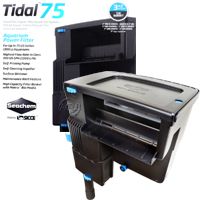
he idea of the a HOB Aquarium Power Filter such as the AAP/SeaChem Tidal, Aqua Clear or similar for tanks under 75 gallons is another viable option if done correctly. These are best combined with other methods including the use of live rock and/or a protein skimmer, and possibly a level one capable internal/submersible UV Sterilizer.
Instead of the traditional set up, I would utilize these filter types by removing the standard grid, ceramic, sponge, etc. bio filter media and replacing with Matrix or Live Rock crumbles, often in a nylon filter bag to prevent damage to the filters's impeller.
Often I have removed even the filter cartridges and all filter components (this includes the carbon and foam insert with Aqua Clear Filters) and ONLY utilize ther before mentioned Matrix and/or live rock crumbles.
The addition of a Filter Max #3 Pre-filter attached to this would improve bio capacity (especially during filter cartridge changes if the cartridges are still utilized).
I should note that this HOB marine filter idea, even with the largest of HOB filters does not have the capacity of a large canister filter when they too are filled with similar filter media (such as the Rena Filstar), or especially a FSB Filter.
As well, the use a of a good marine protein skimmer such as the TMC Skim PRO Skimmers is suggested as a compliment. I would also strongly suggest a Propeller/Circulation water pump to increase circulation within the aquarium and around any live rock that might be present.
Product Resources:
AAP/SeaChem Tidal PREMIUM HOB Filters with Skimmer
Filter Max; Aquarium Pre Filters
AAP CUP Series Submersible/Internal Level 1 Capable UV Filters
Rio, Seio Propeller Pumps, Superior Design Glass Mount Water Circulation Pump
Instead of the traditional set up, I would utilize these filter types by removing the standard grid, ceramic, sponge, etc. bio filter media and replacing with Matrix or Live Rock crumbles, often in a nylon filter bag to prevent damage to the filters's impeller.
Often I have removed even the filter cartridges and all filter components (this includes the carbon and foam insert with Aqua Clear Filters) and ONLY utilize ther before mentioned Matrix and/or live rock crumbles.
The addition of a Filter Max #3 Pre-filter attached to this would improve bio capacity (especially during filter cartridge changes if the cartridges are still utilized).
I should note that this HOB marine filter idea, even with the largest of HOB filters does not have the capacity of a large canister filter when they too are filled with similar filter media (such as the Rena Filstar), or especially a FSB Filter.
As well, the use a of a good marine protein skimmer such as the TMC Skim PRO Skimmers is suggested as a compliment. I would also strongly suggest a Propeller/Circulation water pump to increase circulation within the aquarium and around any live rock that might be present.
Product Resources:
AAP/SeaChem Tidal PREMIUM HOB Filters with Skimmer
Filter Max; Aquarium Pre Filters
AAP CUP Series Submersible/Internal Level 1 Capable UV Filters
Rio, Seio Propeller Pumps, Superior Design Glass Mount Water Circulation Pump
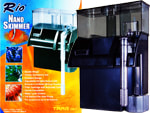
Rio Nano Skimmer This is again an entry level Hang on the back (HOB/ Power Filter) combined with simple and basic Protein Skimmer. This is not a high end product, however it is useful for beginners or those on a budget with a 40 gallon or smaller marine aquarium. As with the previous two suggestions, I would recommend ample live rock and deep sand (2-3 inches of #00 with ½” of #3 crushed coral on top) as well as a power head (such as the Rio 600) or internal filter for better water movement.
Also a UV Sterilizer is another possible addition (connected to a power head).
See this article for how a Sterilizer improves your aquarium water quality (including a video): How UV Sterilization Works)
Product Resource:
Rio 600 Pump from AAP
Product Resources:
SeaChem Matrix from AAP
SeaChem Purigen for Nitrate Control, from AAP
Also a UV Sterilizer is another possible addition (connected to a power head).
See this article for how a Sterilizer improves your aquarium water quality (including a video): How UV Sterilization Works)
Product Resource:
Rio 600 Pump from AAP
Product Resources:
SeaChem Matrix from AAP
SeaChem Purigen for Nitrate Control, from AAP
Advanced Options
Live Rock in the Aquarium is also a must for utilization of the Berlin filter method which basics turns this rock into a large nitrifying and de-nitrifying filter provided you have adequate circulation.
A deep sand bed is also VERY important for de-nitrification; I prefer at least 3 inches of fine #00 oolite size sand with a ½ inch layer of #3 crushed coral on top for some aerobic nitrifying bacteria as well as improved ease in cleaning. Please see the full Marine Basics article for more about this subject:
AQUARIUM SALTWATER BASICS; information, resources, and more
A deep sand bed is also VERY important for de-nitrification; I prefer at least 3 inches of fine #00 oolite size sand with a ½ inch layer of #3 crushed coral on top for some aerobic nitrifying bacteria as well as improved ease in cleaning. Please see the full Marine Basics article for more about this subject:
AQUARIUM SALTWATER BASICS; information, resources, and more
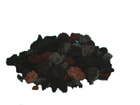
Instead of a lot of ceramic filter media and other filter media which only performs nitrification, the canister filter (or wet/dry) should be loaded with live rock fragments/crumbles or volcanic rock so as to keep the canister filter/wet-dry from becoming a nitrate factory by providing anaerobic and aerobic filtration.
I recommend the live rock/volcanic rock crumbles be place in the first 50% of the filter that the water passes through. Another alternative to live rock crumbles is SeaChem Matrix this unique product is a high porosity bio media that provides efficient bio filtration for the removal of nitrogenous waste, including nitrates via anaerobic de-nitrification deep inside the pore complex of this product.
SeaChem Purigen is another product that can be used in filters, however this would fall under the category of adsorbents.
Purigen is a premium synthetic adsorbent that is not a mixture of ion exchangers or adsorbents, rather a unique macro-porous synthetic polymer that removes soluble and insoluble impurities from water. Purigen controls ammonia, nitrites and often hard to control nitrates by removing nitrogenous organic waste that would otherwise release these harmful compounds, with minimal impact on trace elements.
Product Resources:
AAP Volcanic Rock Bio Media
AAP Matrix Nitrate and Ammonia removing Filter Material
AAP Purigen; Premium Synthetic Adsorbent, Removes Nitrates, Ammonia
For further discussion of filter media, please see this article:
Aquarium Answers; Aquarium and Pond Filter Media.
I recommend the live rock/volcanic rock crumbles be place in the first 50% of the filter that the water passes through. Another alternative to live rock crumbles is SeaChem Matrix this unique product is a high porosity bio media that provides efficient bio filtration for the removal of nitrogenous waste, including nitrates via anaerobic de-nitrification deep inside the pore complex of this product.
SeaChem Purigen is another product that can be used in filters, however this would fall under the category of adsorbents.
Purigen is a premium synthetic adsorbent that is not a mixture of ion exchangers or adsorbents, rather a unique macro-porous synthetic polymer that removes soluble and insoluble impurities from water. Purigen controls ammonia, nitrites and often hard to control nitrates by removing nitrogenous organic waste that would otherwise release these harmful compounds, with minimal impact on trace elements.
Product Resources:
AAP Volcanic Rock Bio Media
AAP Matrix Nitrate and Ammonia removing Filter Material
AAP Purigen; Premium Synthetic Adsorbent, Removes Nitrates, Ammonia
For further discussion of filter media, please see this article:
Aquarium Answers; Aquarium and Pond Filter Media.
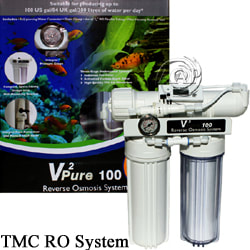
Reverse Osmosis Water is also a must for anyone desiring to keep a more advanced marine aquarium (in particular a reef tank).
Owning your own Reverse Osmosis System allows the aquarium keeper to make RO water for less than 2 cents per gallon. The use of this water is a must for evaporation to prevent buildup of nitrates (which are found in most tap water sources) and other compounds/minerals that can affect the balance of your aquarium. As well this RO water allows for a better quality saltwater when used to mix with most premium salts such as Tropic Marine.
Be wary of the "sharks" in the industry that will try & up-sell you to an RO/DI unit (they come off as knowledgeable, but when question, they really show their used car salesperson side), besides adding to operating costs, these do little for a marine fish keeper other than removing ions the RO system misses. Since removing these ions might make for a neutral pH, this is not a concern for a marine fish/reef keeper since we desire higher pH anyway.
A selling tactic used for these units is that a RO system does not adequately remove nitrates and phosphates. This may be true for some lower end RO systems that are often part of these RO/DI systems, but not the better ones such as I recommend below.
Product Resource:
AAP/Tropic Marine Center V2 Pure RO System
For further reading on this subject that as unfortunately been made way too confusing by certain industry sharks and forums:
Use of RO, DI, Softwater in Aquariums
Owning your own Reverse Osmosis System allows the aquarium keeper to make RO water for less than 2 cents per gallon. The use of this water is a must for evaporation to prevent buildup of nitrates (which are found in most tap water sources) and other compounds/minerals that can affect the balance of your aquarium. As well this RO water allows for a better quality saltwater when used to mix with most premium salts such as Tropic Marine.
Be wary of the "sharks" in the industry that will try & up-sell you to an RO/DI unit (they come off as knowledgeable, but when question, they really show their used car salesperson side), besides adding to operating costs, these do little for a marine fish keeper other than removing ions the RO system misses. Since removing these ions might make for a neutral pH, this is not a concern for a marine fish/reef keeper since we desire higher pH anyway.
A selling tactic used for these units is that a RO system does not adequately remove nitrates and phosphates. This may be true for some lower end RO systems that are often part of these RO/DI systems, but not the better ones such as I recommend below.
Product Resource:
AAP/Tropic Marine Center V2 Pure RO System
For further reading on this subject that as unfortunately been made way too confusing by certain industry sharks and forums:
Use of RO, DI, Softwater in Aquariums
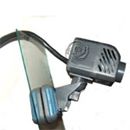
Additional power heads (such as a Seio Propeller Circulation Pump) and/or internal filters add necessarily circulation (and more filter redundancy in the case of an internal filter or Sponge Filter attached to a power head).
Product Resources:
Aquarium Pumps
Seio & SunSun Propeller Aquarium Circulation Water Pumps
Internal Filters
Sponge Filters
The UV Sterilizer, although not essential is a device that will aid in your Redox Potential as well as disease prevention and I personally strongly recommend them. I generally turn them on after the first week.
Product Resources:
Aquarium Pumps
Seio & SunSun Propeller Aquarium Circulation Water Pumps
Internal Filters
Sponge Filters
The UV Sterilizer, although not essential is a device that will aid in your Redox Potential as well as disease prevention and I personally strongly recommend them. I generally turn them on after the first week.
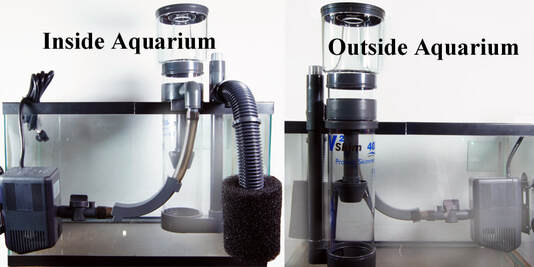
Protein Skimmers are another useful suggestion that can be added after the first few weeks (they do little in the first few weeks due to lack of organics in the water column). Although not 100% required a top notch Protein Skimmer such as the TMC V2 Skim or ASM Skimmer makes reef keeping much easier and thus I would suggest one of these higher end Protein Skimmers for advanced reef marine aquariums.
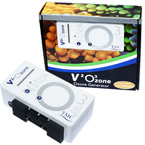
As well a venture style protein skimmer can have an Ozone Generator added for improved effectiveness of organic waste removal, as well this device also lowers pathogens in the water column (similar to a UV Sterilizer).
Product Resources:
TMC Premium Venturi Reef Protein Skimmer
V2 O3 Premium Ozonizer for Marine Reef Aquariums
I strongly recommend reading this article:
Aquarium Protein Skimmer Review
Product Resources:
TMC Premium Venturi Reef Protein Skimmer
V2 O3 Premium Ozonizer for Marine Reef Aquariums
I strongly recommend reading this article:
Aquarium Protein Skimmer Review
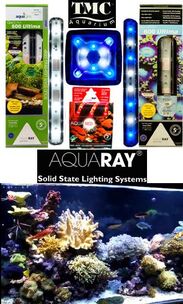
Lighting can be improved as you step up to more advanced inhabitants such as anemones and especially corals.
The best choice with all the advances and when one considers lights in an apples to apples comparison are the Aquarium LED Lights (the vastly out dated watts per gallon so-called rule cannot be applied to modern marine aquarium lights, especially 5 year guaranteed Exclusive AAPAquaRay LEDs which only require as little as .6 watt per gallon for a fish only or FOWLR tank!!).
Product Resource:
The BEST Premium LED Aquarium Lighting
The latest LED lights will outperform ALL fluorescent lights including HO T5 and VHO CFL.
When you consider that the BEST LED aquarium lights last 50,000 hours, the price is less over the life of the fixture when compared to HO T5 such as the Current 39 watt that might be ½ the cost, but lasts only 1/6 the time and consumes 3-4 times the energy for the same "useful light energy" output.
The Aqua Ray Aquarium LED lights are the BEST OF THE BEST as these are the only one with a warranty to actually last 5 years, most others are only a 1 year warranty, including the over rated EcoTech LEDs which also utilize outdated "current reduction" technology which is why these require a cooling fan due to the excess heat generated (that also is wasted energy). It is these fans that often over heat and break down that necessitate only a one year warranty!!
Product Resource:
AAP AquaRay; Complete USA AUTHORIZED line only available at AAP
The best choice with all the advances and when one considers lights in an apples to apples comparison are the Aquarium LED Lights (the vastly out dated watts per gallon so-called rule cannot be applied to modern marine aquarium lights, especially 5 year guaranteed Exclusive AAPAquaRay LEDs which only require as little as .6 watt per gallon for a fish only or FOWLR tank!!).
Product Resource:
The BEST Premium LED Aquarium Lighting
The latest LED lights will outperform ALL fluorescent lights including HO T5 and VHO CFL.
When you consider that the BEST LED aquarium lights last 50,000 hours, the price is less over the life of the fixture when compared to HO T5 such as the Current 39 watt that might be ½ the cost, but lasts only 1/6 the time and consumes 3-4 times the energy for the same "useful light energy" output.
The Aqua Ray Aquarium LED lights are the BEST OF THE BEST as these are the only one with a warranty to actually last 5 years, most others are only a 1 year warranty, including the over rated EcoTech LEDs which also utilize outdated "current reduction" technology which is why these require a cooling fan due to the excess heat generated (that also is wasted energy). It is these fans that often over heat and break down that necessitate only a one year warranty!!
Product Resource:
AAP AquaRay; Complete USA AUTHORIZED line only available at AAP
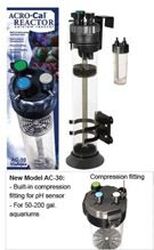
Calcium Reactor: this is a useful device for maintaining bio available calcium in reef tanks with large amounts of stony corals. As well these Calcium Reactors can maintain positive calcium ions that are essential for fish health/Redox balance as well.
However my preference is the use of Oolitc Sand in a good FSB Filter, as while this is not quite as effective as a calcium reactor, it is much more simple and easily kept up with via dosing of products such as SeaChem Reef Advantage Calcium, ASSUMING additional supplementation is even necessary.
For a better understanding on reef chemistry, in particular calcium and alkalinity maintenance, I strongly suggest reading this article:
Use of RO, DI, Softwater in Aquariums
Product Resources:
SeaChem Reef Advantage Calcium from AAP
Oolitic Sand for FSB Filters
See this article for more:
Calcium, Kalkwasser, Reactors, Magnesium in Marine Aquariums
However my preference is the use of Oolitc Sand in a good FSB Filter, as while this is not quite as effective as a calcium reactor, it is much more simple and easily kept up with via dosing of products such as SeaChem Reef Advantage Calcium, ASSUMING additional supplementation is even necessary.
For a better understanding on reef chemistry, in particular calcium and alkalinity maintenance, I strongly suggest reading this article:
Use of RO, DI, Softwater in Aquariums
Product Resources:
SeaChem Reef Advantage Calcium from AAP
Oolitic Sand for FSB Filters
See this article for more:
Calcium, Kalkwasser, Reactors, Magnesium in Marine Aquariums
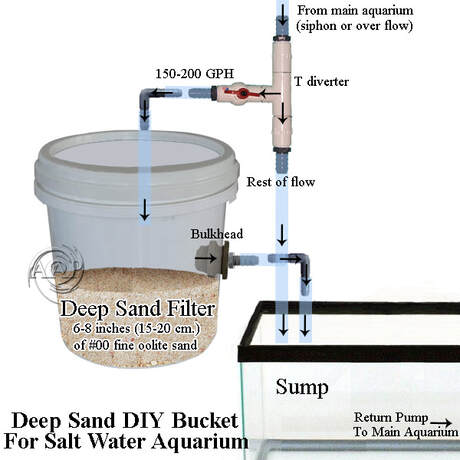
Finally, if nitrates are a problem (with or without a Protein Skimmer): You might consider several other options such as a Deep Sand filter with can be a simple DIY project using either a 10 gallon aquarium or even a bucket. Please click on the picture to see the article to the left.
Refugiums and Mud filters (or combinations of all three in one unit) are also considerations. Above all, if nitrates are a problem with your system, make sure you watch your feeding AND use live rock crumbles or similar porous rock (such as volcanic rock or “Bio Home”) instead of bio balls, or other filter media that only attracts nitrifying aerobic bacteria.
For my FULL Marine Basics article, please visit this site:
AQUARIUM SALTWATER BASICS- information, resources, and more.
Refugiums and Mud filters (or combinations of all three in one unit) are also considerations. Above all, if nitrates are a problem with your system, make sure you watch your feeding AND use live rock crumbles or similar porous rock (such as volcanic rock or “Bio Home”) instead of bio balls, or other filter media that only attracts nitrifying aerobic bacteria.
For my FULL Marine Basics article, please visit this site:
AQUARIUM SALTWATER BASICS- information, resources, and more.
Videos
|
|
|