
Livebearers
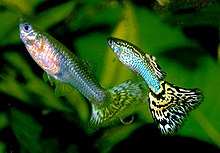
Guppies
Size: females 1.5 -2.25 inches (4-6 cm.) males 1- 1.5 inches (2½–3½ cm.)
Scientific Name: Poecilia reticulata Family- Live Bearer
Natural Habitat: Wild Guppies originate from Venezuela, Barbados, Brazil, Guyana, Netherlands Antilles, Trinidad, Tobago, and the Virgin Islands.
Description: Many Variations, with males generally displaying more color and longer fins. Males will have a pointy anal fin, the so called gonopodium; whereas the females will have a fanned out anal fin, that’s how you can sex them.
Recommended Tank Size and Temperament: 2.5 gallon or larger (per pair, although not a male/female pair otherwise this would be much too small due to the offspring; this recommendation is for a pair from one sex).
Generally a peaceful fish (although they can occasionally nip), they can be kept with many small fish such as Platys, White Clouds, etc.
Water Parameters: Guppies can tolerate salt levels exceeding even the ocean, although this is not necessary for their long term health. Some salt can be helpful in their aquarium, especially during times of stress.
Please Reference this article: Sodium Chloride; Salt in freshwater Aquariums.
If salt is used with guppies & other livebearers, I have had MUCH better results using a quality marine salt so as to supply other minerals salts as well as electrolytes. The best most bio-available is the AAP/Tropic Marin Reef Salt which can be purchased by the pound.
Product Resource: AAP-Tropic Marine Pro Reef Salt from Germany, Also for Guppies, etc.
What is very important (as with ALL Livebearers) is the maintenance of minerals (electrolytes) such as Calcium, Magnesium, Potassium, and Sodium, in part by means of a GH of at least 200 ppm or much higher.
Wonder Shells are one way to do this as these slowly add the positive mineral ions that can be depleted even when your GH test kit is still testing high for General Hardness (similar to how a Car battery can be depleted of a positive charge all the while the elements that make up the car battery are still present)
Medicated Wonder Shells are useful when introducing new fish to the aquarium as these improve Redox while being a mild preventative for fungal, parasitic, and some bacterial infections.
Product Resource: Wonder Shells; Unique Version ONLY available at AAP
A KH of at least 100-150 to buffer and keep a stable pH is also important. Despite claims as to pH, I have found that stability (via KH) is more important than the actual pH number, although I have found the pH is best between 7.4- 8.4
Please see this article for MUCH more on this important but very often missed aspect of of fish husbandry:
“AQUARIUM CHEMISTRY; Calcium, Electrolytes, & more”
Typical food: Guppies are omnivores and will eat most foods offered, however Guppies need high quality vegetable matter such as Spirulina in their diet to thrive, for this reason a food such as the ultra premium Clay Neighbor's Custom Omnivore (from AAP) Crumbles or Spirulina 20 Fish Food Flake would be a good basic diet.
A varied diet is often a good idea as with most fish, this would include frozen or live foods such as Brine Shrimp or FD Foods such as FD Brine Shrimp or Blood Worms.
What is also noteworthy with Guppies and most all livebearers is that they live short/"fast" lifespans. By feeding fish foods with poor energy optimization and low fiber content, this only shortens lifespans even further and allows for lower disease resistance.
The problem is while there are many excellent fish foods with top notch ingredients, the majority are do not optimize energy levels or fiber content which leads to increased oxidative stress. Clay Neighbor's Custom is about the only truly optimized fish foods for both energy and fiber content
Please follow or jump to the end of the page for a listing & links to some of the fish foods suggested in this article:
SUGGESTED FISH FOOD RESOURCES
Breeding: As long as you have 1 male and 2 female, off spring is almost guaranteed. It’s recommended to have a separate breeding tank, which should be at least a 2.5 gallon tank, with heater and filter, where you will put your pregnant female, until the fry are born. They’re livebearers, meaning they give birth to living fish. I recommend against the breeder nets and boxes, as they’re death traps for the fry.
You can also add a bunch of plants to the main tank, like breeding grass, water wisteria, water sprite… where the fry can hide, as the adults tend to eat their fry.
Feed them with “Hikari First bites” or ground up flake food, 4-6 times a day for the first 2 weeks, then you can decrease to 2-4 feedings for 2 weeks, and then to 2 feedings a day.
Product Source: Hikari First Bites
Contributor Notes:
From Renee Wise: Very sensitive to changes in temperature, especially drops in temperature. They seem to prefer a higher GH, KH and PH for breeding. Males mature earlier than females. How easily they breed depends on a lot of factors and throwing a female in with a male in a tank does not guarantee that the female will get pregnant.
In fact, such handling can be very stressful and lead to disease quite easily in my experience. At least for me, guppies tend to be very friendly and very trusting fish who will readily accept food for your hand. Guppies are very messy so if you buy any, consider cleaning a regular routine even if you have a good filter.
Guppies can be kept with many different small, non aggressive tropical fish. However even though some have had success keeping Guppies with Betta Fish, often a Betta will attack Guppies due to finnage that Bettas might find imitates that of another male Betta
Scientific Name: Poecilia reticulata Family- Live Bearer
Natural Habitat: Wild Guppies originate from Venezuela, Barbados, Brazil, Guyana, Netherlands Antilles, Trinidad, Tobago, and the Virgin Islands.
Description: Many Variations, with males generally displaying more color and longer fins. Males will have a pointy anal fin, the so called gonopodium; whereas the females will have a fanned out anal fin, that’s how you can sex them.
Recommended Tank Size and Temperament: 2.5 gallon or larger (per pair, although not a male/female pair otherwise this would be much too small due to the offspring; this recommendation is for a pair from one sex).
Generally a peaceful fish (although they can occasionally nip), they can be kept with many small fish such as Platys, White Clouds, etc.
Water Parameters: Guppies can tolerate salt levels exceeding even the ocean, although this is not necessary for their long term health. Some salt can be helpful in their aquarium, especially during times of stress.
Please Reference this article: Sodium Chloride; Salt in freshwater Aquariums.
If salt is used with guppies & other livebearers, I have had MUCH better results using a quality marine salt so as to supply other minerals salts as well as electrolytes. The best most bio-available is the AAP/Tropic Marin Reef Salt which can be purchased by the pound.
Product Resource: AAP-Tropic Marine Pro Reef Salt from Germany, Also for Guppies, etc.
What is very important (as with ALL Livebearers) is the maintenance of minerals (electrolytes) such as Calcium, Magnesium, Potassium, and Sodium, in part by means of a GH of at least 200 ppm or much higher.
Wonder Shells are one way to do this as these slowly add the positive mineral ions that can be depleted even when your GH test kit is still testing high for General Hardness (similar to how a Car battery can be depleted of a positive charge all the while the elements that make up the car battery are still present)
Medicated Wonder Shells are useful when introducing new fish to the aquarium as these improve Redox while being a mild preventative for fungal, parasitic, and some bacterial infections.
Product Resource: Wonder Shells; Unique Version ONLY available at AAP
A KH of at least 100-150 to buffer and keep a stable pH is also important. Despite claims as to pH, I have found that stability (via KH) is more important than the actual pH number, although I have found the pH is best between 7.4- 8.4
Please see this article for MUCH more on this important but very often missed aspect of of fish husbandry:
“AQUARIUM CHEMISTRY; Calcium, Electrolytes, & more”
Typical food: Guppies are omnivores and will eat most foods offered, however Guppies need high quality vegetable matter such as Spirulina in their diet to thrive, for this reason a food such as the ultra premium Clay Neighbor's Custom Omnivore (from AAP) Crumbles or Spirulina 20 Fish Food Flake would be a good basic diet.
A varied diet is often a good idea as with most fish, this would include frozen or live foods such as Brine Shrimp or FD Foods such as FD Brine Shrimp or Blood Worms.
What is also noteworthy with Guppies and most all livebearers is that they live short/"fast" lifespans. By feeding fish foods with poor energy optimization and low fiber content, this only shortens lifespans even further and allows for lower disease resistance.
The problem is while there are many excellent fish foods with top notch ingredients, the majority are do not optimize energy levels or fiber content which leads to increased oxidative stress. Clay Neighbor's Custom is about the only truly optimized fish foods for both energy and fiber content
Please follow or jump to the end of the page for a listing & links to some of the fish foods suggested in this article:
SUGGESTED FISH FOOD RESOURCES
Breeding: As long as you have 1 male and 2 female, off spring is almost guaranteed. It’s recommended to have a separate breeding tank, which should be at least a 2.5 gallon tank, with heater and filter, where you will put your pregnant female, until the fry are born. They’re livebearers, meaning they give birth to living fish. I recommend against the breeder nets and boxes, as they’re death traps for the fry.
You can also add a bunch of plants to the main tank, like breeding grass, water wisteria, water sprite… where the fry can hide, as the adults tend to eat their fry.
Feed them with “Hikari First bites” or ground up flake food, 4-6 times a day for the first 2 weeks, then you can decrease to 2-4 feedings for 2 weeks, and then to 2 feedings a day.
Product Source: Hikari First Bites
Contributor Notes:
From Renee Wise: Very sensitive to changes in temperature, especially drops in temperature. They seem to prefer a higher GH, KH and PH for breeding. Males mature earlier than females. How easily they breed depends on a lot of factors and throwing a female in with a male in a tank does not guarantee that the female will get pregnant.
In fact, such handling can be very stressful and lead to disease quite easily in my experience. At least for me, guppies tend to be very friendly and very trusting fish who will readily accept food for your hand. Guppies are very messy so if you buy any, consider cleaning a regular routine even if you have a good filter.
Guppies can be kept with many different small, non aggressive tropical fish. However even though some have had success keeping Guppies with Betta Fish, often a Betta will attack Guppies due to finnage that Bettas might find imitates that of another male Betta
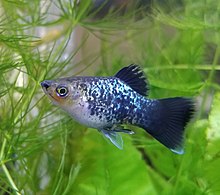
Platy
Different Varieties: Southern Platy, Red Wagtail Platies, Mickey Mouse, Red Tuxedo, Moon Fish, Topsail Rainbow, Sunset, Golden, Calico, Salt and Pepper, Coral Red, Black, Blue… and the list is almost none ending, as most of them have to do with the coloration of them.
Size: Approximately 2 inches (5-6 cm.) for adults
Scientific Name: Xiphophorus maculatus Family- Poeciliidae
Natural Habitat: The natural habitat for the Platy is found in Southern Mexico, Guatemala and Honduras.
Description: A member of live bearing Tooth carp family, Platies are now found in many hybrids and a wide variety of colors and fin forms. Sexing is the same as with guppies.
Recommended Tank Size and Temperament: 2.5 gallon or larger (per pair, although not a male/female pair otherwise this would be much too small due to the offspring; this recommendation is for a pair from one sex).
Generally a peaceful fish (although they can occasionally nip), they can be kept with many small fish such as Guppies, Tetras, even Female Betas, etc.
Water Parameters: Similar to Guppies, except that Platies cannot tolerate ocean salt levels (or even brackish). However some salt can be helpful in their aquarium, especially during times of stress.
As with Guppies and all other Livebearers, what is very important is the maintenance of minerals (electrolytes) such as Calcium, Magnesium, Potassium, and Sodium by means of a GH of at least 200 ppm (10 to 20 dGH).
Wonder shells are one reliable way to do this and Medicated Wonder Shells should be used when introducing new fish as a way to prevent disease while adding these essential mineral ions.
Product Resource: Wonder Shells; Unique Version ONLY available at AAP
Maintain a KH of at least 100-150 to buffer and keep a stable pH over 7.0 as well. Temperature: is best 76-80°F.
Typical food: Like Guppies, Platies are omnivores and will eat most foods offered; however Platies are more vegetarian than guppies and even more so need high quality vegetable matter such as Spirulina in their diet to thrive, for this reason a food such as AAP Custom Omnivore would be a top notch diet.
What is also noteworthy with Platties and most all livebearers is that they live short/"fast" lifespans. By feeding fish foods with poor energy optimization and low fiber content, this only shortens lifespans even further and allows for lower disease resistance.
The problem is while there are many excellent fish foods with top notch ingredients, the majority are do not optimize energy levels or fiber content which leads to increased oxidative stress. Clay Neighbor's Custom is about the only truly optimized fish foods for both energy and fiber content.
My in depth and long term fish food studies (using the 110 aquariums at the Bahooka Restaurant) that used Platties in particular bore this out too
Please follow or jump to the end of the page for a listing & links to some of the fish foods suggested in this article:
SUGGESTED FISH FOOD RESOURCES
Breeding: The sexes should be kept apart (if possible in separate aquaria) and fed with lots of good conditioning food either live, frozen, or freeze-dried to supplement the vegetable based diet.
The pregnancy will be shorter at the higher temp and the resulting fry will also be more vigorous.
Once the pair appears to be in peak condition place the fish together, they will begin mating almost immediately, although it isn't strictly necessary to do all this, by doing so you will be ensuring that the brood will have a far better chance of being large and healthy.
The gestation will last from 4 to 6 weeks depending on the temperature and the brood size will be up to as many as 80.
Unlike many other live bearers Platies are unlikely to eat their own fry especially with a lot of plant cover available. But to minimize the risk the male should be removed after a couple of weeks and the female once she has given birth.
The fry are very easy to raise and will accept crushed flake right away, but better initial growth rates will be achieved if small live or frozen foods such as Micro worms, vinegar eels, baby brine shrimp, etc. is for their first food (although the vegetable based flakes are still important).
As the fry grow they will need regular water changes in order to maintain good growth and eventually they will need moving into larger quarters. Between 8 to 12 weeks the fry should be big enough to sell.
Contributors Notes: by "Murdock" (from Everything Aquatic)
The following is a compilation of gathered information and personal interjection.
Platys are members of the Live bearing Tooth carp family and grow to about two inches. I have had platys grow to over three inches in my tanks. They come from Mexico, Guatemala and Honduras.
They are very peaceful and are ideally suited to the community tank with fish of a similar size. They are unfussy about their food and will eagerly accept most types of food and will thrive on a diet of flake with the occasional live or frozen food.
There are many hybrids and a wide variety of colors and fin forms. They will live in most types of water but very soft acidic water is best avoided. Ideally the water should be above pH 7 with a hardness of 10 to 20 GH.
The sexes are easily told apart; the male is smaller and has a gonopodium, which is a modified anal fin to allow copulation. These fish will breed without any special conditions and in the community tank, but under these conditions very few of the resulting fry if any will survive.
In order to breed these fish properly you should select some breeding stock with all the desired qualities you are after. Also the prospective parents should be in their prime and not old fish or very young adults. The pair should be placed in their own five to ten gallon aquarium with a mature sponge filter and lots of live plants especially on the surface, (Indian Fern is good for this).
The selected breeding pair should be fed lots of good conditioning food like live, frozen, or freeze-dried. The temperature should be between 76 to 80°F, the pregnancy will be shorter at the higher temp and the resulting fry will also be more vigorous. Once the pair looks to be in peak condition, they will begin mating almost immediately, although it isn't strictly necessary to do all this, by doing so you will be ensuring that the brood will have a far better chance of being large and healthy.
The pregnancy will last from 4 to 6 weeks depending on the temperature and the brood size will be up to as many as 80. Unlike many other live bearers Platys are unlikely to eat their own fry especially with a lot of plant cover available. But to minimize the risk the male should be removed after a couple of weeks and the female once she has given birth.
Personally I prefer placing the pregnant female in a birthing tank. They come in an assortment of sizes, shapes and materials. I tend to stay away from the ones made out of netting, as there is no way to prevent the female from eating her fry, or the other fish in the tank from attacking the net and injuring or killing the fry in an attempt to eat them.
I use a store bought plastic container that hooks onto the side of the tank and floats within. It has holes in the bottom to allow for water flow and filtration to continue. Inserted into this plastic birthing container is a removable “V” shaped slotted plastic form that separates the female from the fry. Place the “V” shaped form into place and put the female into the container. After being born, the live fry sink to the bottom of the “V” and are now in their own little area.
After all the fry are born, simply place the female back into the main aquarium. I generally leave the birthing tank in the main aquarium for one day, and then transfer the fry to another aquarium on their own so they can grow.
The fry are very easy to raise and will accept crushed flake right away, but better growth rates will be achieved if you go to the trouble of using newly hatched brine shrimps for their first food.
As the fry grow they will need regular water changes in order to maintain good growth and eventually they will need moving into larger quarters. Between 12 to 16 weeks the fry should be big enough to sell.
Aquarium Breeder NetA consideration for aquarists breeding Platys or any other livebearers is the Penn Plax “Aqua Nursery” which automatically and gently separates mother fish from fry using an attached air pump.
Another is the simple Lees Breeder Net Box which has a fine nylon material that is safe for fry yet allows circulation from the main tank into the fry rearing area. Placing plants (plastic/live) at the bottom of this net allows the fry a place to hide from “Mom” until she can be removed.
Product Source: Lees Net Fish Breeder Net, In Tank Fry Rearing Box
Size: Approximately 2 inches (5-6 cm.) for adults
Scientific Name: Xiphophorus maculatus Family- Poeciliidae
Natural Habitat: The natural habitat for the Platy is found in Southern Mexico, Guatemala and Honduras.
Description: A member of live bearing Tooth carp family, Platies are now found in many hybrids and a wide variety of colors and fin forms. Sexing is the same as with guppies.
Recommended Tank Size and Temperament: 2.5 gallon or larger (per pair, although not a male/female pair otherwise this would be much too small due to the offspring; this recommendation is for a pair from one sex).
Generally a peaceful fish (although they can occasionally nip), they can be kept with many small fish such as Guppies, Tetras, even Female Betas, etc.
Water Parameters: Similar to Guppies, except that Platies cannot tolerate ocean salt levels (or even brackish). However some salt can be helpful in their aquarium, especially during times of stress.
As with Guppies and all other Livebearers, what is very important is the maintenance of minerals (electrolytes) such as Calcium, Magnesium, Potassium, and Sodium by means of a GH of at least 200 ppm (10 to 20 dGH).
Wonder shells are one reliable way to do this and Medicated Wonder Shells should be used when introducing new fish as a way to prevent disease while adding these essential mineral ions.
Product Resource: Wonder Shells; Unique Version ONLY available at AAP
Maintain a KH of at least 100-150 to buffer and keep a stable pH over 7.0 as well. Temperature: is best 76-80°F.
Typical food: Like Guppies, Platies are omnivores and will eat most foods offered; however Platies are more vegetarian than guppies and even more so need high quality vegetable matter such as Spirulina in their diet to thrive, for this reason a food such as AAP Custom Omnivore would be a top notch diet.
What is also noteworthy with Platties and most all livebearers is that they live short/"fast" lifespans. By feeding fish foods with poor energy optimization and low fiber content, this only shortens lifespans even further and allows for lower disease resistance.
The problem is while there are many excellent fish foods with top notch ingredients, the majority are do not optimize energy levels or fiber content which leads to increased oxidative stress. Clay Neighbor's Custom is about the only truly optimized fish foods for both energy and fiber content.
My in depth and long term fish food studies (using the 110 aquariums at the Bahooka Restaurant) that used Platties in particular bore this out too
Please follow or jump to the end of the page for a listing & links to some of the fish foods suggested in this article:
SUGGESTED FISH FOOD RESOURCES
Breeding: The sexes should be kept apart (if possible in separate aquaria) and fed with lots of good conditioning food either live, frozen, or freeze-dried to supplement the vegetable based diet.
The pregnancy will be shorter at the higher temp and the resulting fry will also be more vigorous.
Once the pair appears to be in peak condition place the fish together, they will begin mating almost immediately, although it isn't strictly necessary to do all this, by doing so you will be ensuring that the brood will have a far better chance of being large and healthy.
The gestation will last from 4 to 6 weeks depending on the temperature and the brood size will be up to as many as 80.
Unlike many other live bearers Platies are unlikely to eat their own fry especially with a lot of plant cover available. But to minimize the risk the male should be removed after a couple of weeks and the female once she has given birth.
The fry are very easy to raise and will accept crushed flake right away, but better initial growth rates will be achieved if small live or frozen foods such as Micro worms, vinegar eels, baby brine shrimp, etc. is for their first food (although the vegetable based flakes are still important).
As the fry grow they will need regular water changes in order to maintain good growth and eventually they will need moving into larger quarters. Between 8 to 12 weeks the fry should be big enough to sell.
Contributors Notes: by "Murdock" (from Everything Aquatic)
The following is a compilation of gathered information and personal interjection.
Platys are members of the Live bearing Tooth carp family and grow to about two inches. I have had platys grow to over three inches in my tanks. They come from Mexico, Guatemala and Honduras.
They are very peaceful and are ideally suited to the community tank with fish of a similar size. They are unfussy about their food and will eagerly accept most types of food and will thrive on a diet of flake with the occasional live or frozen food.
There are many hybrids and a wide variety of colors and fin forms. They will live in most types of water but very soft acidic water is best avoided. Ideally the water should be above pH 7 with a hardness of 10 to 20 GH.
The sexes are easily told apart; the male is smaller and has a gonopodium, which is a modified anal fin to allow copulation. These fish will breed without any special conditions and in the community tank, but under these conditions very few of the resulting fry if any will survive.
In order to breed these fish properly you should select some breeding stock with all the desired qualities you are after. Also the prospective parents should be in their prime and not old fish or very young adults. The pair should be placed in their own five to ten gallon aquarium with a mature sponge filter and lots of live plants especially on the surface, (Indian Fern is good for this).
The selected breeding pair should be fed lots of good conditioning food like live, frozen, or freeze-dried. The temperature should be between 76 to 80°F, the pregnancy will be shorter at the higher temp and the resulting fry will also be more vigorous. Once the pair looks to be in peak condition, they will begin mating almost immediately, although it isn't strictly necessary to do all this, by doing so you will be ensuring that the brood will have a far better chance of being large and healthy.
The pregnancy will last from 4 to 6 weeks depending on the temperature and the brood size will be up to as many as 80. Unlike many other live bearers Platys are unlikely to eat their own fry especially with a lot of plant cover available. But to minimize the risk the male should be removed after a couple of weeks and the female once she has given birth.
Personally I prefer placing the pregnant female in a birthing tank. They come in an assortment of sizes, shapes and materials. I tend to stay away from the ones made out of netting, as there is no way to prevent the female from eating her fry, or the other fish in the tank from attacking the net and injuring or killing the fry in an attempt to eat them.
I use a store bought plastic container that hooks onto the side of the tank and floats within. It has holes in the bottom to allow for water flow and filtration to continue. Inserted into this plastic birthing container is a removable “V” shaped slotted plastic form that separates the female from the fry. Place the “V” shaped form into place and put the female into the container. After being born, the live fry sink to the bottom of the “V” and are now in their own little area.
After all the fry are born, simply place the female back into the main aquarium. I generally leave the birthing tank in the main aquarium for one day, and then transfer the fry to another aquarium on their own so they can grow.
The fry are very easy to raise and will accept crushed flake right away, but better growth rates will be achieved if you go to the trouble of using newly hatched brine shrimps for their first food.
As the fry grow they will need regular water changes in order to maintain good growth and eventually they will need moving into larger quarters. Between 12 to 16 weeks the fry should be big enough to sell.
Aquarium Breeder NetA consideration for aquarists breeding Platys or any other livebearers is the Penn Plax “Aqua Nursery” which automatically and gently separates mother fish from fry using an attached air pump.
Another is the simple Lees Breeder Net Box which has a fine nylon material that is safe for fry yet allows circulation from the main tank into the fry rearing area. Placing plants (plastic/live) at the bottom of this net allows the fry a place to hide from “Mom” until she can be removed.
Product Source: Lees Net Fish Breeder Net, In Tank Fry Rearing Box
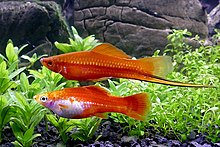
Swordtails
Different Varieties: Black Swordtail, Gold Tux, Green, Lyre tail, Neon, Red Simpson, Spotted, Red Velvet Swordtails, Black Velvet, Belize, Atoyac.
Size: Males will grow to 4 inches Plus (10 cm. plus)
Scientific Name: Xiphohorus helleri Family- Poeciliidae
Natural Habitat: Central America
Description: A livebearer that is closely related to the Platy. The males have a sword and gonopdium, which is a modified anal fin. The female has a fanned anal fin.
Recommended Tank Size and Temperament: 2.5 to 10 gallons per fish depending on filtration, chemistry, tank décor (plants etc.), and tank mates; if you want to keep a pair, no less then a 15 gallon tank. Don’t keep this very active but beautiful livebearer in a cramped 2.5 gallon or even a 5 gallon tank. They need space to room around. Swordtails, especially the males are a more aggressive livebearer and will often harass other fish, although they are still generally a community fish, this should be considered when stocking an aquarium.
Important: Make sure your tank has a lid or a good hood, as sword tails are really good jumpers.
Water Parameters: Very similar to the water requirements of Platties. As with other Livebearers, what is very important is the maintenance of minerals (electrolytes) such as Calcium, Magnesium, Potassium, and Sodium by means of a GH of at least 200 ppm (10 to 20 dGH).
Wonder Shells are one suggested method to do this and Medicated Wonder Shells should be used when introducing new fish. Maintain a KH of at least 100-150 to buffer and keep a stable pH over 7.0 as well. Temperature is best between 76-80 F.
Salt (sodium chloride) is well tolerated by Swordtails and can be useful for stress and disease prevention at a level of 1 tablespoon per 5 gallons to 1 teaspoons per 1 gallon (even higher during certain disease treatments such as Ich).
Further Information: Aquarium Answers, Salt use in Freshwater Aquariums
Typical food: Very similar to Platties, Swordtails are omnivores and will eat most foods offered with a leaning towards high quality vegetable matter such as Spirulina in their diet to thrive, for this reason a food such as the ultra preium all nautral AAP Custom Omnivore or Spirulina 20 Fish Food Flake would be a good basic diet to start with.
Increasing aquatic based meat proteins during breeding/gestation such as Frozen or FD Brine Shrimp or Blood Wormsis always recommended.
Please follow or jump to the end of the page for a listing & links to some of the fish foods suggested in this article:
SUGGESTED FISH FOOD RESOURCES
Breeding: The perfect Breeding condition, temperature is usually around 78-82 degrees.
For breeding, the ratio should always be 1 male to 2-3 females, if you have only 1 female to 1 male, the male may chase her to death.
The gestation period of all livebearers is approximately 28 days.
But remember, even without a male around, a female can have up to 6 batches of fry, because they can store the sperm for that long.
So if you buy a female, expect her to be pregnant
Just before birth the females gets a squarely appearance just beneath their head and a dark gravid spot (which can be in some cases light colored, as an example on an orange platy it will be light orange or reddish).
Here is a video of a guppy giving birth (all livebearers are similar here)
https://youtube.com/watch?v=kFkBjD2Le3k
There are basically 2 ways to consider with swordtails
1- Leave the female in the main tank, if you have lots of plants
2- you have your own breeding tank where you can put your female in
What to do when the fry is born?
On option 1-
Usually you won't find your fry until they're about 1 week old, because they can hide really well, and they will feed from whatever they will find. In my experience, fry born in the tank grow much faster and healthier then the fry in the breeders, because they have just more room to swim around and grow.
on option 2-
You will take out the female after she's done birthing and raise the fry there by themselves.
Which option is better
option 1-
Is only good if you have enough live plants for the fry, so they can hide, or if you only want to have a few survivors
In my experience if kept in a community, 5-15 fry generally survive
option 2-
Is ultimately the best, if you really plan on keeping as many fry as possible, the fry can grow without being in fear of bigger fish eating them.
Tropical’s which are best not put into a breeder because of their size:
*Dalmatian molly
*Swordtail
*Balloon Mollies
*Any molly for that matter
Contributor Notes:
Many of "Murdock's" contributor notes under Platies, can apply here as well.
Size: Males will grow to 4 inches Plus (10 cm. plus)
Scientific Name: Xiphohorus helleri Family- Poeciliidae
Natural Habitat: Central America
Description: A livebearer that is closely related to the Platy. The males have a sword and gonopdium, which is a modified anal fin. The female has a fanned anal fin.
Recommended Tank Size and Temperament: 2.5 to 10 gallons per fish depending on filtration, chemistry, tank décor (plants etc.), and tank mates; if you want to keep a pair, no less then a 15 gallon tank. Don’t keep this very active but beautiful livebearer in a cramped 2.5 gallon or even a 5 gallon tank. They need space to room around. Swordtails, especially the males are a more aggressive livebearer and will often harass other fish, although they are still generally a community fish, this should be considered when stocking an aquarium.
Important: Make sure your tank has a lid or a good hood, as sword tails are really good jumpers.
Water Parameters: Very similar to the water requirements of Platties. As with other Livebearers, what is very important is the maintenance of minerals (electrolytes) such as Calcium, Magnesium, Potassium, and Sodium by means of a GH of at least 200 ppm (10 to 20 dGH).
Wonder Shells are one suggested method to do this and Medicated Wonder Shells should be used when introducing new fish. Maintain a KH of at least 100-150 to buffer and keep a stable pH over 7.0 as well. Temperature is best between 76-80 F.
Salt (sodium chloride) is well tolerated by Swordtails and can be useful for stress and disease prevention at a level of 1 tablespoon per 5 gallons to 1 teaspoons per 1 gallon (even higher during certain disease treatments such as Ich).
Further Information: Aquarium Answers, Salt use in Freshwater Aquariums
Typical food: Very similar to Platties, Swordtails are omnivores and will eat most foods offered with a leaning towards high quality vegetable matter such as Spirulina in their diet to thrive, for this reason a food such as the ultra preium all nautral AAP Custom Omnivore or Spirulina 20 Fish Food Flake would be a good basic diet to start with.
Increasing aquatic based meat proteins during breeding/gestation such as Frozen or FD Brine Shrimp or Blood Wormsis always recommended.
Please follow or jump to the end of the page for a listing & links to some of the fish foods suggested in this article:
SUGGESTED FISH FOOD RESOURCES
Breeding: The perfect Breeding condition, temperature is usually around 78-82 degrees.
For breeding, the ratio should always be 1 male to 2-3 females, if you have only 1 female to 1 male, the male may chase her to death.
The gestation period of all livebearers is approximately 28 days.
But remember, even without a male around, a female can have up to 6 batches of fry, because they can store the sperm for that long.
So if you buy a female, expect her to be pregnant
Just before birth the females gets a squarely appearance just beneath their head and a dark gravid spot (which can be in some cases light colored, as an example on an orange platy it will be light orange or reddish).
Here is a video of a guppy giving birth (all livebearers are similar here)
https://youtube.com/watch?v=kFkBjD2Le3k
There are basically 2 ways to consider with swordtails
1- Leave the female in the main tank, if you have lots of plants
2- you have your own breeding tank where you can put your female in
What to do when the fry is born?
On option 1-
Usually you won't find your fry until they're about 1 week old, because they can hide really well, and they will feed from whatever they will find. In my experience, fry born in the tank grow much faster and healthier then the fry in the breeders, because they have just more room to swim around and grow.
on option 2-
You will take out the female after she's done birthing and raise the fry there by themselves.
Which option is better
option 1-
Is only good if you have enough live plants for the fry, so they can hide, or if you only want to have a few survivors
In my experience if kept in a community, 5-15 fry generally survive
option 2-
Is ultimately the best, if you really plan on keeping as many fry as possible, the fry can grow without being in fear of bigger fish eating them.
Tropical’s which are best not put into a breeder because of their size:
*Dalmatian molly
*Swordtail
*Balloon Mollies
*Any molly for that matter
Contributor Notes:
Many of "Murdock's" contributor notes under Platies, can apply here as well.
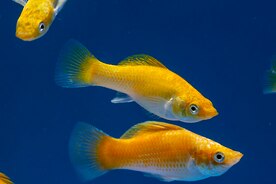
Mollies
Different Varieties: Black Molly, Sail fin Molly, Lyre tail Molly, white molly, Dalmatian molly, Balloon Molly
Size: Mollies vary greatly in size depending from small black or balloon Mollies to large Sail fin Mollies. This translates to 1.5 inches to 4 inches (4- 10 cm.)
Scientific Name: Poecilia sphenops, Poecilia latipinna, Poecilia velifera Family - Poeciliidae
Natural Habitat: Fresh, brackish, and coastal waters from the Carolinas to Texas and the Yucatan Peninsula of Mexico
Description: Many shape, fin and color varieties are available. Including these color varieties; Silver, Gold Dust, mottled and speckled or "Dalmatian" varieties, and the popular black molly. Shapes (fins) include Sail fin, Lyre tail, and “Balloon” Mollies.
Recommended Tank Size and Temperament: Mollies are from the same scientific Genus as Guppies and Endlers Livebearers ( Poecilia), with generally similar temperaments (although I have seen some more Aggressive Sail fin Mollies that I would compare more to s swordtail in temperament). The recommended minimum tank size ranges from 2.5 gallons per same sex pair (more for a mated pair) all the way up to a 20 gallon aquarium for some of the larger Sail fin Mollies.
Water Parameters, similar to other livebearers, however essential mineral cations are even more important to success.
Please read the following article for much more about Molly water parameters and preventing the easily preventable "Molly Shimmy Disease":
Reference: Molly Habitat, Water Parameters, Shimmy Disease
If salt is used with mollies & other livebearers, I have had MUCH better results using a quality marine salt so as to supply other minerals salts as well as electrolytes. The best most bio-available is the AAP/Tropic Marin Reef Salt which can be purchased by the pound.
Product Resource: AAP-Tropic Marine Pro Reef Salt from Germany, Also for Mollies, etc.
Typical food: Mollies are omnivores and will eat most foods offered with a bit more plant material than other livebearers.
For this reason, Mollies in particular need high quality vegetable matter in their diet to thrive such as found in AAP Custom Omnivore Crumbles or Spirulina 20. This can be supplemented with Seaweed such as Ocean Nutrition's excellent seaweed food product (see our suggested food source section at the end of the article)
These foods should be supplemented with live, frozen or Freeze Dried worms, Brine Shrimp or similar foods when ever possible
Please follow or jump to the end of the page for a listing & links to some of the fish foods suggested in this article:
SUGGESTED FISH FOOD RESOURCES
Breeding: check information about breeding in swordtails
What to do before the female gives birth?
There are basically 3 ways:
1- put the female in a 3 way breeder or a net
2- leave the female in the main tank, if you have lots of plants
3- you have your own breeding tank you can put your female in
What to do when the fry are born?
on option 1-
Take the female out and leave the fry where they are and feed them with First Bites or flake food ground into powder 3-5 times a day for the first 5 days, then you can feed them flake food just crushed with the fingers, big enough for them to eat. Be careful not to put to much food in there. These breeders get dirty very fast with a brown layer on the bottom. What I always did, was taking a new soft paintbrush and cleaning it out from the bottom, for excess food on the water, I took a paper towel to take it out, that way the fry don't get to much disturbed.
on option 2-
Usually you won't find your fry until they're about 1 week old, because they can hide really well, and they will feed from whatever they will find. In my experience, fry born in the tank grows much faster and healthier then the fry in the breeders, because they have just more room to swim around and grow
on option 3-
You will take out the female after she's done birthing and raise the fry there by themselves.
Which option is better
on option 1-
Is the worst, because the breeders are so small, and they really only stress out the females, and if the female is put in there to early, it usually causes abortion or early birth and a lot of the fry is underdeveloped
on option 2-
Is only good if you have enough live plants for the fry, so they can hide, or if you only want to have a few survivors
In my experience if kept in a community, 5-15 fry’s generally survive
on option 3-
Is ultimately the best, if you really plan on keeping as many fry as possible, the fry can grow without being in fear of bigger fish eating them.
Tropical’s which are best not to be put into a breeder because of their size:
Dalmatian molly
Swordtails
Balloon mollies
any molly for that matter
When can I put my fry back into the main tank from a breeder or breeder tank?
The common rule is, when the baby fish are bigger than the biggest fish mouth in the tank!!
With mollies, that's usually when they're around 3-4 weeks old
with guppies, that's usually when they're around 4-6 weeks old
with dwarf Platies, that's usually when they're around 6-8 weeks old
Contributors Notes: by "Carl" (from Everything Aquatic)
I have kept and bred a variety of Mollies over the years both personally and professionally (for aquarium maintenance clients).
Mollies can be very rewarding, but also difficult if water parameters are poor. This can result in dies offs from opportunistic diseases and Shimmies.
While the addition of salt to Molly aquariums is widely practiced and often helpful, what I have found both in observation and in actual controlled tests to be more important is the addition/replenishment of essential positive mineral ions.
For me, no other product works better than this than the Wonder Shell, in particular the unique version which our maintenance company has used now for a few decades and is ONLY available at American Aquarium Products (AAP).
Another issue common to Mollies AND Guppies is curvature of the spine.
This is often simply from age, however this is also very often caused by poor water mineralization and/or diet.
Make sure your mollies water has regular addition of minerals, such as with a Wonder Shell.
As well the use of fish foods high in Spirulina algae (such as Spirulina 20) will often aid in the addition of essential minerals internally as well.
Further Reading Reference:
Aquarium Chemistry; Depletion of Mineral Ions
Contributor notes: See "Murdock's" contributor notes under Platies, as they can apply here as well.
Size: Mollies vary greatly in size depending from small black or balloon Mollies to large Sail fin Mollies. This translates to 1.5 inches to 4 inches (4- 10 cm.)
Scientific Name: Poecilia sphenops, Poecilia latipinna, Poecilia velifera Family - Poeciliidae
Natural Habitat: Fresh, brackish, and coastal waters from the Carolinas to Texas and the Yucatan Peninsula of Mexico
Description: Many shape, fin and color varieties are available. Including these color varieties; Silver, Gold Dust, mottled and speckled or "Dalmatian" varieties, and the popular black molly. Shapes (fins) include Sail fin, Lyre tail, and “Balloon” Mollies.
Recommended Tank Size and Temperament: Mollies are from the same scientific Genus as Guppies and Endlers Livebearers ( Poecilia), with generally similar temperaments (although I have seen some more Aggressive Sail fin Mollies that I would compare more to s swordtail in temperament). The recommended minimum tank size ranges from 2.5 gallons per same sex pair (more for a mated pair) all the way up to a 20 gallon aquarium for some of the larger Sail fin Mollies.
Water Parameters, similar to other livebearers, however essential mineral cations are even more important to success.
Please read the following article for much more about Molly water parameters and preventing the easily preventable "Molly Shimmy Disease":
Reference: Molly Habitat, Water Parameters, Shimmy Disease
If salt is used with mollies & other livebearers, I have had MUCH better results using a quality marine salt so as to supply other minerals salts as well as electrolytes. The best most bio-available is the AAP/Tropic Marin Reef Salt which can be purchased by the pound.
Product Resource: AAP-Tropic Marine Pro Reef Salt from Germany, Also for Mollies, etc.
Typical food: Mollies are omnivores and will eat most foods offered with a bit more plant material than other livebearers.
For this reason, Mollies in particular need high quality vegetable matter in their diet to thrive such as found in AAP Custom Omnivore Crumbles or Spirulina 20. This can be supplemented with Seaweed such as Ocean Nutrition's excellent seaweed food product (see our suggested food source section at the end of the article)
These foods should be supplemented with live, frozen or Freeze Dried worms, Brine Shrimp or similar foods when ever possible
Please follow or jump to the end of the page for a listing & links to some of the fish foods suggested in this article:
SUGGESTED FISH FOOD RESOURCES
Breeding: check information about breeding in swordtails
What to do before the female gives birth?
There are basically 3 ways:
1- put the female in a 3 way breeder or a net
2- leave the female in the main tank, if you have lots of plants
3- you have your own breeding tank you can put your female in
What to do when the fry are born?
on option 1-
Take the female out and leave the fry where they are and feed them with First Bites or flake food ground into powder 3-5 times a day for the first 5 days, then you can feed them flake food just crushed with the fingers, big enough for them to eat. Be careful not to put to much food in there. These breeders get dirty very fast with a brown layer on the bottom. What I always did, was taking a new soft paintbrush and cleaning it out from the bottom, for excess food on the water, I took a paper towel to take it out, that way the fry don't get to much disturbed.
on option 2-
Usually you won't find your fry until they're about 1 week old, because they can hide really well, and they will feed from whatever they will find. In my experience, fry born in the tank grows much faster and healthier then the fry in the breeders, because they have just more room to swim around and grow
on option 3-
You will take out the female after she's done birthing and raise the fry there by themselves.
Which option is better
on option 1-
Is the worst, because the breeders are so small, and they really only stress out the females, and if the female is put in there to early, it usually causes abortion or early birth and a lot of the fry is underdeveloped
on option 2-
Is only good if you have enough live plants for the fry, so they can hide, or if you only want to have a few survivors
In my experience if kept in a community, 5-15 fry’s generally survive
on option 3-
Is ultimately the best, if you really plan on keeping as many fry as possible, the fry can grow without being in fear of bigger fish eating them.
Tropical’s which are best not to be put into a breeder because of their size:
Dalmatian molly
Swordtails
Balloon mollies
any molly for that matter
When can I put my fry back into the main tank from a breeder or breeder tank?
The common rule is, when the baby fish are bigger than the biggest fish mouth in the tank!!
With mollies, that's usually when they're around 3-4 weeks old
with guppies, that's usually when they're around 4-6 weeks old
with dwarf Platies, that's usually when they're around 6-8 weeks old
Contributors Notes: by "Carl" (from Everything Aquatic)
I have kept and bred a variety of Mollies over the years both personally and professionally (for aquarium maintenance clients).
Mollies can be very rewarding, but also difficult if water parameters are poor. This can result in dies offs from opportunistic diseases and Shimmies.
While the addition of salt to Molly aquariums is widely practiced and often helpful, what I have found both in observation and in actual controlled tests to be more important is the addition/replenishment of essential positive mineral ions.
For me, no other product works better than this than the Wonder Shell, in particular the unique version which our maintenance company has used now for a few decades and is ONLY available at American Aquarium Products (AAP).
Another issue common to Mollies AND Guppies is curvature of the spine.
This is often simply from age, however this is also very often caused by poor water mineralization and/or diet.
Make sure your mollies water has regular addition of minerals, such as with a Wonder Shell.
As well the use of fish foods high in Spirulina algae (such as Spirulina 20) will often aid in the addition of essential minerals internally as well.
Further Reading Reference:
Aquarium Chemistry; Depletion of Mineral Ions
Contributor notes: See "Murdock's" contributor notes under Platies, as they can apply here as well.
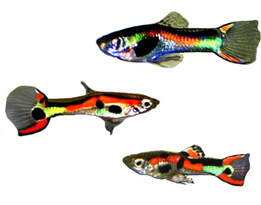
Endlers
Size: females 1 -1.5 inches (3-4 cm.) males ¾ to 1 inch (about 2 cm.)
Scientific Name: Poecilia endlers (Not yet confirmed)
Natural Habitat: The Endlers Livebearer were first discovered in Laguna de los Patos (Lagoon of the Ducks) in northeastern Venezuela by Franklin Bond in 1937, although they remained in anonymity until Professor John Endler “re-discovered” the Endlers Livebearer in 1975 and returned with specimens where they became popular in Germany. The Endlers livebearer is found in its natural habitat with wild guppies and although they can interbreed, the offspring are often sterile due to being of a different species.
Description: Many Variations, with males generally displaying more color and longer fins (but this is not a positive identification of male vs. female)
Recommended Tank Size and Temperament: Endlers Live Bearers due well in small aquariums, even desk top aquariums, although filtration and heat is strongly recommended (required IMO)
Water Parameters: Temperature: 23 -28 °C (73.4-82.4°F)
Typical food: Endlers Liverbearers are omnivores and will eat most foods offered, however similar to guppies they need high quality vegetable matter such as Spirulina in their diet to thrive, for this reason a food such as AP Custom Omnivore or Spirulina 20 Fish Food Flake or similar would be a good basic diet. A varied diet is often a good idea as with most fish, this would include frozen or live foods such as Grindal Worms, Brine Shrimp or FD Foods such as FD Brine Shrimp or Blood Worms.
Breeding: same as all above livebearers; only difference, Endler's Livebearers generally won’t eat their young.
Contributor Notes:
Please see the web site below for further information & resources:
Endlers.com
SUGGESTED FISH FOOD RESOURCES
*Clay Neighbor's Custom All Natural Dehydrated Fish Food from AAP
This is THE Premium Fish Food that has no equal with nutrient optimization and no heat processing to drive off nutrients unlike ALL OTHER fish foods.
Optimized energy & fiber levels to promote longer lifespan, which is especially important with livebearers which have shorter/faster life spans.
Spirulina 20 Highly Digestible Fish Food Flakes
Rain One FD Blood Worms, Brine Shrimp, more
Hikari First Bites specifically formulated to provide any newborn fish fry the exacting nutritional balance
Seaweed Salad, Excellent supplemental food for most livebearers, especially Mollies
Scientific Name: Poecilia endlers (Not yet confirmed)
Natural Habitat: The Endlers Livebearer were first discovered in Laguna de los Patos (Lagoon of the Ducks) in northeastern Venezuela by Franklin Bond in 1937, although they remained in anonymity until Professor John Endler “re-discovered” the Endlers Livebearer in 1975 and returned with specimens where they became popular in Germany. The Endlers livebearer is found in its natural habitat with wild guppies and although they can interbreed, the offspring are often sterile due to being of a different species.
Description: Many Variations, with males generally displaying more color and longer fins (but this is not a positive identification of male vs. female)
Recommended Tank Size and Temperament: Endlers Live Bearers due well in small aquariums, even desk top aquariums, although filtration and heat is strongly recommended (required IMO)
Water Parameters: Temperature: 23 -28 °C (73.4-82.4°F)
Typical food: Endlers Liverbearers are omnivores and will eat most foods offered, however similar to guppies they need high quality vegetable matter such as Spirulina in their diet to thrive, for this reason a food such as AP Custom Omnivore or Spirulina 20 Fish Food Flake or similar would be a good basic diet. A varied diet is often a good idea as with most fish, this would include frozen or live foods such as Grindal Worms, Brine Shrimp or FD Foods such as FD Brine Shrimp or Blood Worms.
Breeding: same as all above livebearers; only difference, Endler's Livebearers generally won’t eat their young.
Contributor Notes:
Please see the web site below for further information & resources:
Endlers.com
SUGGESTED FISH FOOD RESOURCES
*Clay Neighbor's Custom All Natural Dehydrated Fish Food from AAP
This is THE Premium Fish Food that has no equal with nutrient optimization and no heat processing to drive off nutrients unlike ALL OTHER fish foods.
Optimized energy & fiber levels to promote longer lifespan, which is especially important with livebearers which have shorter/faster life spans.
Spirulina 20 Highly Digestible Fish Food Flakes
Rain One FD Blood Worms, Brine Shrimp, more
Hikari First Bites specifically formulated to provide any newborn fish fry the exacting nutritional balance
Seaweed Salad, Excellent supplemental food for most livebearers, especially Mollies