

Saltwater Aquarium Care | Basics to Advanced Information | Reef Fish
Saltwater Chemistry, Lighting, Filtration, Substrate, More
Saltwater Chemistry, Lighting, Filtration, Substrate, More
Overview
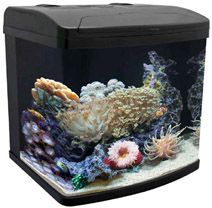
This article is for basic to advanced information and resources intended for a marine fish aquarium (Basic, FOWLR, Nano Reefs, & some advanced information).
The intention of this article is to provide up to date starter information for the beginner as well as some more advanced information.
For more advanced marine reef keepers, please follow the many links/resources in this article to much more researched, in depth and advanced information.
This article is based on my experience of keeping and professionally maintaining marine fish (and reef) aquariums for over 35 years with one of the largest aquarium maintenance companies in Los Angeles, California.
Most of my marine and freshwater customers had been with other services and had regular losses of their fish until we were referred to them.
I will update and expand this article on a regular basis, especially the more in depth articles linked from this more basic article, such as:
Aquarium Lighting; Facts & Information.
Please note that due to new information and methods being developed/explored, that there is no one best way to set up a marine/reef aquarium, so I would be cautious of anyone who states as such (in my experience these persons are generally closed minded to new research such as in aquarium Redox, which generally makes their opinions less than helpful in keeping a healthy marine aquarium).
In fact I have a marine aquarium set-up combinations page, for which ALL methods work quite well and I update this regularly page/article too. However I will admit that this is page is not an exhaustive article as to different methods to set up a healthy marine fish or reef aquarium as there are other proven methods as well.
My point is to be cautious of anyone that states theirs is the only way to set up a marine aquarium or trashes one of the methods I outline here as these persons generally are not open minded enough or spend any real research, often which requires research outside the aquarium keeping hobby to understand why certain methods work and others do not.
I have used the majority of the methods and tested outlined here.
This is also not to say that some methods should not be used such as this example method;
A canister filter set up for aerobic bio filtration Only (run without any de-nitrification), without any deep oolite sand, seasoned live rock and lighting provided by basic T8 lights and then expect to keep corals alive, as you likely will fail!
That said, I have also seen many articles or popular YouTube Videos that show elaborate systems that I will not question their viability of these systems, however a viewer/reader of these videos/articles might assume that these elaborate systems are the only way to go, which is simply NOT true!
I certainly recommend the best system you can afford.
However this does not mean multiple Metal Halide Lights & a chiller WHEN a modern LED (not a cheap LED), T5 or T2 system may work for less money (& complication).
Or an elaborate wet/dry system which may likely be an out of date nitrate factory when not properly installed.
Or an advanced pump dosing system, calcium reactor, etc. when often good maintenance practices along with a simple DIY drip dosing system and other methods may work equally well (or better).
Please see this article for my suggestions as to marine fish (& reef) tank set up combinations (again all these methods work, but are not the "end all" of methods either):
Saltwater Set Up/Systems Suggestions
For beginners, a small aquarium such as a Nano Reef can be difficult, as many problems can accelerate in an aquarium this small. For this reason I recommend a first marine aquarium to be at least 40 gallons (although I know of many aquarists who have started with smaller aquariums and have been successful!)
As a final note to readers, in particular those who are "thinking" of starting a marine aquarium, PLEASE know your budget as more times than I care to count have I seen new marine aquarium keepers fail only because they got into a hobby that was beyond their budget.
Many times a marine aquarium can be kept in a budget that is not much more than a freshwater aquarium of the same size, but this is for a fish only or fish with live rock (often called a FOWLR tank).
If you are considering a full reef tank (corals, clams, etc), the costs are considerably more than a fish only tank.
In fact the lighting alone on say a 60 gallon reef tank can cost as much as a complete 60 gallon freshwater set up, this of coarse is assuming the correct lighting needed such as LED, T5, Metal Halide, SHO or a combination there-of.
The intention of this article is to provide up to date starter information for the beginner as well as some more advanced information.
For more advanced marine reef keepers, please follow the many links/resources in this article to much more researched, in depth and advanced information.
This article is based on my experience of keeping and professionally maintaining marine fish (and reef) aquariums for over 35 years with one of the largest aquarium maintenance companies in Los Angeles, California.
Most of my marine and freshwater customers had been with other services and had regular losses of their fish until we were referred to them.
I will update and expand this article on a regular basis, especially the more in depth articles linked from this more basic article, such as:
Aquarium Lighting; Facts & Information.
Please note that due to new information and methods being developed/explored, that there is no one best way to set up a marine/reef aquarium, so I would be cautious of anyone who states as such (in my experience these persons are generally closed minded to new research such as in aquarium Redox, which generally makes their opinions less than helpful in keeping a healthy marine aquarium).
In fact I have a marine aquarium set-up combinations page, for which ALL methods work quite well and I update this regularly page/article too. However I will admit that this is page is not an exhaustive article as to different methods to set up a healthy marine fish or reef aquarium as there are other proven methods as well.
My point is to be cautious of anyone that states theirs is the only way to set up a marine aquarium or trashes one of the methods I outline here as these persons generally are not open minded enough or spend any real research, often which requires research outside the aquarium keeping hobby to understand why certain methods work and others do not.
I have used the majority of the methods and tested outlined here.
This is also not to say that some methods should not be used such as this example method;
A canister filter set up for aerobic bio filtration Only (run without any de-nitrification), without any deep oolite sand, seasoned live rock and lighting provided by basic T8 lights and then expect to keep corals alive, as you likely will fail!
That said, I have also seen many articles or popular YouTube Videos that show elaborate systems that I will not question their viability of these systems, however a viewer/reader of these videos/articles might assume that these elaborate systems are the only way to go, which is simply NOT true!
I certainly recommend the best system you can afford.
However this does not mean multiple Metal Halide Lights & a chiller WHEN a modern LED (not a cheap LED), T5 or T2 system may work for less money (& complication).
Or an elaborate wet/dry system which may likely be an out of date nitrate factory when not properly installed.
Or an advanced pump dosing system, calcium reactor, etc. when often good maintenance practices along with a simple DIY drip dosing system and other methods may work equally well (or better).
Please see this article for my suggestions as to marine fish (& reef) tank set up combinations (again all these methods work, but are not the "end all" of methods either):
Saltwater Set Up/Systems Suggestions
For beginners, a small aquarium such as a Nano Reef can be difficult, as many problems can accelerate in an aquarium this small. For this reason I recommend a first marine aquarium to be at least 40 gallons (although I know of many aquarists who have started with smaller aquariums and have been successful!)
As a final note to readers, in particular those who are "thinking" of starting a marine aquarium, PLEASE know your budget as more times than I care to count have I seen new marine aquarium keepers fail only because they got into a hobby that was beyond their budget.
Many times a marine aquarium can be kept in a budget that is not much more than a freshwater aquarium of the same size, but this is for a fish only or fish with live rock (often called a FOWLR tank).
If you are considering a full reef tank (corals, clams, etc), the costs are considerably more than a fish only tank.
In fact the lighting alone on say a 60 gallon reef tank can cost as much as a complete 60 gallon freshwater set up, this of coarse is assuming the correct lighting needed such as LED, T5, Metal Halide, SHO or a combination there-of.
Filtration- Including Substrate and Live Rock
Good filtration is a must for a successful marine aquarium. Admittedly with Pico or Nano marine/reef constant water nearly 100% water changes can sometimes suffice, but not for aquariums much over 15 gallons as larger water changes become impractical and costly (assuming the use of a truly quality salt such as AAPs Tropic Marin)
With good & complete filtration, along with a quality salt and regular marine reef chemistry maintenance, water changes can be very minima, often as little as 5%, just enough to run a vacuum to remove any organic mulm.
I recommend a MINIMUM Marine Fish Aquarium filtration turnover rate of 4-5 times tank volume per hour (combined all filters) minimum, however your in tank circulation (counting power heads, air stones, etc.) should be OVER 8-10 times per hour.
Suggested COMBINED (filters and circulation devices) Aquarium Turnover Rates (per hour):
8-10 times for an average fish only aquarium
10-12 times for an average FOWLR or very basic reef tank (FOWLR = Fish only with live rock)
14-20 times for an Advanced Reef Tank
With Acropora and Montipora coral, which are often at the top of the reef, these can require as high as 40-50 times per hour combined circulation!
DO NOT make the incorrect assumption that the wave activity at the top of the reef means corals, anemones, etc that live in more protected areas of the reef need the same flow rates as Acropora and Montipora corals.
Filtration is also performed by Live Rock, so please read more in the section about the Berlin Method (Live Rock) further down in this article.
Canister filters are excellent for their capacity, but can these filters can become what are sometimes called "Nitrate factories" if not set up correctly and/or rinsed very regularly (once per week unless de-nitrification or nitrate absorbing media is used such as Matrix or Purigen).
A few Canister Filters I recommend are the Eheim, Filstar, and the Magnum (for certain applications).
In fact, because of this "Nitrate Factory" tendency; Canister Filters should not be used for delicate Marine Reef tanks as sold "out of the box".
To improve on the “nitrate factory” aspect of these filters do NOT use bio balls or ceramic filter media, rather I prefer to add products such as SeaChem Matrix and/or volumes of cured live rock crumbles/rubble or volcanic rock to my canister filters.
For higher flow rates I recommend larger crumbles (to provide less penetration of oxygen into the live rock so as to insure anaerobic bacterial growth). 2-5 centimeters is what I have generally used in live rock rubble size (smaller sizes are best for slower flow rates such as 150 gph, while larger sizes are best for higher flow rates such as 500+ gph).
When loaded up with Matrix, Live Rock Crumbles, and/or Volcanic Rock as well as serviced regularly, your Canister filter should be perfectly fine for Marine Reef Aquarium Use (often even removing nitrates)!!
Please read the canister filter section of this article:
Aquarium Filtration; Canister Filters for further information.
Product Resources:
Matrix- For the removal of Nitrogenous Waste, including Nitrate
Purigen- Controls Ammonia, Nitrites and Nitrates
Volcanic/Lava Rock
With good & complete filtration, along with a quality salt and regular marine reef chemistry maintenance, water changes can be very minima, often as little as 5%, just enough to run a vacuum to remove any organic mulm.
I recommend a MINIMUM Marine Fish Aquarium filtration turnover rate of 4-5 times tank volume per hour (combined all filters) minimum, however your in tank circulation (counting power heads, air stones, etc.) should be OVER 8-10 times per hour.
Suggested COMBINED (filters and circulation devices) Aquarium Turnover Rates (per hour):
8-10 times for an average fish only aquarium
10-12 times for an average FOWLR or very basic reef tank (FOWLR = Fish only with live rock)
14-20 times for an Advanced Reef Tank
With Acropora and Montipora coral, which are often at the top of the reef, these can require as high as 40-50 times per hour combined circulation!
DO NOT make the incorrect assumption that the wave activity at the top of the reef means corals, anemones, etc that live in more protected areas of the reef need the same flow rates as Acropora and Montipora corals.
Filtration is also performed by Live Rock, so please read more in the section about the Berlin Method (Live Rock) further down in this article.
Canister filters are excellent for their capacity, but can these filters can become what are sometimes called "Nitrate factories" if not set up correctly and/or rinsed very regularly (once per week unless de-nitrification or nitrate absorbing media is used such as Matrix or Purigen).
A few Canister Filters I recommend are the Eheim, Filstar, and the Magnum (for certain applications).
In fact, because of this "Nitrate Factory" tendency; Canister Filters should not be used for delicate Marine Reef tanks as sold "out of the box".
To improve on the “nitrate factory” aspect of these filters do NOT use bio balls or ceramic filter media, rather I prefer to add products such as SeaChem Matrix and/or volumes of cured live rock crumbles/rubble or volcanic rock to my canister filters.
For higher flow rates I recommend larger crumbles (to provide less penetration of oxygen into the live rock so as to insure anaerobic bacterial growth). 2-5 centimeters is what I have generally used in live rock rubble size (smaller sizes are best for slower flow rates such as 150 gph, while larger sizes are best for higher flow rates such as 500+ gph).
When loaded up with Matrix, Live Rock Crumbles, and/or Volcanic Rock as well as serviced regularly, your Canister filter should be perfectly fine for Marine Reef Aquarium Use (often even removing nitrates)!!
Please read the canister filter section of this article:
Aquarium Filtration; Canister Filters for further information.
Product Resources:
Matrix- For the removal of Nitrogenous Waste, including Nitrate
Purigen- Controls Ammonia, Nitrites and Nitrates
Volcanic/Lava Rock
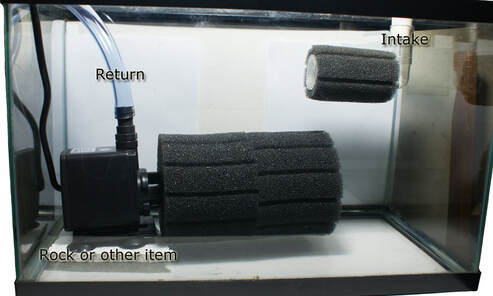
Wet/Dry filters are good, but as most are designed, these are usually are poor mechanical filters and can become nitrate factories as with canister filters.
If Bio Balls are used, the bio ball media in them also should be rinsed regularly in de-chlorinated water to prevent a buildup of organic material, increasing nitrates.
As with canister filters, most wet/dry set ups are not Advanced Reef capable due to high nitrate and phosphate issues. I prefer to use broken cured live rock, volcanic rock pieces, or SeaChem Matrix instead of bio balls.
Another idea instead of the use of bio balls, etc. is the use of Hydro Pond Sponge Filters, which is easily and quickly rinsed to prevent nitrate producing organic buildup along with a deep sand bed to aid in de-nitrification (removal of nitrates), along with such a wet/dry sump filter, live rock crumbles or volcanic rock can also be "piled" around the pick up "sump sponge".
Product Reference:
Hydro Pond 3 & 4 Sump Filter
Sump systems with live rock, plants, and sponge filters work well.
The live rock is excellent for aerobic filtration (ammonia and nitrite removal) and anaerobic filtration (nitrate removal).
The live plants and green algae are good for nitrogen fixing and phosphate removal.
While the sponge filter is a simple to clean aerobic bio-filter and mechanical filter (although make sure and rinse the sponge regularly or it can become a nitrate factory).
Common Wet/Dry systems are what are considered open loop systems which employs a sump (as compared to a closed loop that has no open sump).
Sponges- The benefit with the use of a Sponge filter (such as in a sump, in place of bio balls or simply as a stand alone filter) is the ease of rinsing, which if rinsed regularly, will nullify any possibility of becoming a nitrate factory and will increase your aquariums ability to bounce back quickly from spikes in wastes (resulting in very undesirable spikes in ammonia).
In fact controlled tests using sponge filters that were rinsed regularly, I observed increases at most of .05 in nitrates and when these sponge filters were taken out of the aquarium system, much more dangerous spikes in ammonia occurred, proving that with the correct aerobic filter combined with the correct care, the "nitrate factory" phenomenon can be avoided and better nitrification can be achieved with no instances of ammonia spikes as would be present in tanks with only live rock and protein skimmers!
It is also noteworthy that there was no increase whatever in nitrates in these tests when a deep sand bed or de-nitrifying filter media was also present
Product Resource:
Aquarium Sponge Filters by AAP, Lustar
If Bio Balls are used, the bio ball media in them also should be rinsed regularly in de-chlorinated water to prevent a buildup of organic material, increasing nitrates.
As with canister filters, most wet/dry set ups are not Advanced Reef capable due to high nitrate and phosphate issues. I prefer to use broken cured live rock, volcanic rock pieces, or SeaChem Matrix instead of bio balls.
Another idea instead of the use of bio balls, etc. is the use of Hydro Pond Sponge Filters, which is easily and quickly rinsed to prevent nitrate producing organic buildup along with a deep sand bed to aid in de-nitrification (removal of nitrates), along with such a wet/dry sump filter, live rock crumbles or volcanic rock can also be "piled" around the pick up "sump sponge".
Product Reference:
Hydro Pond 3 & 4 Sump Filter
Sump systems with live rock, plants, and sponge filters work well.
The live rock is excellent for aerobic filtration (ammonia and nitrite removal) and anaerobic filtration (nitrate removal).
The live plants and green algae are good for nitrogen fixing and phosphate removal.
While the sponge filter is a simple to clean aerobic bio-filter and mechanical filter (although make sure and rinse the sponge regularly or it can become a nitrate factory).
Common Wet/Dry systems are what are considered open loop systems which employs a sump (as compared to a closed loop that has no open sump).
Sponges- The benefit with the use of a Sponge filter (such as in a sump, in place of bio balls or simply as a stand alone filter) is the ease of rinsing, which if rinsed regularly, will nullify any possibility of becoming a nitrate factory and will increase your aquariums ability to bounce back quickly from spikes in wastes (resulting in very undesirable spikes in ammonia).
In fact controlled tests using sponge filters that were rinsed regularly, I observed increases at most of .05 in nitrates and when these sponge filters were taken out of the aquarium system, much more dangerous spikes in ammonia occurred, proving that with the correct aerobic filter combined with the correct care, the "nitrate factory" phenomenon can be avoided and better nitrification can be achieved with no instances of ammonia spikes as would be present in tanks with only live rock and protein skimmers!
It is also noteworthy that there was no increase whatever in nitrates in these tests when a deep sand bed or de-nitrifying filter media was also present
Product Resource:
Aquarium Sponge Filters by AAP, Lustar
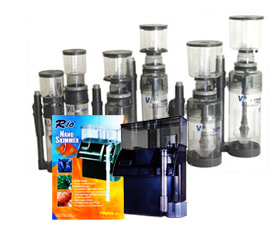
Protein Skimmers employ a chamber with a column of fine bubbles. Surface tension attracts organic waste to the bubbles & carries it through the column (this is called foam fractionation); then it is "skimmed" into a collection cup.
Let me add one point about protein skimmers is that although protein skimmers are a useful tool in marine and reef aquariums (a tool I recommend too), they are not essential for all marine aquariums, especially fish only tanks.
Many older Skimmers abilities are often over rated, as I have kept dozens of marine aquariums with and without them and excellent results in the marine/reef aquariums without them (providing other methods of filtration are employed such as deep sand bed).
However, that said they are still a useful tool and will state that keeping an advanced reef tank is much easier when a well designed Protein Skimmer is employed, especially with the newer generation skimmers now available that are more efficient with less hassles.
Often problems I have seen with aquarists using Protein skimmers is that they are not set up and running properly so the cup is collecting foam. Also many aquarists will not empty the cup frequently enough which then makes the skimmer useless.
If you choose to have advanced level marine aquarium, please look carefully at the Skimmer you purchase and make all the adjustments necessary once set up for proper foam refraction.
The Professional V2 Skimmer is a quality protein skimmer incorporating a patented venture injection system which optimizes the perfect mixture of fine air bubbles and water and ensures intensive, efficient skimming and the removal of proteins and other harmful toxins (waste) from the aquarium.
The addition of an Ozone Generator to a venturi style skimmer (such as the V2 Skim noted above) further increases efficiency and add the benefit of killing many pathogens.
There are other good Skimmers also available (such as the ultra high end Warner Marine mesh wheel and the ASM) as well as many “dogs” that are often still quite expensive.
Finally as to Skimmers, since they work via foam refraction on organic proteins in the water, they will not collect much foam in a new marine aquarium, so do not get discouraged if yours does not work well in the first few weeks after initial setup.
For MUCH more information about Protein Skimmers (including types), please see this updated article in Aquarium Answers:
Aquarium Protein Skimmers- Review, venturi, aspirating, spray injection
Let me add one point about protein skimmers is that although protein skimmers are a useful tool in marine and reef aquariums (a tool I recommend too), they are not essential for all marine aquariums, especially fish only tanks.
Many older Skimmers abilities are often over rated, as I have kept dozens of marine aquariums with and without them and excellent results in the marine/reef aquariums without them (providing other methods of filtration are employed such as deep sand bed).
However, that said they are still a useful tool and will state that keeping an advanced reef tank is much easier when a well designed Protein Skimmer is employed, especially with the newer generation skimmers now available that are more efficient with less hassles.
Often problems I have seen with aquarists using Protein skimmers is that they are not set up and running properly so the cup is collecting foam. Also many aquarists will not empty the cup frequently enough which then makes the skimmer useless.
If you choose to have advanced level marine aquarium, please look carefully at the Skimmer you purchase and make all the adjustments necessary once set up for proper foam refraction.
The Professional V2 Skimmer is a quality protein skimmer incorporating a patented venture injection system which optimizes the perfect mixture of fine air bubbles and water and ensures intensive, efficient skimming and the removal of proteins and other harmful toxins (waste) from the aquarium.
The addition of an Ozone Generator to a venturi style skimmer (such as the V2 Skim noted above) further increases efficiency and add the benefit of killing many pathogens.
There are other good Skimmers also available (such as the ultra high end Warner Marine mesh wheel and the ASM) as well as many “dogs” that are often still quite expensive.
Finally as to Skimmers, since they work via foam refraction on organic proteins in the water, they will not collect much foam in a new marine aquarium, so do not get discouraged if yours does not work well in the first few weeks after initial setup.
For MUCH more information about Protein Skimmers (including types), please see this updated article in Aquarium Answers:
Aquarium Protein Skimmers- Review, venturi, aspirating, spray injection
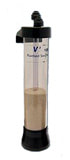
Fluidized Sand Bed Filters/Reactors: These filters are an excellent compliment to Protein Skimmers, especially when no other bio filters are utilized.
These filters/Reactors can be set up with oolitic sand (for aerobic filtration, and slow addition of minerals/alkalinity), phosphate removers, carbon, and nitrate removing products such as AAP/NPX Bio-Plastics.
The result is that these filters can become "nitrate and phosphate removing machines" (a Protein Skimmer or SeaChem Purigen is recommended for best results).
Another positive of the AAP Fluidised Sand Bed Filter/Reactor is that it has the option of utilizing oolitic sand filter media, which works somewhat similar to a Calcium reactor by maintaining the calcium and alkalinity levels of an aquarium via the constant friction of the oolitic sand containing calcium and some carbonates as well.
In our world of the more fancy equipment the better for our marine/reef aquarium, these filters stand out in their simplicity and effectiveness.
The facts are, I changed out many tanks with elaborate systems, including an entire aquarium store fish room for more simple systems that included a good FSB Reactor/Filter (with Bioplastics), a Protein Skimmer, basic mechanical and/or pre-filter and recorded improvement in water parameters including nitrates, alkalinity, and calcium maintenance.!!!
The bottom line is this is a piece of equipment that I VERY STRONGLY SUGGEST for ANY Reef Aquarium!!
Product Resources:
AAP/TMC Fluidized Sand Bed Reactors/Filters
AAP/NPX Bioplastics Nitrate & Phosphate Reducing Polymer Media
These filters/Reactors can be set up with oolitic sand (for aerobic filtration, and slow addition of minerals/alkalinity), phosphate removers, carbon, and nitrate removing products such as AAP/NPX Bio-Plastics.
The result is that these filters can become "nitrate and phosphate removing machines" (a Protein Skimmer or SeaChem Purigen is recommended for best results).
Another positive of the AAP Fluidised Sand Bed Filter/Reactor is that it has the option of utilizing oolitic sand filter media, which works somewhat similar to a Calcium reactor by maintaining the calcium and alkalinity levels of an aquarium via the constant friction of the oolitic sand containing calcium and some carbonates as well.
In our world of the more fancy equipment the better for our marine/reef aquarium, these filters stand out in their simplicity and effectiveness.
The facts are, I changed out many tanks with elaborate systems, including an entire aquarium store fish room for more simple systems that included a good FSB Reactor/Filter (with Bioplastics), a Protein Skimmer, basic mechanical and/or pre-filter and recorded improvement in water parameters including nitrates, alkalinity, and calcium maintenance.!!!
The bottom line is this is a piece of equipment that I VERY STRONGLY SUGGEST for ANY Reef Aquarium!!
Product Resources:
AAP/TMC Fluidized Sand Bed Reactors/Filters
AAP/NPX Bioplastics Nitrate & Phosphate Reducing Polymer Media
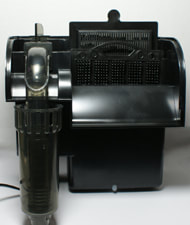
Hang on back filters (HOB) are very limited for saltwater aquariums, but can be used too, especially if combined with other bio filters (in particular de-nitrifying bio filters) and Protein Skimmers.
Internal filters are also limited, but once again are good combined with others or used as above.
Be careful with some of the claims by many in the aquarium hobby about bio wheels, although they do work; no where near to what the hype say and are only marginal marine filters, please see this article:
Do Bio Wheels Really Work.
There are many reasonable choices if you choose HOB filter as part of your saltwater filter system.
The AAP Tidal and similar but lower quality Hagen Aqua Clear models have room for additional filter media for de-nitrification or absorbing nitrates & phosphates.
Many others such as the Economy SunSun HBL 701 can have one side of their double chamber removed and replaced with "live rock crumbles", SeaChem Matrix, SeaChem Purigen, volcanic rock or similar for better phosphate/nitrate removal & de-nitrification.
Additional Product Resource:
AAP Tidal High Capacity Premium HOB Filter
See product references earlier in article for Matrix, Purigen, etc.
Ecosystem mud filtration is effective for nitrate removal (due to the large colonies of anaerobic bacteria), they can be simpler to use than a protein Skimmer in my opinion (although Ecosystems do work, I believe they are over hyped for fish aquaria).
Unfortunately there are many stores pushing these systems as the end all of filtration, and they are not. They are a good part of a system, but should not be the only part. Good mechanical, other types of bio filtration and especially germicidal filtration are also important.
Power Heads along with wave makers (for more high tech reef tanks) are an excellent addition (& IMO a necessary addition when live rock is used as a major source of bio filtration) as these can add valuable cross currents and can be directed in ways that make for tidal zone like circulation. Many such as the Rio 1000 Powerhead, Pump are quite versatile and fit many small to medium saltwater tanks well.
Internal filters are also limited, but once again are good combined with others or used as above.
Be careful with some of the claims by many in the aquarium hobby about bio wheels, although they do work; no where near to what the hype say and are only marginal marine filters, please see this article:
Do Bio Wheels Really Work.
There are many reasonable choices if you choose HOB filter as part of your saltwater filter system.
The AAP Tidal and similar but lower quality Hagen Aqua Clear models have room for additional filter media for de-nitrification or absorbing nitrates & phosphates.
Many others such as the Economy SunSun HBL 701 can have one side of their double chamber removed and replaced with "live rock crumbles", SeaChem Matrix, SeaChem Purigen, volcanic rock or similar for better phosphate/nitrate removal & de-nitrification.
Additional Product Resource:
AAP Tidal High Capacity Premium HOB Filter
See product references earlier in article for Matrix, Purigen, etc.
Ecosystem mud filtration is effective for nitrate removal (due to the large colonies of anaerobic bacteria), they can be simpler to use than a protein Skimmer in my opinion (although Ecosystems do work, I believe they are over hyped for fish aquaria).
Unfortunately there are many stores pushing these systems as the end all of filtration, and they are not. They are a good part of a system, but should not be the only part. Good mechanical, other types of bio filtration and especially germicidal filtration are also important.
Power Heads along with wave makers (for more high tech reef tanks) are an excellent addition (& IMO a necessary addition when live rock is used as a major source of bio filtration) as these can add valuable cross currents and can be directed in ways that make for tidal zone like circulation. Many such as the Rio 1000 Powerhead, Pump are quite versatile and fit many small to medium saltwater tanks well.
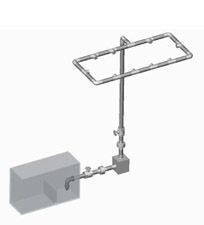
For larger aquariums and especially sumps, the Rio 1700 Pump, Rio 26HF or especially larger pumps are also useful especially for sumps, or unique applications such as the one pictured here at this site: “Water Return Manifold” (sometimes referred to as closed loop system, although this is not my definition, a better definition is just that; a water return manifold).
This manifold allows for higher flows without areas of extreme turbulence.
Product References:
Rio Plus 1000, Multi Purpose Aquarium Water Pumps
Rio Plus 1700, Multi Purpose Aquarium Water Pumps
Rio 26HF Pump
This manifold allows for higher flows without areas of extreme turbulence.
Product References:
Rio Plus 1000, Multi Purpose Aquarium Water Pumps
Rio Plus 1700, Multi Purpose Aquarium Water Pumps
Rio 26HF Pump
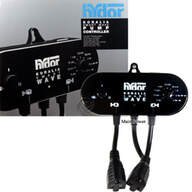
Wave Makers/Controller can be a good idea if you have sensitive corals that live in tidal zones.
I personally have not had good luck with oscillating power heads, instead I recommend electronic wave monitors that you plug your power heads into such as the excellent "Hydor Smart Wave Controller" (pictured).
Product Resource:
Hydor Smart Wave Controller
If you use one of these devices make sure and use a quality power head that will restart as many of the power heads available (Aqua Clear, Marineland) have a poor track record from my extensive experience.
The Seio Propeller/Ciculation pumps are excellent for this application.
If you do not have these sensitive coral, simply having a few well placed power heads at different angles will do the trick.
I personally have not had good luck with oscillating power heads, instead I recommend electronic wave monitors that you plug your power heads into such as the excellent "Hydor Smart Wave Controller" (pictured).
Product Resource:
Hydor Smart Wave Controller
If you use one of these devices make sure and use a quality power head that will restart as many of the power heads available (Aqua Clear, Marineland) have a poor track record from my extensive experience.
The Seio Propeller/Ciculation pumps are excellent for this application.
If you do not have these sensitive coral, simply having a few well placed power heads at different angles will do the trick.
|
|
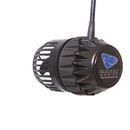
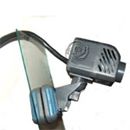
Propeller Pumps are gaining popularity, originally in high tech reef tanks.
These are generally my first choice now for moving current in a marine aquarium and especially when used with Wave Controllers. This includes through live rock situated in a marine aquarium essentially acting as a secondary filter (or even primary filter).
These unique pumps deliver high flow in a wide angle with low heat, and high electrical efficiency.
Propeller pumps install easily onto any aquarium with a glass or acrylic thickness that is 3/4" and below.
Some propeller pumps use magnetic force to transmit energy through the aquarium wall, while others have a similar self contained design to the mag-drive pumps, which results in a better over all flow inside the aquarium compared to the more laminar flow of power heads.
I would caution that while popular, the new models that use magnetic force to transmit energy through the aquarium wall, these also can have issues of debris or misalignment causing a failure of the impeller that is much more rare in traditional "well impeller" designs with power directly to the pump.
These energy efficient pumps have come down much in price from the originals, first with the Hydro Koralia, then with the slightly better designed and better price/value Seio Propeller Pumps
The SunSun Circulation/Propeller Pumps are worth of mention as these perform about as well as any other propeller pump at a much lower cost, due in part to the fact many of these are supplied with suction cups instead of magnets to keep the costs down.
Product Reference:
Seio & SunSun Propeller Pumps; Superior Design Glass Mount Aquarium Circulation Pump
These are generally my first choice now for moving current in a marine aquarium and especially when used with Wave Controllers. This includes through live rock situated in a marine aquarium essentially acting as a secondary filter (or even primary filter).
These unique pumps deliver high flow in a wide angle with low heat, and high electrical efficiency.
Propeller pumps install easily onto any aquarium with a glass or acrylic thickness that is 3/4" and below.
Some propeller pumps use magnetic force to transmit energy through the aquarium wall, while others have a similar self contained design to the mag-drive pumps, which results in a better over all flow inside the aquarium compared to the more laminar flow of power heads.
I would caution that while popular, the new models that use magnetic force to transmit energy through the aquarium wall, these also can have issues of debris or misalignment causing a failure of the impeller that is much more rare in traditional "well impeller" designs with power directly to the pump.
These energy efficient pumps have come down much in price from the originals, first with the Hydro Koralia, then with the slightly better designed and better price/value Seio Propeller Pumps
The SunSun Circulation/Propeller Pumps are worth of mention as these perform about as well as any other propeller pump at a much lower cost, due in part to the fact many of these are supplied with suction cups instead of magnets to keep the costs down.
Product Reference:
Seio & SunSun Propeller Pumps; Superior Design Glass Mount Aquarium Circulation Pump
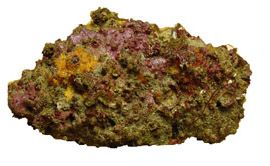
Live Rock & The Berlin Filter Method:
The Berlin Filter method as I apply it is the use of cured live rock (A) In the tank, or (B) In sumps or other filters.
This method is extremely effective for fish and reef (including Nano Reef), especially when combined with one or more other filters such as a mud filter, protein skimmer, or even a fluidized filter. The advantage here is the colonies of aerobic and anaerobic bacteria, as well as the many creatures and coralline algae that are housed in the live rock.
I generally recommend 1-2 pounds of live rock per gallon (or see the link tot he more accurate substrate calculator further down in this section).
Even if the "Live Rock" is only inside your main aquarium, as long as circulation is provided through and around it with a water pump and/or well placed air stones within your live rock "reef", this counts as a bio filter.
As noted earlier, the water pump I generally recommend is a propeller pump for this application due to their smooth water flow.
In other words since I recommend filter redundancy of at least two or more filters in a marine aquarium; this live rock "reef" can be one of those filters!
The Berlin filter Method is also used in closed loop systems similar to wet/dry filter systems, except without the sump.
The Berlin Filter method as I apply it is the use of cured live rock (A) In the tank, or (B) In sumps or other filters.
This method is extremely effective for fish and reef (including Nano Reef), especially when combined with one or more other filters such as a mud filter, protein skimmer, or even a fluidized filter. The advantage here is the colonies of aerobic and anaerobic bacteria, as well as the many creatures and coralline algae that are housed in the live rock.
I generally recommend 1-2 pounds of live rock per gallon (or see the link tot he more accurate substrate calculator further down in this section).
Even if the "Live Rock" is only inside your main aquarium, as long as circulation is provided through and around it with a water pump and/or well placed air stones within your live rock "reef", this counts as a bio filter.
As noted earlier, the water pump I generally recommend is a propeller pump for this application due to their smooth water flow.
In other words since I recommend filter redundancy of at least two or more filters in a marine aquarium; this live rock "reef" can be one of those filters!
The Berlin filter Method is also used in closed loop systems similar to wet/dry filter systems, except without the sump.
|
|
-Sand Substrate:
Another similar aspect to “Live Rock” is “Live Sand”, although I have to part ways with the fad as to the live part (not the sand part), almost 100% of the packaged live sand I have tested is not all that "live", especially as to aerobic nitrifying bacteria as this bacteria goes dormant in a sealed bag to the point of not being able to revive in a useful/practical way. As well, unlike live rock, even when added to the aquarium the sand is not normally exposed to much water flow and oxygen.
Thus for both reasons live sand does pretty much ZERO for getting your aquarium nitrogen/bio cycle going, making live sand an expensive gimmick to avoid.
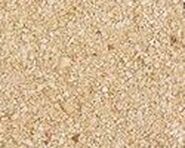
I suggest starting with dry oolitic sand, your aquarium will develop anaerobic de-nitrification in about 4-8 weeks.
Back to sand, for a reef marine aquarium I highly recommend a deep sand bed of at least 3 inches, with 4-5 inches preferred. For fish only, 2-4 inches works well in most aquariums.
This substrate should consist of #00 oolite sized coral sand (NOT Playground sand which is NOT at all the same in chemical composition!).
This sand bed will act as a “home” for de-nitrifying anaerobic bacteria to live in an oxygen free environment and aid in keeping your nitrate levels low.
For more about anaerobic bacteria, please see this article:
Aquarium Nitrogen Cycle- Denitrification
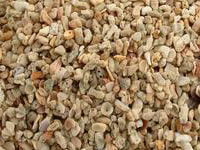
On top of the fine sand I recommend a layer of #3 crushed coral for improved nitrification and better waste control, not to mention easier vacuuming.
This top layer will generally trap large debris and detritus and will also allow some aerobic nitrifying bacteria to grow as well, however the main purpose is for trapping debris for vastly easier vacuuming, not to mention a more aesthetically pleasing aquarium than with sand alone.
The FACTS ARE; while this method is not as well known of late due to lack of mentoring in the hobby, it is a proven method of marine aquarium substrate that keeps organics more minimized resulting in more stable pH and alkalinity!!
I generally only vacuum the top crushed coral layer, only occasionally pushing the vacuum bell deeper into the sand so as to not disrupt too much of the anaerobic bacteria in the sand (I often vacuum deeply in the front areas of the tank so as to remove unsightly algae (“mold”) that will grow here.
I should note that occasionally pushing the vacuum in to different areas of the sand bed (rotating areas with each cleaning) will control potential buildup of mulm or other undesirable organic decomposition as well as to prevent sulfur-reduction.
For more about aquarium cleaning, please see this article:
Aquarium Cleaning
Here is a very helpful online sand/substrate calculator:
Substrate-Gravel-Sand Calculator
Another similar aspect to “Live Rock” is “Live Sand”, although I have to part ways with the fad as to the live part (not the sand part), almost 100% of the packaged live sand I have tested is not all that "live", especially as to aerobic nitrifying bacteria as this bacteria goes dormant in a sealed bag to the point of not being able to revive in a useful/practical way. As well, unlike live rock, even when added to the aquarium the sand is not normally exposed to much water flow and oxygen.
Thus for both reasons live sand does pretty much ZERO for getting your aquarium nitrogen/bio cycle going, making live sand an expensive gimmick to avoid.
I suggest starting with dry oolitic sand, your aquarium will develop anaerobic de-nitrification in about 4-8 weeks.
Back to sand, for a reef marine aquarium I highly recommend a deep sand bed of at least 3 inches, with 4-5 inches preferred. For fish only, 2-4 inches works well in most aquariums.
This substrate should consist of #00 oolite sized coral sand (NOT Playground sand which is NOT at all the same in chemical composition!).
This sand bed will act as a “home” for de-nitrifying anaerobic bacteria to live in an oxygen free environment and aid in keeping your nitrate levels low.
For more about anaerobic bacteria, please see this article:
Aquarium Nitrogen Cycle- Denitrification
On top of the fine sand I recommend a layer of #3 crushed coral for improved nitrification and better waste control, not to mention easier vacuuming.
This top layer will generally trap large debris and detritus and will also allow some aerobic nitrifying bacteria to grow as well, however the main purpose is for trapping debris for vastly easier vacuuming, not to mention a more aesthetically pleasing aquarium than with sand alone.
The FACTS ARE; while this method is not as well known of late due to lack of mentoring in the hobby, it is a proven method of marine aquarium substrate that keeps organics more minimized resulting in more stable pH and alkalinity!!
I generally only vacuum the top crushed coral layer, only occasionally pushing the vacuum bell deeper into the sand so as to not disrupt too much of the anaerobic bacteria in the sand (I often vacuum deeply in the front areas of the tank so as to remove unsightly algae (“mold”) that will grow here.
I should note that occasionally pushing the vacuum in to different areas of the sand bed (rotating areas with each cleaning) will control potential buildup of mulm or other undesirable organic decomposition as well as to prevent sulfur-reduction.
For more about aquarium cleaning, please see this article:
Aquarium Cleaning
Here is a very helpful online sand/substrate calculator:
Substrate-Gravel-Sand Calculator
|
|
More about Live Rock:
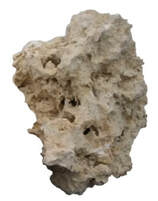
Make sure it is cured, many stores sell live rock right after it comes to them, and this is not cured live rock.
Live rock arrives to the stores wrapped in newspaper and mostly dead by this time, it takes up to 6 weeks to fully cure live rock.
Fully cured live rock has the benefit of containing aerobic and anaerobic bacteria; the later helps convert nitrates to nitrogen which is released harmlessly into the atmosphere. Cured live rock also contains many “creatures”, many of which are both interesting and beneficial.
You may also create your own using rock high in calcium carbonate (coralline rock), or even dead coral skeletons by placing them under healthy cured live rock for a couple of months in a healthy aquarium (reef set ups are best for this). It is important to use very porous rock for the proper benefits of live rock.
The use of ancient calcium carbonate rocks (from a rock quarry) is a great way to preserve the reefs as well since you are not depleting reefs for your aquarium!.
Another similar idea is to purchase Aqua Cultured Live Rock where they perform this task for you.
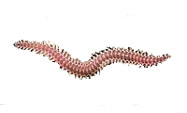
An important point as to live rock, is to soak and “swish” your rock around in a bucket of de-chlorinated freshwater for 5 minutes. This has worked well for me and kills Oodinium pathogens and many (not all) creatures such polychaete worms (AKA Bristleworms) will fall out for your removal. Creatures you want to keep that fall out during this process can be simply placed back into the main aquarium. This has worked well for me over the years at minimizing disease risk and introduction of undesirables.
Reference:
Fireworm, Polychaete Worms
A method I prefer is to break the live rock into smaller chunks and place these in back mounted wet/dry filters, canister filters or even remove the filter media from an AAP Tidal, Aqua Clear 500, or similar HOB Filter and instead use these 1-2” live rock pieces, this can make for a simple application of the Berlin Filter Method.
Volcanic rock can also work well in the above mentioned filters due to its porous nature (although volcanic rock does not aid in adding minerals or buffering the water).
Make sure it is cured, many stores sell live rock right after it comes to them, and this is not cured live rock.
Live rock arrives to the stores wrapped in newspaper and mostly dead by this time, it takes up to 6 weeks to fully cure live rock.
Fully cured live rock has the benefit of containing aerobic and anaerobic bacteria; the later helps convert nitrates to nitrogen which is released harmlessly into the atmosphere. Cured live rock also contains many “creatures”, many of which are both interesting and beneficial.
You may also create your own using rock high in calcium carbonate (coralline rock), or even dead coral skeletons by placing them under healthy cured live rock for a couple of months in a healthy aquarium (reef set ups are best for this). It is important to use very porous rock for the proper benefits of live rock.
The use of ancient calcium carbonate rocks (from a rock quarry) is a great way to preserve the reefs as well since you are not depleting reefs for your aquarium!.
Another similar idea is to purchase Aqua Cultured Live Rock where they perform this task for you.
An important point as to live rock, is to soak and “swish” your rock around in a bucket of de-chlorinated freshwater for 5 minutes. This has worked well for me and kills Oodinium pathogens and many (not all) creatures such polychaete worms (AKA Bristleworms) will fall out for your removal. Creatures you want to keep that fall out during this process can be simply placed back into the main aquarium. This has worked well for me over the years at minimizing disease risk and introduction of undesirables.
Reference:
Fireworm, Polychaete Worms
A method I prefer is to break the live rock into smaller chunks and place these in back mounted wet/dry filters, canister filters or even remove the filter media from an AAP Tidal, Aqua Clear 500, or similar HOB Filter and instead use these 1-2” live rock pieces, this can make for a simple application of the Berlin Filter Method.
Volcanic rock can also work well in the above mentioned filters due to its porous nature (although volcanic rock does not aid in adding minerals or buffering the water).
Nitrate & Phosphate Removal Filtration:
The methods and filtration discussed above often are enough for nitrate and phosphate control for most fish and FOWLR (fish only with live rock) tanks; HOWEVER with many reef enthusiasts, the above methods may not be enough to keep nitrates and phosphates at levels condusive to healthy corals, and other delicate reef life.
In fact it is in my experience (and many others) that occasionally poor lighting gets blamed for poor coral health, when if fact a closer examination of water parameters show clearly unacceptable nitrate and phosphate levels.
Here are just a few Suggestions (not an exhaustive list):
(A) Mud Filters, Deep Sand: As mentioned above, Mud filters can be very useful for Nitrate removal as are deep sand beds or even a DIY deep sand bed “filter” in which you can use a bucket or another small aquarium.
For a simple DIY picture and better description of this idea, please follow this link:
DIY Deep Sand Bucket/Tank
For a Mud Filter (and diagram) please see my article:
AQUARIUM FILTRATION; Mud Filters, Algae Scrubbers, Refugiums
(B) Live Rock Crumbles, Matrix: Also as mentioned above; a lot of cured live rock is extremely helpful for nitrate removal, this should also be used as live rock crumbles in wet/dry, canister or similar filters in place of bio balls or ceramic media which tend to promote high nitrates. Volcanic Rock can be substituted for live rock crumbles/scrap.
A commercial product that is even more efficient at utilizing de-nitrifying anaerobic bacteria for nitrate removal SeaChem Matrix.
Matrix has macropores that are ideally sized for the support of nitrifying and denitrifying bacteria. This allows Matrix to remove nitrate along with ammonia and nitrite, simultaneously and in the same filter.
Product Resources:
Matrix- Supports colonies of Nitrifying and Denitrifying Bacteria
Volcanic Rock
See also this article:
“Filter Media; Chemical, biological, mechanical”.
(C) Protein Skimmers: these devices remove protein based organics before entering the nitrogen cycle, thus never allowing nitrates to form.
(D) Use of products such as NPX BioPlastics: that promote anaerobic bio activity that in turns greatly lowers nitrates and phosphates. This product works by promoting Anaerobic zones to develop within the pellets, resulting de-nitrification there-in. As well, when "churned" in a Fluidized Filter or Reactor, bacteria develop on the pellet surfaces and slough off, then these bacteria can be removed with a protein skimmer or serve as planktonic food for corals, clams, sponges and other filter-feeding invertebrates.
This is a similar concept to "Vodka Dosing" however it is superior in its simplicity and less issues of yellowing of water (which can be reduced with SeaChem Purigen which also aid in nitrate control).
For more about Vodka Dosing and other means of Nitrate removal, please reference this article:
Aquarium Nitrates; Removal, Prevention
Product Resources:
NPX Bioplastics Nitrate & Phosphate Reducing Polymer Media
Next Generation TMC Fluidized Sand Bed Aquarium Filter
(E)Use of Synthetic Adsorption such as products like API Phos-Zorb or SeaChem Purigen:
Purigen controls ammonia, nitrites and often hard to control nitrates by removing nitrogenous organic waste that would otherwise release these harmful compounds, with minimal impact on trace elements.
Carbon can also be used as it too is an adsorbent, although there are some issues when used in combination with Protein Skimmers as well as release of contaminants, so please refer to this article for more:
“Aquarium Answers; Carbon”
Product Resources:
API Phos-Zorb Phosphate Remover
SeaChem Purigen; Premium Synthetic Adsorbent
Nirox Premium Carbon for Aquariums
The methods and filtration discussed above often are enough for nitrate and phosphate control for most fish and FOWLR (fish only with live rock) tanks; HOWEVER with many reef enthusiasts, the above methods may not be enough to keep nitrates and phosphates at levels condusive to healthy corals, and other delicate reef life.
In fact it is in my experience (and many others) that occasionally poor lighting gets blamed for poor coral health, when if fact a closer examination of water parameters show clearly unacceptable nitrate and phosphate levels.
Here are just a few Suggestions (not an exhaustive list):
(A) Mud Filters, Deep Sand: As mentioned above, Mud filters can be very useful for Nitrate removal as are deep sand beds or even a DIY deep sand bed “filter” in which you can use a bucket or another small aquarium.
For a simple DIY picture and better description of this idea, please follow this link:
DIY Deep Sand Bucket/Tank
For a Mud Filter (and diagram) please see my article:
AQUARIUM FILTRATION; Mud Filters, Algae Scrubbers, Refugiums
(B) Live Rock Crumbles, Matrix: Also as mentioned above; a lot of cured live rock is extremely helpful for nitrate removal, this should also be used as live rock crumbles in wet/dry, canister or similar filters in place of bio balls or ceramic media which tend to promote high nitrates. Volcanic Rock can be substituted for live rock crumbles/scrap.
A commercial product that is even more efficient at utilizing de-nitrifying anaerobic bacteria for nitrate removal SeaChem Matrix.
Matrix has macropores that are ideally sized for the support of nitrifying and denitrifying bacteria. This allows Matrix to remove nitrate along with ammonia and nitrite, simultaneously and in the same filter.
Product Resources:
Matrix- Supports colonies of Nitrifying and Denitrifying Bacteria
Volcanic Rock
See also this article:
“Filter Media; Chemical, biological, mechanical”.
(C) Protein Skimmers: these devices remove protein based organics before entering the nitrogen cycle, thus never allowing nitrates to form.
(D) Use of products such as NPX BioPlastics: that promote anaerobic bio activity that in turns greatly lowers nitrates and phosphates. This product works by promoting Anaerobic zones to develop within the pellets, resulting de-nitrification there-in. As well, when "churned" in a Fluidized Filter or Reactor, bacteria develop on the pellet surfaces and slough off, then these bacteria can be removed with a protein skimmer or serve as planktonic food for corals, clams, sponges and other filter-feeding invertebrates.
This is a similar concept to "Vodka Dosing" however it is superior in its simplicity and less issues of yellowing of water (which can be reduced with SeaChem Purigen which also aid in nitrate control).
For more about Vodka Dosing and other means of Nitrate removal, please reference this article:
Aquarium Nitrates; Removal, Prevention
Product Resources:
NPX Bioplastics Nitrate & Phosphate Reducing Polymer Media
Next Generation TMC Fluidized Sand Bed Aquarium Filter
(E)Use of Synthetic Adsorption such as products like API Phos-Zorb or SeaChem Purigen:
Purigen controls ammonia, nitrites and often hard to control nitrates by removing nitrogenous organic waste that would otherwise release these harmful compounds, with minimal impact on trace elements.
Carbon can also be used as it too is an adsorbent, although there are some issues when used in combination with Protein Skimmers as well as release of contaminants, so please refer to this article for more:
“Aquarium Answers; Carbon”
Product Resources:
API Phos-Zorb Phosphate Remover
SeaChem Purigen; Premium Synthetic Adsorbent
Nirox Premium Carbon for Aquariums
|
|
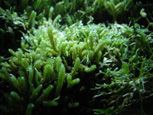
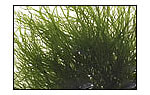
(F) Plants or green algae: such as Caulerpa algae (although Caulerpa Algae is now regulated in many areas) or Green Gracillaria directly in the aquarium or in a DIY Refugium/Mud Filter or Algae Scrubber.
(G) Pre-Filters: such as ATIs "Filter Max" on filter intakes; these are easily rinsed and remove organic matter before it can go thru the nitrogen cycle.
Product Resource:
ATI Filter Max Sponge Pre-Filters
(H) Improved cleaning methods: such as where by as much decomposing organics are removed. The use of battery powered sludge removing vacuums such as the Eheim Sludge Remover Gravel Vacuum is very useful, especially in tanks without deep sand beds.
Product Resource:
Eheim Sludge Extractor Battery Gravel Vacuum
Please Reference this article for more about Nitrate Control from Aquarium Answers:
Aquarium Nitrates- Removal & Prevention
(G) Pre-Filters: such as ATIs "Filter Max" on filter intakes; these are easily rinsed and remove organic matter before it can go thru the nitrogen cycle.
Product Resource:
ATI Filter Max Sponge Pre-Filters
(H) Improved cleaning methods: such as where by as much decomposing organics are removed. The use of battery powered sludge removing vacuums such as the Eheim Sludge Remover Gravel Vacuum is very useful, especially in tanks without deep sand beds.
Product Resource:
Eheim Sludge Extractor Battery Gravel Vacuum
Please Reference this article for more about Nitrate Control from Aquarium Answers:
Aquarium Nitrates- Removal & Prevention
Lighting
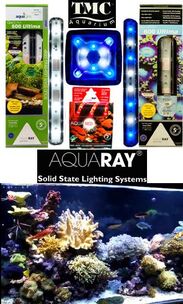
A 6,400K to 20,000 K Daylight bulb is a start for most basic marine aquarium applications.
The 6400K light will provide the important PAR best for marine fish, however in tanks over 12 inches deep, a higher Kelvin light will be needed.
Actinic Blue can help balance out the 400-550nm range of the EVEN MORE important PUR necessary for corals and provides a nice “blue” appearance to your aquarium.
Reference:
Aquarium Lighting, PUR
For more advanced reef keeping you will need to consider the power compacts, the T-5, HO T5, the Metal Halide, the even newer LED, SHO bulbs, or for small tanks, the T2 lights (T2s are not suggested for advanced reef tanks).
LED light fixtures in particular are making major advances on a yearly basis (if not even quicker) in both performance and price (when compared apples to apples such as in terms of focused lumens, lumens per watt, PAR, much less wasted light energy in the yellow/green spectrum & more).
So before you write these off as too expensive (which is NOT true when you consider the 50,000 hour life span and vastly less electricity used over the life of the system when compared to often over rated HO T5 light systems or similar) or simply that LEDs are not that good based on anecdotal advice.
It is also noteworthy that there are many LED fixtures now flooding the market they have copious amounts of emitters to make up for the lack of patent rights to the best emitters, please be careful and do not fall for one of these poor quality LED Lights.
My latest study with Red Slime Algae really showed me how much these LED lights can do for an aquarium.
For Fish only or FOWLR, the T2 lights, SHO, or Marine White LED are excellent choices for good lighting that can be upgraded (especially the T2 and LED are easily added to).
With Reef tanks, multiples of the Reef White, Ocean Blue 1500s, Marine or Fiji Blue LEDs combined with Metal Halide, or T5 lights are excellent modern technology choices.
Product References:
AquaRay New Technology LED Reef Lighting Systems
SHO; Super High output Lights
Lighting is a VERY complex subject, deserving a full article, so I STRONGLY RECOMMEND reading this extremely in depth article for vastly more aquarium lighting information from basics to complex:
“AQUARIUM LIGHTING, Kelvin, Nanometers, PAR and more.”
The above is a MUST read article for ANY advanced Marine/Reef Aquarium keeper & a recommended read for basic saltwater aquarium keepers!
It is noteworthy that for fish only or fish with some invertebrates such as Arrow Crabs, lighting is not as important a factor, however if you plan to have anemones, soft coral and especially hard corals, good lighting is a MAJOR factor in their success!
Also note that although the 3-5 watt per gallon rule is a reasonable starting point for older technology lights, this is an archaic rule of thumb as there are so many other factors that are also important such as lumens per watt, useful energy, tank depth, and more. Again PLEASE read the above article for more about lighting!
If you are keeping reef tank with Photosynthetically sensitive corals, another important point that is often missed is specimen placement. I would move corals as high up in the water column as possible, this especially important with SPS corals (short polyp stony corals) where placement on the rocks directly under your lights is even more essential.
Sometimes in conversations with reef enthusiasts that are questioning different lighting systems/ideas is that it is often missed that the most high light requiring corals (such as SPS) do not grow 100 feet (30 meters) below the surface in the reefs and that these corals will be just below the surface, so regardless of the lights you choose, placement is extremely important.
Even less light demanding tropical reef building corals species are restricted to the euphotic zone, the region in the ocean where light penetrates to a depth of approximately 230 feet or 70 meters.
I should also note that with SPS corals in my own experience, placement low or even in substrate that I have observed the corals getting “eaten away” by bacteria from the bottom up; while this is an anecdotal observation of mine (as other factors were not tested in a controlled scientific study), it is still consideration in coral specimen placement.
The bottom line is that you can have the best lighting system that money can buy, but poor placement of specimens can make it all for not.
Finally do not inadvertently block your light by having dirty salt covered bulbs, or even by placing a glass top between your lights and aquarium water. A glass top is OK for most fish but often can block essential light energy necessary for corals.
I recommend using a Polycarbonate top (if a top is even required) as glass block more than 60% of beneficial UVA rays. Polycarbonate only blocks about 8-10% (provided it is kept clean). Most retailers specializing in plastics can custom cut you such a top from Polycarbonate.
The 6400K light will provide the important PAR best for marine fish, however in tanks over 12 inches deep, a higher Kelvin light will be needed.
Actinic Blue can help balance out the 400-550nm range of the EVEN MORE important PUR necessary for corals and provides a nice “blue” appearance to your aquarium.
Reference:
Aquarium Lighting, PUR
For more advanced reef keeping you will need to consider the power compacts, the T-5, HO T5, the Metal Halide, the even newer LED, SHO bulbs, or for small tanks, the T2 lights (T2s are not suggested for advanced reef tanks).
LED light fixtures in particular are making major advances on a yearly basis (if not even quicker) in both performance and price (when compared apples to apples such as in terms of focused lumens, lumens per watt, PAR, much less wasted light energy in the yellow/green spectrum & more).
So before you write these off as too expensive (which is NOT true when you consider the 50,000 hour life span and vastly less electricity used over the life of the system when compared to often over rated HO T5 light systems or similar) or simply that LEDs are not that good based on anecdotal advice.
It is also noteworthy that there are many LED fixtures now flooding the market they have copious amounts of emitters to make up for the lack of patent rights to the best emitters, please be careful and do not fall for one of these poor quality LED Lights.
My latest study with Red Slime Algae really showed me how much these LED lights can do for an aquarium.
For Fish only or FOWLR, the T2 lights, SHO, or Marine White LED are excellent choices for good lighting that can be upgraded (especially the T2 and LED are easily added to).
With Reef tanks, multiples of the Reef White, Ocean Blue 1500s, Marine or Fiji Blue LEDs combined with Metal Halide, or T5 lights are excellent modern technology choices.
Product References:
AquaRay New Technology LED Reef Lighting Systems
SHO; Super High output Lights
Lighting is a VERY complex subject, deserving a full article, so I STRONGLY RECOMMEND reading this extremely in depth article for vastly more aquarium lighting information from basics to complex:
“AQUARIUM LIGHTING, Kelvin, Nanometers, PAR and more.”
The above is a MUST read article for ANY advanced Marine/Reef Aquarium keeper & a recommended read for basic saltwater aquarium keepers!
It is noteworthy that for fish only or fish with some invertebrates such as Arrow Crabs, lighting is not as important a factor, however if you plan to have anemones, soft coral and especially hard corals, good lighting is a MAJOR factor in their success!
Also note that although the 3-5 watt per gallon rule is a reasonable starting point for older technology lights, this is an archaic rule of thumb as there are so many other factors that are also important such as lumens per watt, useful energy, tank depth, and more. Again PLEASE read the above article for more about lighting!
If you are keeping reef tank with Photosynthetically sensitive corals, another important point that is often missed is specimen placement. I would move corals as high up in the water column as possible, this especially important with SPS corals (short polyp stony corals) where placement on the rocks directly under your lights is even more essential.
Sometimes in conversations with reef enthusiasts that are questioning different lighting systems/ideas is that it is often missed that the most high light requiring corals (such as SPS) do not grow 100 feet (30 meters) below the surface in the reefs and that these corals will be just below the surface, so regardless of the lights you choose, placement is extremely important.
Even less light demanding tropical reef building corals species are restricted to the euphotic zone, the region in the ocean where light penetrates to a depth of approximately 230 feet or 70 meters.
I should also note that with SPS corals in my own experience, placement low or even in substrate that I have observed the corals getting “eaten away” by bacteria from the bottom up; while this is an anecdotal observation of mine (as other factors were not tested in a controlled scientific study), it is still consideration in coral specimen placement.
The bottom line is that you can have the best lighting system that money can buy, but poor placement of specimens can make it all for not.
Finally do not inadvertently block your light by having dirty salt covered bulbs, or even by placing a glass top between your lights and aquarium water. A glass top is OK for most fish but often can block essential light energy necessary for corals.
I recommend using a Polycarbonate top (if a top is even required) as glass block more than 60% of beneficial UVA rays. Polycarbonate only blocks about 8-10% (provided it is kept clean). Most retailers specializing in plastics can custom cut you such a top from Polycarbonate.
Test Kits
An ammonia, nitrite, nitrate, ph, Hydrometer, and KH (Alkalinity) test kit are all important. For reef aquariums a Calcium and Magnesium Test Kit are also highly recommended.
For a more in depth article about Aquarium Test Kits, please follow this link:
AQUARIUM TEST KITS; what they are used for and their importance.
For a more in depth article about Aquarium Test Kits, please follow this link:
AQUARIUM TEST KITS; what they are used for and their importance.
Water Chemistry
Start with a good marine salt and mix it to a specific gravity of 1.019- 1.024 for fish (although there is some controversy as to whether fish should be kept in a slightly hyposalinity environment, my admittedly less than scientific records on this subject seem to indicate a slightly lower incidence of some parasitic diseases).
A specific gravity of 1.023- 1.026 is best for reef tanks/invertebrates.
Be careful with too high or too low of a specific gravity as this can cause problems with proper osmotic function in fish.
I have heard of persons being told to keep their marine fish at a constant specific gravity of 1.012 to prevent or treat disease, this is too low except for treatment of Cyptocaryon and even then the salinity must be lowered carefully and raised carefully when done treating, along with a stable pH!.
For more information about osmotic function in fish, please read this article:
“How Do Fish Drink; Proper Osmotic Function”
Use Reverse Osmosis (RO) water to top off with for evaporation to prevent potential buildup of nitrate or other elements from tap water or even well water. If tap water is used (which again I recommend avoiding), use water conditioners such as “Prime” to neutralize the chlorine, chloramines and heavy metals. For much more about tap water please see this article:
For Reef tanks I recommend using ONLY RO water for mixing of salt as well, as the Phosphates and Nitrates can quickly build up after continued water changes with tap water containing nitrates and especially phosphates (PO4).
Further Reference:
“What Should I know about Tap Water for my Aquarium? From Chlorine and Chloramines to Phosphates”
Product References:
TMC Professional Reverse Osmosis Aquarium Water Filter System
SeaChem Prime: Removes Ammonia, Chlorine, Chloramines, Toxic Ammonia
A specific gravity of 1.023- 1.026 is best for reef tanks/invertebrates.
Be careful with too high or too low of a specific gravity as this can cause problems with proper osmotic function in fish.
I have heard of persons being told to keep their marine fish at a constant specific gravity of 1.012 to prevent or treat disease, this is too low except for treatment of Cyptocaryon and even then the salinity must be lowered carefully and raised carefully when done treating, along with a stable pH!.
For more information about osmotic function in fish, please read this article:
“How Do Fish Drink; Proper Osmotic Function”
Use Reverse Osmosis (RO) water to top off with for evaporation to prevent potential buildup of nitrate or other elements from tap water or even well water. If tap water is used (which again I recommend avoiding), use water conditioners such as “Prime” to neutralize the chlorine, chloramines and heavy metals. For much more about tap water please see this article:
For Reef tanks I recommend using ONLY RO water for mixing of salt as well, as the Phosphates and Nitrates can quickly build up after continued water changes with tap water containing nitrates and especially phosphates (PO4).
Further Reference:
“What Should I know about Tap Water for my Aquarium? From Chlorine and Chloramines to Phosphates”
Product References:
TMC Professional Reverse Osmosis Aquarium Water Filter System
SeaChem Prime: Removes Ammonia, Chlorine, Chloramines, Toxic Ammonia
Salt to Use
What I can tell readers is both from experience (but this is subjective) and some of the science behind synthetic sea salts for aquarium use.
The Science:
While it may seem logical to match the ocean element per element in the exact same ratios, this is not the case!
Why? Because the aquarium is a closed system UNLIKE the ocean and thus requires certain elements and/or compounds in higher concentrations that are used up rapidly in this closed environment.
Examples would be Calcium and carbonate buffers.
The best salts have a buffering system and maintain a pH level and have been adapted to accommodate the use of calcium supplements or calcium reactors to help simplify the care of even very sensitive hard corals.
These salt mixes would safely maintain elevated levels of calcium, magnesium, strontium, and iodide for healthy coral growth.
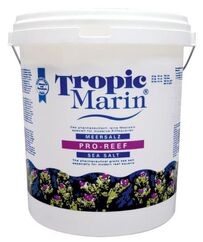
Premium Tropic Marin Pro Reef Sea Salt from Germany
My Opinion/Experience (based primarily for optimum conditions):
Tropic Marin Pro Reef Salt from Germany is THE best
With the use of AAP Tropic Marine Reef Salt, you will find that it dissolves IMMEDIATELY (unlike almost all other salt mixes). MORE IMPORTANTLY you will find more stable reef chemistry and less need to add expensive supplements.
However these are good too:
Red Sea Salt Mix
Instant Ocean Reef Crystals
SeaChem Sea Salt
Finally, I have used Coralife Sea Salt mix in generally undemanding environments (such as FOWLR tanks) and found no issues (this is an inexpensive salt)
I HAVE had real issues with Marine Environment Sea Salt and "Real Ocean Water" (sold at Petco); I would avoid these products.
General Marine Aquarium Water Parameters to maintain:
The Science:
While it may seem logical to match the ocean element per element in the exact same ratios, this is not the case!
Why? Because the aquarium is a closed system UNLIKE the ocean and thus requires certain elements and/or compounds in higher concentrations that are used up rapidly in this closed environment.
Examples would be Calcium and carbonate buffers.
The best salts have a buffering system and maintain a pH level and have been adapted to accommodate the use of calcium supplements or calcium reactors to help simplify the care of even very sensitive hard corals.
These salt mixes would safely maintain elevated levels of calcium, magnesium, strontium, and iodide for healthy coral growth.
Premium Tropic Marin Pro Reef Sea Salt from Germany
My Opinion/Experience (based primarily for optimum conditions):
Tropic Marin Pro Reef Salt from Germany is THE best
With the use of AAP Tropic Marine Reef Salt, you will find that it dissolves IMMEDIATELY (unlike almost all other salt mixes). MORE IMPORTANTLY you will find more stable reef chemistry and less need to add expensive supplements.
However these are good too:
Red Sea Salt Mix
Instant Ocean Reef Crystals
SeaChem Sea Salt
Finally, I have used Coralife Sea Salt mix in generally undemanding environments (such as FOWLR tanks) and found no issues (this is an inexpensive salt)
I HAVE had real issues with Marine Environment Sea Salt and "Real Ocean Water" (sold at Petco); I would avoid these products.
General Marine Aquarium Water Parameters to maintain:
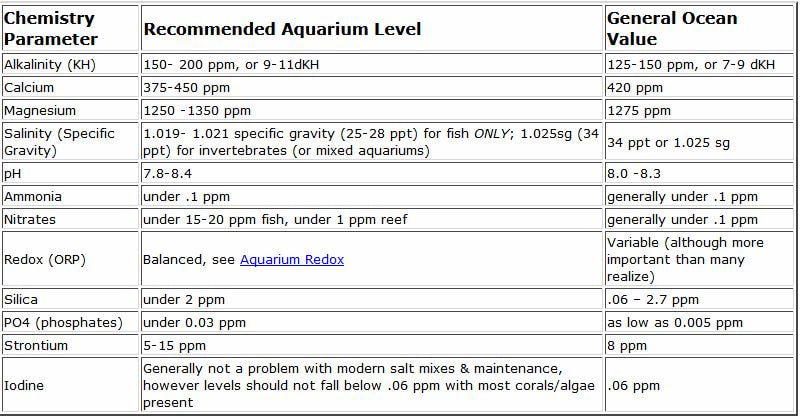
Please note that there are differences for actual ocean parameters such as alkalinity (KH), this is due to the fact that the marine aquarium is a closed system and this can be depleted quickly, so a higher alkalinity “reserve” is necessary.
Salinity for fish is sometimes best lower to simply aid in parasitic disease prevention, but for reef tanks this is not recommended.
Reference:
Aquarium Answers- Osmoregulation.
Also note that meq/L can be approximately converted to ppm by multiplying by 50, while dKH can be converted to ppm by multiplying by 17.9.
Salinity for fish is sometimes best lower to simply aid in parasitic disease prevention, but for reef tanks this is not recommended.
Reference:
Aquarium Answers- Osmoregulation.
Also note that meq/L can be approximately converted to ppm by multiplying by 50, while dKH can be converted to ppm by multiplying by 17.9.
|
|
A few more water chemistry tips:
Be patient with the cycling process. There are several methods, but adding CURED live rock will help jump start this process. You can add small amounts of food every day before fish are added to help stimulate the formation of aerobic bacteria.
For much more information about cycling, see this article:
How the Aquarium Nitrogen Cycle Works; Fishless Cycling, Truths and Myths.
Change water regularly especially in areas of waste accumulation, this will help maintain low nitrates.
Reference:
"Reasons for aquarium Cleaning".
Please note that with Reef tanks in particular, keeping exacting water parameters is more essential than with fish.
Many corals will often slowly die with poor water parameters such as inadequate minerals, buffers, etc. But even more so with high organics or compounds related to organics such as nitrates and PO4 (phosphates).
Coral turning brown is almost a sure sign of high PO4 (phosphates) and possibly nitrates. The use of products such as Phos-Zorb by AAP/API or BETTER, AAP Phosbond can help greatly with phosphate removal/control.
Lighting does NOT play as much of a role in coral "browning" as some inexperienced anecdotal claims state except in cases of UV-B burning that some Metal Halides can cause (UV-B is not generally found in T2, T5, & LEDs).
Resources:
AAP PhosBond
Be careful when using products such as Boyd's ChemiPure & "The Poly Pad" as these products can slowly affect Redox and Alkalii Reserve, which if not addressed can become major issues over time. Products such as Seachem Reef Builder can help counter the negative affects of these products.
TRACE, MINOR, & MAJOR ELEMENTS SUCH AS CALCIUM:
This is very important, as many trace and minor elements are depleted by normal bio processes.
HOWEVER, with normal water changes using a quality marine mix, the result is many of these trace elements are generally not in short supply that would affect fish. This includes Iodine & Strontium.
The use of a quality trace element supplement such as SeaChem Reef Trace can ensure adequate levels of essential trace elements between water changes and/or if water changes are not enough to maintain certain trace elements.
SeaLab Blocks are a simple, yet proven (& cost effective) method to maintain trace elements as well as calcium in marine aquariums. Our larger aquarium maintenance company used these with excellent results. The negative for these is they are not exacting for calcium and do nothing for alkalinity or alkaline reserve. For advanced reef keepers I would look into the Balling method mentioned later in this section.
For minor and major elements (other than sodium chloride), using a quality buffer (for Carbonates, pH, Alkalinity) and balanced methods of adding Calcium one should not have issues with most elements being under recommended levels.
If some of these essential minor/major elements are off, this may indicate something askew in maintenance and the maybe the quality of salt mix used.
Since water changes are rarely enough to replenish normal depletion of carbonates and calcium, buffers such as SeaChem Marine Buffer are important for maintaining a proper alkalinity and add many trace and minor elements as well.
Many Buffering products available do not add both calcium and magnesium and they are BOTH necessary together for proper chemistry and fish health.
It should be noted, that unlike freshwater fish which absorb the water around them, marine fish drink the water constantly, which affects their internal body chemistry to the surrounding water.
When KH (alkalinity) is not an issue the use of straight trace elements such as Sea Chem Marine Trace Elements is another option (but as noted earlier, the need for plain trace elements should not be a problem under normal care and conditions). However this may not be the case with advanced Reefs (where depletion from growth may exceed water change replenishment).
Another product that is useful, especially for reef keepers is Sea Chem Reef Builder (which is similar to Marine Buffer except Reef Builder does NOT raise pH, and is aimed more for the needs of a reef aquarium). Generally I would recommend this product for alkalinity and other important minor elements when pH is not a problem.
Bio available calcium in balance with strontium and magnesium is important to reef aquariums (correct ratio: 100:5:1, Ca;Mg:Sr). Products such as Sea Chem Reef Advantage Calcium can help achieve this.
Product Resources:
AAP SeaLab Blocks
SeaChem Marine Buffer with trace and minor elements
(supplies sodium, magnesium, calcium, strontium, and potassium salts of carbonate, bicarbonate, chloride, sulfate, and borate)
SeaChem Reef Builder, Raises Carbonate Alkalinity without impacting pH
SeaChem Reef Trace Elements
SeaChem Reef Advantage Calcium
Kalkwasser is a popular method for pH stabilization and alkalinity however I personally do not recommend it for beginners. If Kalkwasser is added to your aquarium too fast it will be converted to carbonate ions which ties up Calcium your inhabitants need. With proper drip or vinegar methods it will convert to Bi-carbonates allowing for the necessary Calcium.
If you plan to use Kalkwasser, I recommend reading my article in the section about Calcium:
“The Importance of Calcium in Aquariums; Kalkwasser, Balling Method”
Or this outside article:
Kalkwasser in Depth: http://www.reefscapes.net/articles/breefcase/kalkwasser.html
A better method in my opinion, also originating in Germany is the "Balling Method" developed by Hans-Werner Balling.
The principle here allows for more bio available calcium, more stable alkalinity, and less depletion of other essential elements. This 3 step method when used with via a quality product such as TMCs Balling Method Calcium Supplementation, is much more simple than the older Kalkwasser method.
The Result is a doubling in size of small-polyped stony (SPS) corals in their aquariums within about 100 days.
Product Resource for the "Balling Method of Calcium Supplementation":
TMC Bio Calcium for Balling Method from AAP
Most of the coralline algae, which secrete calcium carbonate need not only bio available calcium but other trace elements in the proper balance which is why a complete buffer such as Sea Chem Marine Buffer should be used to adjust alkalinity.
KH (or alkalinity as is called in marine aquariums) should be over 240 ppm (13 dKH). Normal bio processes such as the break down of nitrogenous wastes produce acids that constantly chip away at your alkaline reserves, so alkalinity is important to monitor and maintain through water changes, buffers, and aragonite or similar sand/ crushed coral gravel.
Please see this outside resource for calculator calculate reef chemistry additions for Calcium, Alkalinity, Iodide (Iodine), Strontium, or Magnesium using commercial products or standard chemicals (please note that not all products are represented):
SeaChem Reef Chemistry Calculator
Product Resource:
SeaChem Stabilized potassium Iodide source for Reef Aquaria
*Complete diets will also add some trace and minor elements as well as water changes and aragonite substrates.
Changing water regularly with a quality mix (preferably using RO or DI water to mix with it) will also generally add back depleted trace and minor elements. I find water changes for this reason alone more important in smaller aquariums in particular. Make sure and purchase a quality mix (of which there are many), a few suggestions are Instant Ocean (a popular quality product) or Tropic Marine (out of Germany, probably the best IMO).
Be patient with the cycling process. There are several methods, but adding CURED live rock will help jump start this process. You can add small amounts of food every day before fish are added to help stimulate the formation of aerobic bacteria.
For much more information about cycling, see this article:
How the Aquarium Nitrogen Cycle Works; Fishless Cycling, Truths and Myths.
Change water regularly especially in areas of waste accumulation, this will help maintain low nitrates.
Reference:
"Reasons for aquarium Cleaning".
Please note that with Reef tanks in particular, keeping exacting water parameters is more essential than with fish.
Many corals will often slowly die with poor water parameters such as inadequate minerals, buffers, etc. But even more so with high organics or compounds related to organics such as nitrates and PO4 (phosphates).
Coral turning brown is almost a sure sign of high PO4 (phosphates) and possibly nitrates. The use of products such as Phos-Zorb by AAP/API or BETTER, AAP Phosbond can help greatly with phosphate removal/control.
Lighting does NOT play as much of a role in coral "browning" as some inexperienced anecdotal claims state except in cases of UV-B burning that some Metal Halides can cause (UV-B is not generally found in T2, T5, & LEDs).
Resources:
AAP PhosBond
Be careful when using products such as Boyd's ChemiPure & "The Poly Pad" as these products can slowly affect Redox and Alkalii Reserve, which if not addressed can become major issues over time. Products such as Seachem Reef Builder can help counter the negative affects of these products.
TRACE, MINOR, & MAJOR ELEMENTS SUCH AS CALCIUM:
This is very important, as many trace and minor elements are depleted by normal bio processes.
HOWEVER, with normal water changes using a quality marine mix, the result is many of these trace elements are generally not in short supply that would affect fish. This includes Iodine & Strontium.
The use of a quality trace element supplement such as SeaChem Reef Trace can ensure adequate levels of essential trace elements between water changes and/or if water changes are not enough to maintain certain trace elements.
SeaLab Blocks are a simple, yet proven (& cost effective) method to maintain trace elements as well as calcium in marine aquariums. Our larger aquarium maintenance company used these with excellent results. The negative for these is they are not exacting for calcium and do nothing for alkalinity or alkaline reserve. For advanced reef keepers I would look into the Balling method mentioned later in this section.
For minor and major elements (other than sodium chloride), using a quality buffer (for Carbonates, pH, Alkalinity) and balanced methods of adding Calcium one should not have issues with most elements being under recommended levels.
If some of these essential minor/major elements are off, this may indicate something askew in maintenance and the maybe the quality of salt mix used.
Since water changes are rarely enough to replenish normal depletion of carbonates and calcium, buffers such as SeaChem Marine Buffer are important for maintaining a proper alkalinity and add many trace and minor elements as well.
Many Buffering products available do not add both calcium and magnesium and they are BOTH necessary together for proper chemistry and fish health.
It should be noted, that unlike freshwater fish which absorb the water around them, marine fish drink the water constantly, which affects their internal body chemistry to the surrounding water.
When KH (alkalinity) is not an issue the use of straight trace elements such as Sea Chem Marine Trace Elements is another option (but as noted earlier, the need for plain trace elements should not be a problem under normal care and conditions). However this may not be the case with advanced Reefs (where depletion from growth may exceed water change replenishment).
Another product that is useful, especially for reef keepers is Sea Chem Reef Builder (which is similar to Marine Buffer except Reef Builder does NOT raise pH, and is aimed more for the needs of a reef aquarium). Generally I would recommend this product for alkalinity and other important minor elements when pH is not a problem.
Bio available calcium in balance with strontium and magnesium is important to reef aquariums (correct ratio: 100:5:1, Ca;Mg:Sr). Products such as Sea Chem Reef Advantage Calcium can help achieve this.
Product Resources:
AAP SeaLab Blocks
SeaChem Marine Buffer with trace and minor elements
(supplies sodium, magnesium, calcium, strontium, and potassium salts of carbonate, bicarbonate, chloride, sulfate, and borate)
SeaChem Reef Builder, Raises Carbonate Alkalinity without impacting pH
SeaChem Reef Trace Elements
SeaChem Reef Advantage Calcium
Kalkwasser is a popular method for pH stabilization and alkalinity however I personally do not recommend it for beginners. If Kalkwasser is added to your aquarium too fast it will be converted to carbonate ions which ties up Calcium your inhabitants need. With proper drip or vinegar methods it will convert to Bi-carbonates allowing for the necessary Calcium.
If you plan to use Kalkwasser, I recommend reading my article in the section about Calcium:
“The Importance of Calcium in Aquariums; Kalkwasser, Balling Method”
Or this outside article:
Kalkwasser in Depth: http://www.reefscapes.net/articles/breefcase/kalkwasser.html
A better method in my opinion, also originating in Germany is the "Balling Method" developed by Hans-Werner Balling.
The principle here allows for more bio available calcium, more stable alkalinity, and less depletion of other essential elements. This 3 step method when used with via a quality product such as TMCs Balling Method Calcium Supplementation, is much more simple than the older Kalkwasser method.
The Result is a doubling in size of small-polyped stony (SPS) corals in their aquariums within about 100 days.
Product Resource for the "Balling Method of Calcium Supplementation":
TMC Bio Calcium for Balling Method from AAP
Most of the coralline algae, which secrete calcium carbonate need not only bio available calcium but other trace elements in the proper balance which is why a complete buffer such as Sea Chem Marine Buffer should be used to adjust alkalinity.
KH (or alkalinity as is called in marine aquariums) should be over 240 ppm (13 dKH). Normal bio processes such as the break down of nitrogenous wastes produce acids that constantly chip away at your alkaline reserves, so alkalinity is important to monitor and maintain through water changes, buffers, and aragonite or similar sand/ crushed coral gravel.
Please see this outside resource for calculator calculate reef chemistry additions for Calcium, Alkalinity, Iodide (Iodine), Strontium, or Magnesium using commercial products or standard chemicals (please note that not all products are represented):
SeaChem Reef Chemistry Calculator
Product Resource:
SeaChem Stabilized potassium Iodide source for Reef Aquaria
*Complete diets will also add some trace and minor elements as well as water changes and aragonite substrates.
Changing water regularly with a quality mix (preferably using RO or DI water to mix with it) will also generally add back depleted trace and minor elements. I find water changes for this reason alone more important in smaller aquariums in particular. Make sure and purchase a quality mix (of which there are many), a few suggestions are Instant Ocean (a popular quality product) or Tropic Marine (out of Germany, probably the best IMO).
Amino Acids for Corals
Another sometimes forgotten aspect of Marine Reef Keeping is the need for certain essential amino acids for SPS corals and other inhabitants of reef aquariums.
Corals and other other animals from the Phylum cnidaria, have a special ability to uptake amino acids from the water column across their entire surface, and it is ESSENTIAL that these specific amino acids be present in the water column.
Protein Skimmers in particular are notorious for removing many essential amino acids from the water column.
Delicate Corals such as Acropora will NOT survive without these amino acids, and often new reef keepers purchase the best lighting and other equipment, but forget about adding/replacing these amino acids into the water column.
Two Little Fishies AcroPower is one such product that supplies essential amino acids that corals need to build their skeletal architecture.
Product Resource:
AcroPower Amino Acids for SPS Corals
Another sometimes forgotten aspect of Marine Reef Keeping is the need for certain essential amino acids for SPS corals and other inhabitants of reef aquariums.
Corals and other other animals from the Phylum cnidaria, have a special ability to uptake amino acids from the water column across their entire surface, and it is ESSENTIAL that these specific amino acids be present in the water column.
Protein Skimmers in particular are notorious for removing many essential amino acids from the water column.
Delicate Corals such as Acropora will NOT survive without these amino acids, and often new reef keepers purchase the best lighting and other equipment, but forget about adding/replacing these amino acids into the water column.
Two Little Fishies AcroPower is one such product that supplies essential amino acids that corals need to build their skeletal architecture.
Product Resource:
AcroPower Amino Acids for SPS Corals
For more advanced reefs you may want or need to add separate elements such as Strontium, Iodine (Iodide), Magnesium and Calcium.
Make sure and test your water first if you think you need to add iodine and strontium in particular.
This article gives the desired levels of these elements:
“Aquarium Test Kits, Information” .
I have never found a need to add additional Calcium other than the methods outlined above.
Water Changes, Sea Chem Marine Buffer (which also contains strontium), & Sea Chem Reef Calcium or Kalkwasser have all worked fine 99% of the time.
However some advanced aquarists prefer to use a Calcium Reactor.
Another more simple alternative to a calcium reactor (albeit not as effective) is the use of a Fluidized Filter employing Oolitic sand media.
The advantage besides the obvious simplicity is this is a "second to none" high capacity nitrifying filter that can go inline from a canister filter, power head, or sump pump to increase bio filtration and also via the constant friction of the Oolitic sand, add essential calcium and trace elements!
The TMC V2 Fluidized Filter is the best one currently available, although any potential buyer should note that the Oolitic Sand is sold separately by TMC (it comes with silica sand).
Product Reference:
TMC Fluid Sand Filter, Calcium Reactor
Dosing
Once known rates of depletion of certain elements (between water changes) is known, many advanced reef keepers prefer to add “dosers” to add measured amounts of known depleted elements on a regular basis.
Many videos/articles show advanced systems with pumps, etc. to perform this function which often makes many newbies question whether this is a worthwhile undertaking due to all the time and effort.
Personally I have found a simple gravity doser where the reef aquarium keeper mixes the necessary elements (such as Iodine or Sea Chem Reef Builder) with RO water (which if properly calibrated can also add water for evaporation). I use simple air line tubing along with an airline control valve to control the drip rate.
Product Reference:
Sea Chem Reef Builder
(contains calcium, magnesium, and strontium to compensate for the inevitable loss which occurs when raising alkalinity)
If fish and other marine inhabitants do not have proper trace and minor elements, their health will suffer.
I have been called to customers with Yellow Tangs with red streaks and sunken abdomens, the only treatment I did was add trace elements, adjust alkalinity, change water, and improve the diet; and the fish recovered.
Often this can also be a sign of Vibrio and requires further treatment, please see this article for more information:
Treatment and Identification of Aeromonas and Vibrio in Aquariums
Please read these two articles for further information about Alkalinity, osmoregulation, Calcium, trace elements and more:
“THE IMPORTANCE OF CALCIUM, ELECTROLYTES, MAGNESIUM, AND KH IN YOUR AQUARIUM (Salt & Freshwater)”
“How do Fish Drink- Proper Osmotic Function”
Make sure and test your water first if you think you need to add iodine and strontium in particular.
This article gives the desired levels of these elements:
“Aquarium Test Kits, Information” .
I have never found a need to add additional Calcium other than the methods outlined above.
Water Changes, Sea Chem Marine Buffer (which also contains strontium), & Sea Chem Reef Calcium or Kalkwasser have all worked fine 99% of the time.
However some advanced aquarists prefer to use a Calcium Reactor.
Another more simple alternative to a calcium reactor (albeit not as effective) is the use of a Fluidized Filter employing Oolitic sand media.
The advantage besides the obvious simplicity is this is a "second to none" high capacity nitrifying filter that can go inline from a canister filter, power head, or sump pump to increase bio filtration and also via the constant friction of the Oolitic sand, add essential calcium and trace elements!
The TMC V2 Fluidized Filter is the best one currently available, although any potential buyer should note that the Oolitic Sand is sold separately by TMC (it comes with silica sand).
Product Reference:
TMC Fluid Sand Filter, Calcium Reactor
Dosing
Once known rates of depletion of certain elements (between water changes) is known, many advanced reef keepers prefer to add “dosers” to add measured amounts of known depleted elements on a regular basis.
Many videos/articles show advanced systems with pumps, etc. to perform this function which often makes many newbies question whether this is a worthwhile undertaking due to all the time and effort.
Personally I have found a simple gravity doser where the reef aquarium keeper mixes the necessary elements (such as Iodine or Sea Chem Reef Builder) with RO water (which if properly calibrated can also add water for evaporation). I use simple air line tubing along with an airline control valve to control the drip rate.
Product Reference:
Sea Chem Reef Builder
(contains calcium, magnesium, and strontium to compensate for the inevitable loss which occurs when raising alkalinity)
If fish and other marine inhabitants do not have proper trace and minor elements, their health will suffer.
I have been called to customers with Yellow Tangs with red streaks and sunken abdomens, the only treatment I did was add trace elements, adjust alkalinity, change water, and improve the diet; and the fish recovered.
Often this can also be a sign of Vibrio and requires further treatment, please see this article for more information:
Treatment and Identification of Aeromonas and Vibrio in Aquariums
Please read these two articles for further information about Alkalinity, osmoregulation, Calcium, trace elements and more:
“THE IMPORTANCE OF CALCIUM, ELECTROLYTES, MAGNESIUM, AND KH IN YOUR AQUARIUM (Salt & Freshwater)”
“How do Fish Drink- Proper Osmotic Function”
UVc Sterilization
UV Sterilizers are in my opinion, not essential, but based on 35 years of research and hands on tests, they are VERY important, and in fact is a tool I was rarely without in with my contracted marine aquarium customers.
UV Sterilizers help with disease prevention and also help maintain a proper Redox Potential/Balance (oxidation/reduction properties of water).
The Redox Potential/ Balance is often overlooked by many aquarists, even advanced aquarium keepers.
Further References:
The Importance of Redox Balance in Aquariums for Fish Immunity
Aquarium UV Sterilization, use of a UVC Sterilizer in Marine Aquariums.
The above article is one of the most in depth articles on the subject of UV Sterilization, using real research to dispel many of the myths about this important tool for aquarium keeping. This is a must read!, and to be even more blunt, although these devices are not essential, considering the difference a properly installed UV Sterilizer can make (including Redox), no serious marine keeper should be without one especially when one considers that a Quality UV Sterilizer often cost less than on Marine Angel or other prize specimen!!
Product Reference:
Terminator, TMC, Custom UV Sterilizers and parts
Even with smaller aquariums (Nano Reefs, etc.) a UV sterilizer is still a good idea.
A UV can be fitted to Nano Reef Tank with a small internal filter such as a "Rio 400 Internal Filter" as an example. Most Bio Cube aquariums have built in filters in the back that easily attached to a small UV Sterilizer (see the picture to the left)
Product Reference:
Rio 400 Internal Filter
Another method to set up a simple Nano Reef is to utilize an Internal Wet/Dry Filter which would convert a 10-20 gallon aquarium into a less expensive “Bio Cube” Aquarium.
UV Sterilizers help with disease prevention and also help maintain a proper Redox Potential/Balance (oxidation/reduction properties of water).
The Redox Potential/ Balance is often overlooked by many aquarists, even advanced aquarium keepers.
Further References:
The Importance of Redox Balance in Aquariums for Fish Immunity
Aquarium UV Sterilization, use of a UVC Sterilizer in Marine Aquariums.
The above article is one of the most in depth articles on the subject of UV Sterilization, using real research to dispel many of the myths about this important tool for aquarium keeping. This is a must read!, and to be even more blunt, although these devices are not essential, considering the difference a properly installed UV Sterilizer can make (including Redox), no serious marine keeper should be without one especially when one considers that a Quality UV Sterilizer often cost less than on Marine Angel or other prize specimen!!
Product Reference:
Terminator, TMC, Custom UV Sterilizers and parts
Even with smaller aquariums (Nano Reefs, etc.) a UV sterilizer is still a good idea.
A UV can be fitted to Nano Reef Tank with a small internal filter such as a "Rio 400 Internal Filter" as an example. Most Bio Cube aquariums have built in filters in the back that easily attached to a small UV Sterilizer (see the picture to the left)
Product Reference:
Rio 400 Internal Filter
Another method to set up a simple Nano Reef is to utilize an Internal Wet/Dry Filter which would convert a 10-20 gallon aquarium into a less expensive “Bio Cube” Aquarium.
Cooling & Heating
Heating is a rather simple subject that I will not go into any detail other than refer to this "Aquarium Answers" article that discusses "Types" and provides a few reviews as well:
Aquarium Heaters- Types, Reviews
For cooling in summer, as with the Freshwater Basic article (cooling/heating), these same principles apply:
"A few suggestions include floating frozen 2 liter plastic pop bottles in the aquarium and the use of a wet towel draped over the tank with a fan aimed at this towel (this works similar to human perspiration).
The wet towel/fan method is more efficient for larger aquariums and tends to have less temperature swings, however sometime the frozen bottle method is needed for quicker lowering of temperature; as well both methods can be combined.
I often had clients leave a wet towel & fan on their tank before leaving for work, then add a frozen bottle when they come home.
Other options can simply be to add a small room air conditioner and set it at a high setting of 78 F. This can often be cheaper than both the purchase and operating cost of an aquarium chiller in my experience."
I have found in the 1000s of aquariums I have maintained that with a few exceptions, a chiller was a costly device that broke down often and the cost of purchase and running exceeded running a room air conditioner at a high setting. Using lower wattage devices and dumping Metal Halide Lights in favor of LEDs, especially the more efficient AquaRays that do not require cooling fans because they PRODUCE MUCH LESS WASTED HEAT ENERGY than many other LEDs such as EcoTechs or Kessils can make a big difference too.
Aquarium Heaters- Types, Reviews
For cooling in summer, as with the Freshwater Basic article (cooling/heating), these same principles apply:
"A few suggestions include floating frozen 2 liter plastic pop bottles in the aquarium and the use of a wet towel draped over the tank with a fan aimed at this towel (this works similar to human perspiration).
The wet towel/fan method is more efficient for larger aquariums and tends to have less temperature swings, however sometime the frozen bottle method is needed for quicker lowering of temperature; as well both methods can be combined.
I often had clients leave a wet towel & fan on their tank before leaving for work, then add a frozen bottle when they come home.
Other options can simply be to add a small room air conditioner and set it at a high setting of 78 F. This can often be cheaper than both the purchase and operating cost of an aquarium chiller in my experience."
I have found in the 1000s of aquariums I have maintained that with a few exceptions, a chiller was a costly device that broke down often and the cost of purchase and running exceeded running a room air conditioner at a high setting. Using lower wattage devices and dumping Metal Halide Lights in favor of LEDs, especially the more efficient AquaRays that do not require cooling fans because they PRODUCE MUCH LESS WASTED HEAT ENERGY than many other LEDs such as EcoTechs or Kessils can make a big difference too.
New Fish & Invertebrate Introduction
The best way to acclimate your new fish, corals or other delicate marine inhabitants is to place your bag in a bucket, then open a VERY small area so as to insert an air line tube.
Use this tube along with an in line Air line valve or clip (such as a clothes pin) so that you can adjust the drip. Start a siphon in this line and adjust this drip to about one drip per every 2-3 seconds (more or less).
Let this drip run for about 1 hour minimum (Sometimes less for fish, often much longer for corals, anemones).
It is also important to carefully open your bag as little as possible, otherwise you may have a “gassing out” effect that can drastically lower your pH in your bag containing your new arrivals which can shock and kill them.
Product Reference:
Lees Air line Valve
For fish quarantine or at least a dip or bath is also suggested for disease introduction/prevention, please see this article:
“Aquarium Disease Prevention; Quarantine”
Use this tube along with an in line Air line valve or clip (such as a clothes pin) so that you can adjust the drip. Start a siphon in this line and adjust this drip to about one drip per every 2-3 seconds (more or less).
Let this drip run for about 1 hour minimum (Sometimes less for fish, often much longer for corals, anemones).
It is also important to carefully open your bag as little as possible, otherwise you may have a “gassing out” effect that can drastically lower your pH in your bag containing your new arrivals which can shock and kill them.
Product Reference:
Lees Air line Valve
For fish quarantine or at least a dip or bath is also suggested for disease introduction/prevention, please see this article:
“Aquarium Disease Prevention; Quarantine”
Common Algae
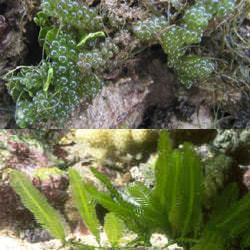
|
|
Here are couple of commonly encountered algae in marine aquariums, especially with live rock. Both are forms of Macro Algae, the top being grape Caulerpa while the bottom is the fast growing (and illegal in some states) taxifolia. However the taxifolia is an excellent source for food for many fish from Dwarf angels to tangs as well a great Nitrate Sponge that is useful in Refugiums.
Although not the problem or scourge that red slime (Cyanobacteria), Filamentous Hair Algae can over take an aquarium in short order and is an indicator of high nitrates and phosphates. Although I consider green algae growth generally an indicator of a healthy marine aquarium, normally I recommend less problematic algae such as the Macro-Algae.
For further information about aquarium algae, and treatment there of, please visit this article from Aquarium Answers (including the further resources found in this article):
Aquarium Algae- Brown Diatom, Hair, Green Spot, Black Brush, Cyanobacteria, Blue Green
Although not the problem or scourge that red slime (Cyanobacteria), Filamentous Hair Algae can over take an aquarium in short order and is an indicator of high nitrates and phosphates. Although I consider green algae growth generally an indicator of a healthy marine aquarium, normally I recommend less problematic algae such as the Macro-Algae.
For further information about aquarium algae, and treatment there of, please visit this article from Aquarium Answers (including the further resources found in this article):
Aquarium Algae- Brown Diatom, Hair, Green Spot, Black Brush, Cyanobacteria, Blue Green
Proper Fish Feeding-Species Specific Diet
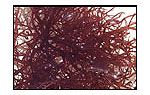
|
|
Do not over crowd a marine aquarium.
The amount of fish kept depends on the aquarium surface area and the type of fish.
My article “Basic Aquarium Principles” addresses this subject.
Reference:
Choosing the Correct Aquarium for your FW Fish
Feed your marine fish according to the type of food they naturally eat in the wild.
High quality aquatic based foods such as AAP Spirulina 20 Flake, AAP Custom, and AAP/Hikari Marine S are good generic fish foods for Tangs, angels, clown fish, etc.
Red Gracillaria algae for feeding marine fishOf course a basic fish food is, but a starting place for proper feeding, especially among the diversity of marine fish commonly kept.
For instance, Marine Angels and Tangs will do best with fresh algae such as Red Gracillaria algae that is now commercially available in many local or internet locations (see picture to the left or this website:
ORA Algae.
As well San Francisco Brand & Ocean Nutrition have Natural Dried Seaweed & many excellent frozen prepared foods for specific fish such as Trigger Diet & Angel Diet.
Product Reference:
Seaweed Salad - Green
I cannot emphasize enough the importance of a good low energy diet in healthy fish, as many trace nutrients are introduced to the marine chemistry this way.
Often many aquarists will spend more time chasing pH, attempting the perfect dosing system, replacing lights, etc., all the while feeding poor diets and then wonder why their fish never thrive.
Even with the basic flake foods, often low end products are fed, with the aquarists thinking this is a name brand therefore it must be good, all the while the number one brand flake food is quite bluntly far from the best.
Spirulina 20 Flake is vastly superior to most marine flake foods that the number one ingredient is Spirulina (not way down on the list like many brands if at all in the product)
Reference:
The Benefits of spirulina in Fish Diets
Another issue is stimulating difficult specimens to feed. A unique product that addresses this are AAP/Gamma NutraShots which are basically a dry food that acts more like a frozen food in how fish respond and its analysis. This is a excellent and unique product for fish that are new, picky, or simply need stimulation for whatever reason. It is an part and in fact should be a part of any advanced marine fish keeper's feeding regimen.
I also recommend reading my Aquatic Nutrition article to learn about high quality foods:
“Proper Aquatic Nutrition, Fish Feeding Basics to Advanced”
It is also noteworthy that many invertebrates kept, such as anemones and corals have specific dietary needs. So it is important to find these our BEFORE purchasing any individual new specimen.
An example would be specific amino acid requirements in the water column for many SPS corals.
Product References:
AAP Spirulina 20 Fish Food Flake by Zoomed
AAP/Gamma Nutrashots | Fish, Corals Premium Fish Food
AAP Custom-Premium Low Energy
AAP/Hikari Marine S Pellets
AcroPower Amino Acids for SPS Corals
The amount of fish kept depends on the aquarium surface area and the type of fish.
My article “Basic Aquarium Principles” addresses this subject.
Reference:
Choosing the Correct Aquarium for your FW Fish
Feed your marine fish according to the type of food they naturally eat in the wild.
High quality aquatic based foods such as AAP Spirulina 20 Flake, AAP Custom, and AAP/Hikari Marine S are good generic fish foods for Tangs, angels, clown fish, etc.
Red Gracillaria algae for feeding marine fishOf course a basic fish food is, but a starting place for proper feeding, especially among the diversity of marine fish commonly kept.
For instance, Marine Angels and Tangs will do best with fresh algae such as Red Gracillaria algae that is now commercially available in many local or internet locations (see picture to the left or this website:
ORA Algae.
As well San Francisco Brand & Ocean Nutrition have Natural Dried Seaweed & many excellent frozen prepared foods for specific fish such as Trigger Diet & Angel Diet.
Product Reference:
Seaweed Salad - Green
I cannot emphasize enough the importance of a good low energy diet in healthy fish, as many trace nutrients are introduced to the marine chemistry this way.
Often many aquarists will spend more time chasing pH, attempting the perfect dosing system, replacing lights, etc., all the while feeding poor diets and then wonder why their fish never thrive.
Even with the basic flake foods, often low end products are fed, with the aquarists thinking this is a name brand therefore it must be good, all the while the number one brand flake food is quite bluntly far from the best.
Spirulina 20 Flake is vastly superior to most marine flake foods that the number one ingredient is Spirulina (not way down on the list like many brands if at all in the product)
Reference:
The Benefits of spirulina in Fish Diets
Another issue is stimulating difficult specimens to feed. A unique product that addresses this are AAP/Gamma NutraShots which are basically a dry food that acts more like a frozen food in how fish respond and its analysis. This is a excellent and unique product for fish that are new, picky, or simply need stimulation for whatever reason. It is an part and in fact should be a part of any advanced marine fish keeper's feeding regimen.
I also recommend reading my Aquatic Nutrition article to learn about high quality foods:
“Proper Aquatic Nutrition, Fish Feeding Basics to Advanced”
It is also noteworthy that many invertebrates kept, such as anemones and corals have specific dietary needs. So it is important to find these our BEFORE purchasing any individual new specimen.
An example would be specific amino acid requirements in the water column for many SPS corals.
Product References:
AAP Spirulina 20 Fish Food Flake by Zoomed
AAP/Gamma Nutrashots | Fish, Corals Premium Fish Food
AAP Custom-Premium Low Energy
AAP/Hikari Marine S Pellets
AcroPower Amino Acids for SPS Corals
Angels from the Genus “Pomacanthus” such as Emperor or Koran Angels also need sponge in their diet.
Angels from the Genus “Centropyge” such as Flame Angels and Coral Beautys need marine algae in their diet.
Angelfish from this Genus also should not be housed together in a tank much under 150-200 gallon and then ample hiding places should be provided.
Angelfish from this Genus also should not be housed together in a tank much under 150-200 gallon and then ample hiding places should be provided.
Butterfly Fish from the Genus “Chemon” such as Copperband Butterflies need small foods such as mysis shrimp, FD or frozen shrimp, and fresh or frozen clam. However, even though many will eat these foods in captivity, many butterflys only truly thrive with live coral to pick at and be at least a part of their diet.
Trigger Fish from the Genus “Balistoides” such as Clown Triggerfish require Urchin in their diet.
I will also note here that Triggers are generally very aggressive, so care is advised in placement with other tank mates (I have especially found Pink Tail and Undulatus Triggers to be "nasty").
I will also note here that Triggers are generally very aggressive, so care is advised in placement with other tank mates (I have especially found Pink Tail and Undulatus Triggers to be "nasty").
Mandarin Dragonets (also called Mandarin Gobies)
These fish can be very hardy under the right conditions when starting with a healthy specimen which is feeding. They seem to be very resistant to parasitic diseases such as Ich, apparently due to their thick slime coating.
Many Mandarins are kept under conditions in pet stores that cause them to slowly starve (I always sold mine out of reef tanks). Look for sunken bellies before purchasing a specimen. If possible, select a specimen that is eating frozen food.
Feeding is the problem with Mandarins. Amphipods and copepods (small crustaceans that inhabit the sea floor) are the best diet for these fish if they can be cultured in small broken live rock piles. Some will take foods such as frozen brine shrimp and bloodworms.
Here are a few feeding suggestions:
• Try feeding roe, or fish eggs. These can be obtained at Asian markets under the name of flying fish eggs. They look like the orange little balls on sushi rolls.
• Create a "pod pile" of small chunks of live rock in a corner. Pile the rubble up so fish cannot enter and spray the area with minute bits of food to herd the pods into the safety area to feed and reproduce.
For more about copepods and other pods:
Pods, Delicious and Nutritious
Also from the author of this previous article, cultured ocean pods:
Aquacultured Copepods for the Hobbyist
These fish can be very hardy under the right conditions when starting with a healthy specimen which is feeding. They seem to be very resistant to parasitic diseases such as Ich, apparently due to their thick slime coating.
Many Mandarins are kept under conditions in pet stores that cause them to slowly starve (I always sold mine out of reef tanks). Look for sunken bellies before purchasing a specimen. If possible, select a specimen that is eating frozen food.
Feeding is the problem with Mandarins. Amphipods and copepods (small crustaceans that inhabit the sea floor) are the best diet for these fish if they can be cultured in small broken live rock piles. Some will take foods such as frozen brine shrimp and bloodworms.
Here are a few feeding suggestions:
• Try feeding roe, or fish eggs. These can be obtained at Asian markets under the name of flying fish eggs. They look like the orange little balls on sushi rolls.
• Create a "pod pile" of small chunks of live rock in a corner. Pile the rubble up so fish cannot enter and spray the area with minute bits of food to herd the pods into the safety area to feed and reproduce.
For more about copepods and other pods:
Pods, Delicious and Nutritious
Also from the author of this previous article, cultured ocean pods:
Aquacultured Copepods for the Hobbyist
Starter Fish & Inhabitants
As for starter fish, this is where a good LFS comes in handy, they can help you decide based on what you want to achieve in an aquarium.
Here are a few livestock suggestions:
*Yellow Tangs
*Percula, Sebae, or Osellaris Clowns
*Koran Angels
*Spotted Hawkfish
*Blue Hippo Tangs
*Yellow Tail and Green Chromis Damsels (not as aggressive as many other damsels).
*Pseudochromis such as the purple.
*Royal Gramma Basslet
*Coral, Dianna, or Spanish Hogfish
Also most Groupers and Triggers as well as Volitan Lionfish are very hardy however these are aggressive fish that WILL grow.
Most Hermit Crabs, Coral Banded Shrimp, and Arrow Crabs are hardy invertebrates
Here are a few livestock suggestions:
*Yellow Tangs
*Percula, Sebae, or Osellaris Clowns
*Koran Angels
*Spotted Hawkfish
*Blue Hippo Tangs
*Yellow Tail and Green Chromis Damsels (not as aggressive as many other damsels).
*Pseudochromis such as the purple.
*Royal Gramma Basslet
*Coral, Dianna, or Spanish Hogfish
Also most Groupers and Triggers as well as Volitan Lionfish are very hardy however these are aggressive fish that WILL grow.
Most Hermit Crabs, Coral Banded Shrimp, and Arrow Crabs are hardy invertebrates

I recommend fish distributed by Quality Marine USA, for their quality and most importantly care.
Their fish tend to be a little higher in price, but you are also assured of a quality fish & other reef inhabitants that have received the most humane care possible; simply the "best of the best".
Their fish tend to be a little higher in price, but you are also assured of a quality fish & other reef inhabitants that have received the most humane care possible; simply the "best of the best".
Poisonous Marine Pets
Foxface and Lionfish produce a neurotoxin that attacks the nervous system, so does the Stone Fish and the Blue Ring Octopus (as well as the Black Widow Spider).
Each of these fish puts in different amounts, the Blue Ring the most. This is important to note as a second or third sting with neurotoxin can be life threatening (which a Blue Ring is very much so due to the concentrated amount injected.
Foxface and Lionfish are not generally a danger though to the hobbyist, the best treatment is a hot compress of 50 C with baking soda. At this temperature tests have shown the poison to be denatured.
Here are marine animals of note:
Blue Ring Octopus-
The strong neurotoxin interferes with the body's nervous system. The victim will immediately experience numbness of the mouth and tongue, blurring of vision, loss of touch, difficulty with speech and swallowing, and paralysis of the legs and nausea.
If the victim does not receive medical treatment immediately, full paralysis may occur within minutes, followed by unconsciousness and death due to heart failure and lack of oxygen.
There is no anti-venom for the poison from a blue-ringed octopus.
It is usually necessary to perform continuous CPR on a victim until the effects of the venom have subsided. This may take several hours, but it may mean the difference between life or the death for the victim.
For more about keeping a common brown Octopus as a pet, please read this article:
Octopus as Pets
Box Fish, Trunk fish, & Cowfish-
When these fish are frightened or harassed, the fish in this family have the ability to release a fatal toxin from their bodies.
They can kill every living thing in your aquarium, leaving you with an empty aquarium. Be careful when mixing these fish in an aquarium (even with territorial fish such as Domino Damsels or Maroon Clownfish), unless you want to take the risk of possibly loosing everything.
Although this has only happened once and the reason was because I added the cowfish to an aquarium with very dominant fish.
That said I have kept dozens of cowfish in my own and my clients aquariums with no problems.
If these are fish you like to keep, I recommend a large, non aggressive aquarium with place to hide, and good filtration that may include carbon.
Each of these fish puts in different amounts, the Blue Ring the most. This is important to note as a second or third sting with neurotoxin can be life threatening (which a Blue Ring is very much so due to the concentrated amount injected.
Foxface and Lionfish are not generally a danger though to the hobbyist, the best treatment is a hot compress of 50 C with baking soda. At this temperature tests have shown the poison to be denatured.
Here are marine animals of note:
Blue Ring Octopus-
The strong neurotoxin interferes with the body's nervous system. The victim will immediately experience numbness of the mouth and tongue, blurring of vision, loss of touch, difficulty with speech and swallowing, and paralysis of the legs and nausea.
If the victim does not receive medical treatment immediately, full paralysis may occur within minutes, followed by unconsciousness and death due to heart failure and lack of oxygen.
There is no anti-venom for the poison from a blue-ringed octopus.
It is usually necessary to perform continuous CPR on a victim until the effects of the venom have subsided. This may take several hours, but it may mean the difference between life or the death for the victim.
For more about keeping a common brown Octopus as a pet, please read this article:
Octopus as Pets
Box Fish, Trunk fish, & Cowfish-
When these fish are frightened or harassed, the fish in this family have the ability to release a fatal toxin from their bodies.
They can kill every living thing in your aquarium, leaving you with an empty aquarium. Be careful when mixing these fish in an aquarium (even with territorial fish such as Domino Damsels or Maroon Clownfish), unless you want to take the risk of possibly loosing everything.
Although this has only happened once and the reason was because I added the cowfish to an aquarium with very dominant fish.
That said I have kept dozens of cowfish in my own and my clients aquariums with no problems.
If these are fish you like to keep, I recommend a large, non aggressive aquarium with place to hide, and good filtration that may include carbon.
Marine Ich (Cryptocaryon irritans) Treatment
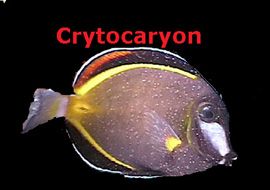
Aquarium IchIt is best to move your fish to a quarantine aquarium with sponge filter that can be seeded from your established aquarium.
This hospital aquarium should also have no gravel and just enough décor to give the fish a place to hide. Try and keep this tank in the dark for the first 3-5 days of treatment.
Change 25% water daily using water from your main aquarium, thus performing water changes there too. MAKE SURE NO equipment from your hospital aquariums makes contact with your main aquarium (you can soak in a copper solution then rinse in scalding hot water).
Your medication options starting with the strongest are:
Copper Sulfate kept at 25 ppm
Medicated Wonder Shell (Marine version) *Malachite Green
The copper sulfate is your best bet, but this cannot be used in your main aquarium.
A freshwater dip (pH adjusted to 8.2) combined with methylene blue for 3-5 minutes will also help. I recommend using the methylene blue at double strength for this dip.
Do not place your fish in your main aquarium for 3 weeks.
For more about Marine Ich, please read this article:
Aquarium Ich: Cryptocaryon irritans treatment
This hospital aquarium should also have no gravel and just enough décor to give the fish a place to hide. Try and keep this tank in the dark for the first 3-5 days of treatment.
Change 25% water daily using water from your main aquarium, thus performing water changes there too. MAKE SURE NO equipment from your hospital aquariums makes contact with your main aquarium (you can soak in a copper solution then rinse in scalding hot water).
Your medication options starting with the strongest are:
Copper Sulfate kept at 25 ppm
Medicated Wonder Shell (Marine version) *Malachite Green
The copper sulfate is your best bet, but this cannot be used in your main aquarium.
A freshwater dip (pH adjusted to 8.2) combined with methylene blue for 3-5 minutes will also help. I recommend using the methylene blue at double strength for this dip.
Do not place your fish in your main aquarium for 3 weeks.
For more about Marine Ich, please read this article:
Aquarium Ich: Cryptocaryon irritans treatment
Marine Oodinium (Amyloodinium Ocellatum) Treatment
This disease (or infestation) is also called Coral Fish Disease and saltwater Velvet.
Oodinium has been a fast moving killer in marine fish keeping for many years.
Oodinium is a parasitic dinoflagellate which can infect and kill many species of saltwater fish. Similar to Cryptocaryon (Marine Ich and other external fish parasites, this Dinoflagellate is much more dangerous in the confines of an aquarium, especially a small overcrowded tank due to rapid re-infection.
For my FULL article about Marine Oodinium, please read this article:
MARINE OODINIUM (Amyloodinium Ocellatum)
Oodinium has been a fast moving killer in marine fish keeping for many years.
Oodinium is a parasitic dinoflagellate which can infect and kill many species of saltwater fish. Similar to Cryptocaryon (Marine Ich and other external fish parasites, this Dinoflagellate is much more dangerous in the confines of an aquarium, especially a small overcrowded tank due to rapid re-infection.
For my FULL article about Marine Oodinium, please read this article:
MARINE OODINIUM (Amyloodinium Ocellatum)
Summary
This article is aimed at giving out good, reliable and tested information to help the reader make informed choices (not just popular/anecdotal) as I have used many different methods in my maintenance business over the years and have tested the differences.
However this article is not complete and I recommend reading the links provided here and other references articles as well.
I also apologize to my readers if I threw out a lot of information that has both pros and cons leaving one to wonder what is truly best, unfortunately there is not a "One Best Method" based on my research and experience as I stated at the beginning of this article.
I strongly recommend reading our Filtration article and UV Sterilization article, as these are often an area of controversy and misinformation; whether it be what a UV can or cannot do or the so-called MUST have filters for marine keeping such as the Protein Skimmer, which are very useful, however if one applies the Berlin Method properly and adds good properly maintained filters such as a simple sponge filter or fluidized filter, you can test the results and find out they do help, but are NOT essential for marine fish only in particular.
That said, I am not recommending against them either, just pointing out that there re many combinations that are often overlooked or are simply trashed out of hand by many narrow minded marine aquarium keepers without proper research (UVs, Sponge Filters, and Fluidized Filters fall into this category).
However this article is not complete and I recommend reading the links provided here and other references articles as well.
I also apologize to my readers if I threw out a lot of information that has both pros and cons leaving one to wonder what is truly best, unfortunately there is not a "One Best Method" based on my research and experience as I stated at the beginning of this article.
I strongly recommend reading our Filtration article and UV Sterilization article, as these are often an area of controversy and misinformation; whether it be what a UV can or cannot do or the so-called MUST have filters for marine keeping such as the Protein Skimmer, which are very useful, however if one applies the Berlin Method properly and adds good properly maintained filters such as a simple sponge filter or fluidized filter, you can test the results and find out they do help, but are NOT essential for marine fish only in particular.
That said, I am not recommending against them either, just pointing out that there re many combinations that are often overlooked or are simply trashed out of hand by many narrow minded marine aquarium keepers without proper research (UVs, Sponge Filters, and Fluidized Filters fall into this category).
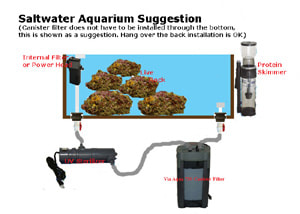
Here is an article/diagram with alternative suggestions as to how to set up a saltwater aquarium,
(please click on the picture for the full article and full size diagram):
Saltwater Aquarium Set Up
(please click on the picture for the full article and full size diagram):
Saltwater Aquarium Set Up
Videos
|
|
|
|