

Aquarium Medications Part 3
Parasite & Chemical Treatments
Parasite & Chemical Treatments
Trichlorfon (Dylox)
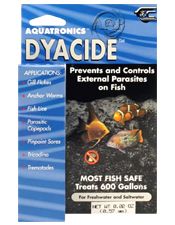
Trichlorfon (Dylox) is an Organophosphate and degrades rapidly (approximately 99% of applied degraded in 2 hours) in alkaline pond water (pH 8.5) at room temperature. But Trichlorfon remains stable in the same pond water held under acidic (pH 5.0) conditions for 2 hours.
Trichlorfon is highly toxic to invertebrates.
DO NOT USE ON FISH THAT ARE CHEMICALLY SENSITIVE to Organophosphates such as: Silver Dollars, Rays, Bala Sharks, Arowanas, Tinfoil Barbs, Hemodias, Piranha, Most Silver Scaled Fish, Marine sharks, Lion Fish.
USE: Trichlorfon/Dylox is useful for treatment of: Hydra, Lernia (Anchor Worms), Parasitic Copepods, Monodigenetic and Digenetic Flukes, Fish Lice (Argulus), Leeches.
As well Clout may be effective for at least partially exposed nematodes such as camalanus worms.
CLOUT contains Trichlorfon (Dimethyl (2,2,2,Trichloro-1-Hydroxyethyl) Phosphonate) AKA Dylox, as well as; 4-[P-(dimethylamino)-O-phenylbenzylidene]-2, 5-cyclohexadien-1-xylidene dimethylammonium chloride, 1,2,dimethyl-5-nitroimidazole.
I recommend maintaining a minimum KH of 50 ppm during treatment with Trichlorfon.
Product Resources:
*CLOUT from AAP Clout is currently out of production.
*AAP Dyacide (Dylox)
DOSAGE: There is no recommended dosage (other than Freshwater fish acute toxicity= 1.6-180 ppm), refer to manufacturers directions for all products containing Trichlorfon.
Treat again in 14 days to kill new hatchings of Anchor worms.
Use of Trichlorfon for snail treatment; caution be exercised when Trichlorfon is used for the removal of snails (or if snails are present during a parasite treatment). Although I will admit the evidence at this point is anecdotal, but since Trichlorfon is highly toxic to snails, the use of this treatment to kill snails (or in their presence) can rapidly decrease pH (especially in tanks in low KH) as snails rapidly die off (which can release other toxins).
Also be careful with the use of Dylox/Clout to treat Detritus Worms (who many confuse are Planaria), as the combination of the die off, high bio-load, and ammonia spike can often then take out the fish in the aquarium too that otherwise would not be affected by the treatment.
An important fact may be “at play” in that Trichlorfon is more stable in lower pH water with lower calcium levels, thus retaining its toxicity for a longer period of time which the often high organic decomposition found in tanks with high snail populations may allow a “snow ball” effect of dying snails, increasingly lower pH, and increasing toxicity of Trichlorfon which may result in the death of fish as well.
Trichlorfon is best used in water with mid pH readings of about 7.2 and a GH of about 7-14dGH for optimum & safest results.
In fact, the use of Trichlorfon (Dyacide) by persons not using at the optimum pH or GH OR NOT being aware of just how effective this product is for snails or Detritus worms has resulted in such massive die offs that entire tanks of fish have been killed, then these same anecdotal persons post on the internet that "Trichlorfon killed my fish" when in fact it was their improper use that killed their fish.
Used correctly, which includes not using for silver fish, as well as proper bio filtration and water changes when die-offs of anchor worms, detritus worms, flukes, etc.; this is easily the most effective external parasite product on the market by a wide margin when used in the hands of someone who knows what they are doing and reads science based information (not some person with a YouTube channel because they think they are suddenly an expert after they killed off their fish).
Side note; for marine fish, a Chloroquine Phosphate/ Pyrimethamine combination found in Marex is the better choice.
Trichlorfon is highly toxic to invertebrates.
DO NOT USE ON FISH THAT ARE CHEMICALLY SENSITIVE to Organophosphates such as: Silver Dollars, Rays, Bala Sharks, Arowanas, Tinfoil Barbs, Hemodias, Piranha, Most Silver Scaled Fish, Marine sharks, Lion Fish.
USE: Trichlorfon/Dylox is useful for treatment of: Hydra, Lernia (Anchor Worms), Parasitic Copepods, Monodigenetic and Digenetic Flukes, Fish Lice (Argulus), Leeches.
As well Clout may be effective for at least partially exposed nematodes such as camalanus worms.
CLOUT contains Trichlorfon (Dimethyl (2,2,2,Trichloro-1-Hydroxyethyl) Phosphonate) AKA Dylox, as well as; 4-[P-(dimethylamino)-O-phenylbenzylidene]-2, 5-cyclohexadien-1-xylidene dimethylammonium chloride, 1,2,dimethyl-5-nitroimidazole.
I recommend maintaining a minimum KH of 50 ppm during treatment with Trichlorfon.
Product Resources:
*CLOUT from AAP Clout is currently out of production.
*AAP Dyacide (Dylox)
DOSAGE: There is no recommended dosage (other than Freshwater fish acute toxicity= 1.6-180 ppm), refer to manufacturers directions for all products containing Trichlorfon.
Treat again in 14 days to kill new hatchings of Anchor worms.
Use of Trichlorfon for snail treatment; caution be exercised when Trichlorfon is used for the removal of snails (or if snails are present during a parasite treatment). Although I will admit the evidence at this point is anecdotal, but since Trichlorfon is highly toxic to snails, the use of this treatment to kill snails (or in their presence) can rapidly decrease pH (especially in tanks in low KH) as snails rapidly die off (which can release other toxins).
Also be careful with the use of Dylox/Clout to treat Detritus Worms (who many confuse are Planaria), as the combination of the die off, high bio-load, and ammonia spike can often then take out the fish in the aquarium too that otherwise would not be affected by the treatment.
An important fact may be “at play” in that Trichlorfon is more stable in lower pH water with lower calcium levels, thus retaining its toxicity for a longer period of time which the often high organic decomposition found in tanks with high snail populations may allow a “snow ball” effect of dying snails, increasingly lower pH, and increasing toxicity of Trichlorfon which may result in the death of fish as well.
Trichlorfon is best used in water with mid pH readings of about 7.2 and a GH of about 7-14dGH for optimum & safest results.
In fact, the use of Trichlorfon (Dyacide) by persons not using at the optimum pH or GH OR NOT being aware of just how effective this product is for snails or Detritus worms has resulted in such massive die offs that entire tanks of fish have been killed, then these same anecdotal persons post on the internet that "Trichlorfon killed my fish" when in fact it was their improper use that killed their fish.
Used correctly, which includes not using for silver fish, as well as proper bio filtration and water changes when die-offs of anchor worms, detritus worms, flukes, etc.; this is easily the most effective external parasite product on the market by a wide margin when used in the hands of someone who knows what they are doing and reads science based information (not some person with a YouTube channel because they think they are suddenly an expert after they killed off their fish).
Side note; for marine fish, a Chloroquine Phosphate/ Pyrimethamine combination found in Marex is the better choice.
Piperazine
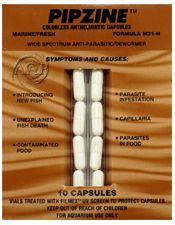
PIPERAZINE:
USE: Piperazine is an organic compound used as an anti-parasitic in veterinary medicine, primarily for worms.
Piperazine works through anthelmintic action (used to expel or destroy parasitic worms in the gastro-intestinal tract).
The mode of action is generally by paralysing parasites, which allows the host body to easily remove or expel the invading organism. This action is mediated by its agonist effects upon the inhibitory GABA (the chief inhibitory neurotransmitter in the vertebrate central nervous system.) receptor.
Its selectivity for worms and similar invertebrates is because vertebrates only use GABA in the Central Nervous System and a worms GABA receptor is a different isoform to the vertebrate's one (Isoform: A protein having the same function and similar [or identical sequence], but the product of a different gene and usually).
This product should never be used in the presence of invertebrates as for the reasons outlined above.
Piperazines aquatic uses are restricted to internal parasite control, especially intestinal worms.
Piperazine is proven effective for Capillaria Nematode worms that commonly infest the intestines of Angelfish, Discus, Gouramis (AKA "Gourami Disease"), some other cichlids, and occasionally other aquarium species.
If Piperazine can be found, it is superior to Levamisol in that it is gentler on the fish and environment. The reason in part is the mode of how the medication works while slower than Levamisol allows the fish to more gently expel the parasite with less toxins to both the fish and environment.
At the same time, Piperazine is more effective than popularly used Praziquantel (which itself has a wide safety margin)
In the aquarium, this parasite infestation spreads easily from fish to fish as they consume the eggs of the worms, shed in feces of infected individuals.
Piperazine is found in AAP Piperazine/Pipzine AND AAPDiscomed, and the now discontinued Pepso Flakes and Tetra Anti-Parasite Flakes.
Resources:
AAP Piperazine/Pipzine
AAP Discomed
Discomed Contains: Levamisol, NaCl, Piperazine, Magnesium Sulfate and Neomycin Sulfate Activity
USE: Piperazine is an organic compound used as an anti-parasitic in veterinary medicine, primarily for worms.
Piperazine works through anthelmintic action (used to expel or destroy parasitic worms in the gastro-intestinal tract).
The mode of action is generally by paralysing parasites, which allows the host body to easily remove or expel the invading organism. This action is mediated by its agonist effects upon the inhibitory GABA (the chief inhibitory neurotransmitter in the vertebrate central nervous system.) receptor.
Its selectivity for worms and similar invertebrates is because vertebrates only use GABA in the Central Nervous System and a worms GABA receptor is a different isoform to the vertebrate's one (Isoform: A protein having the same function and similar [or identical sequence], but the product of a different gene and usually).
This product should never be used in the presence of invertebrates as for the reasons outlined above.
Piperazines aquatic uses are restricted to internal parasite control, especially intestinal worms.
Piperazine is proven effective for Capillaria Nematode worms that commonly infest the intestines of Angelfish, Discus, Gouramis (AKA "Gourami Disease"), some other cichlids, and occasionally other aquarium species.
If Piperazine can be found, it is superior to Levamisol in that it is gentler on the fish and environment. The reason in part is the mode of how the medication works while slower than Levamisol allows the fish to more gently expel the parasite with less toxins to both the fish and environment.
At the same time, Piperazine is more effective than popularly used Praziquantel (which itself has a wide safety margin)
In the aquarium, this parasite infestation spreads easily from fish to fish as they consume the eggs of the worms, shed in feces of infected individuals.
Piperazine is found in AAP Piperazine/Pipzine AND AAPDiscomed, and the now discontinued Pepso Flakes and Tetra Anti-Parasite Flakes.
Resources:
AAP Piperazine/Pipzine
AAP Discomed
Discomed Contains: Levamisol, NaCl, Piperazine, Magnesium Sulfate and Neomycin Sulfate Activity
Praziquantel
Praziquantel is an anti-worm, medication. It prevents worms from growing or multiplying in the body.
It is used to treat infections caused by worms. Also internal trematodes, commonly known as flukes and flatworms.
Being a wormer with a wider safety margin, this product can be used for external Flukes when safety of more effective treatments such as Trichlorfon are in question.
Praziquantel is found in PraziPro, API General Cure, and Jungle Parasite Clear.
With the popular AAP/API General Cure, Praziquantel is combined with the also very safe Metronidazole to make for a moderately effective in tank or medicated fish food soak product with a wide margin for safety.
Jungle/Tetra/AAP Parasite Guard is similar, but also adds the chemical treatment Acriflavin as well as Diflubenzuron (an insecticide). This is also a reasonably safe and slightly stronger external parasite product than General Cure, but based on the additional ingredients not as good for a fish food soak.
Praziquantel and Levamisol are found in Jungle Medicated Parasite Food which was an excellent way to deliver this food.
However this product is not currently available, I suggest using Tetra/ Jungle Parasite Guard or API General Cure as a replacement since it contains Praziquantel and Metronidazole which both work well internally for parasites.
AAP General Cure can be used as a medicated fish food soak by using 1/2 tablet for an average 60 gallon bio load medicated fish preparation. Fish food should be soaked for 15 minutes.
After soak, pour entire contents into aquarium. (Additional medication can be added for a full tank treatment; for example with a 30 gallon aquarium, use 1/2 tablet in fish food soak and use the other half plus two more tablets in the aquarium.)
Continue this twice per day for 7-10 days
With products such as PraziPro, the best method of delivery whether for a small aquarium fish or a large pond koi is via a bath.
This bath should be 30-60 minutes and used in an appropriate sized container for the fish involved, such as a 5 gallon bucket or even larger Rubbermade container for a large Koi.
However if the infestation is systemic, "in tank" use is suggested (or in combination with a bath).
A full dose follow up treatment in also advised for parasite hatchlings 14 days after completion of initial treatment.
It should be noted that unless Praziquantel is used in a fish food soak (in other words, fed internally), it primarily will only affect externally exposed parasites.
This is important as many fish keepers are incorrectly advised to use Praziquantel as a catch all fish disease preventative when new fish are introduced. The reality is Praziquantel will only be helpful for a handful of potential externally exposed parasites, not internal and certainly not bacterial, fungal, viral and even for Ich or Velvet infestations.
Better for new fish introduction (especially if a quarantine tank is not available) is the use of AAP Medicated Wonder Shells or maybe AAP PolyGuard.
Product Sources:
*PraziPro from AAP which can be used "in tank" or as a bath for Tapeworms, Flatworms, Flukes, etc.
*Tetra/Jungle Parasite Guard
*API General Cure
Contraindications:
*Do not mix with isoniazid, pyrazinamide, or rifampin as these may significantly decrease the effective blood levels of praziquantel rendering it ineffective.
*While generally safe with crustaceans, plants and filter-bacteria, Praziquantel may kill snails
It is used to treat infections caused by worms. Also internal trematodes, commonly known as flukes and flatworms.
Being a wormer with a wider safety margin, this product can be used for external Flukes when safety of more effective treatments such as Trichlorfon are in question.
Praziquantel is found in PraziPro, API General Cure, and Jungle Parasite Clear.
With the popular AAP/API General Cure, Praziquantel is combined with the also very safe Metronidazole to make for a moderately effective in tank or medicated fish food soak product with a wide margin for safety.
Jungle/Tetra/AAP Parasite Guard is similar, but also adds the chemical treatment Acriflavin as well as Diflubenzuron (an insecticide). This is also a reasonably safe and slightly stronger external parasite product than General Cure, but based on the additional ingredients not as good for a fish food soak.
Praziquantel and Levamisol are found in Jungle Medicated Parasite Food which was an excellent way to deliver this food.
However this product is not currently available, I suggest using Tetra/ Jungle Parasite Guard or API General Cure as a replacement since it contains Praziquantel and Metronidazole which both work well internally for parasites.
AAP General Cure can be used as a medicated fish food soak by using 1/2 tablet for an average 60 gallon bio load medicated fish preparation. Fish food should be soaked for 15 minutes.
After soak, pour entire contents into aquarium. (Additional medication can be added for a full tank treatment; for example with a 30 gallon aquarium, use 1/2 tablet in fish food soak and use the other half plus two more tablets in the aquarium.)
Continue this twice per day for 7-10 days
With products such as PraziPro, the best method of delivery whether for a small aquarium fish or a large pond koi is via a bath.
This bath should be 30-60 minutes and used in an appropriate sized container for the fish involved, such as a 5 gallon bucket or even larger Rubbermade container for a large Koi.
However if the infestation is systemic, "in tank" use is suggested (or in combination with a bath).
A full dose follow up treatment in also advised for parasite hatchlings 14 days after completion of initial treatment.
It should be noted that unless Praziquantel is used in a fish food soak (in other words, fed internally), it primarily will only affect externally exposed parasites.
This is important as many fish keepers are incorrectly advised to use Praziquantel as a catch all fish disease preventative when new fish are introduced. The reality is Praziquantel will only be helpful for a handful of potential externally exposed parasites, not internal and certainly not bacterial, fungal, viral and even for Ich or Velvet infestations.
Better for new fish introduction (especially if a quarantine tank is not available) is the use of AAP Medicated Wonder Shells or maybe AAP PolyGuard.
Product Sources:
*PraziPro from AAP which can be used "in tank" or as a bath for Tapeworms, Flatworms, Flukes, etc.
*Tetra/Jungle Parasite Guard
*API General Cure
Contraindications:
*Do not mix with isoniazid, pyrazinamide, or rifampin as these may significantly decrease the effective blood levels of praziquantel rendering it ineffective.
*While generally safe with crustaceans, plants and filter-bacteria, Praziquantel may kill snails
Levamisol
Levamisol has a wide range of anti-nematodic (worms) effects. It is efficient in destroying both adult and larvae forms of gastrointestinal and pulmonary nematode parasites in fish such as Camallanus Nematodes (& is one of the best nematode treatments one can use).
It attacks parasites by causing first paralysis and then death of the parasites. Partly decomposed parasites are being eliminated during the first 24 hours since the beginning of the medicine application.
Levamisole is found primarily in wormers for animals at veterinary supply houses and treated a 5 ppm.
This was also found in an Aquatronics product, Discomed (a good one at that that contained Levamisole at safer dose in a blend that worked); no longer available since the demise of what was arguably the best fish treatment manufacturer.
In fact as a side note, purchasing aquarium products at companies such as Amazon, Pet Mountain and many others will likely result in more top notch aquarium information and supply companies disappearing as did Aquatronics, remember this the next time you attempt to save a $1 by purchasing at these types of retailers
Dosage: Refer to product instructions containing these medications (Do NOT use any of these in the presence of invertebrates). If Levamisol cannot be located, the use of Levamisol HCL found in many commercial dog, poultry, cattle, etc. wormers can be substituted.
59 mg of Levamisole HCl is equivalent to 50 mg of pure levamisole.
You will need 2.36 mg/L (or 9 mg/Gallon) of Levamisole HCL, so approximately 90mg of Levamisole HCL will treat 10 gallons (38 liters) with a required 2 ppm concentration.
Since Levamisole can be safely over dosed (with a considerable safety margin), approximately .019 teaspoon will work per 10 gallons.
Be prepared to vacuum gravel/change water to remove dead worms. The nematodes will be giving off toxins as they die.
CAUTION: Do NOT use to treat Detritus Worms usually falsely identified as Planaria. Since these generally harmless worms are mostly substrate composters, their population is usually much higher than the worms one might see on the glass, so a sudden die off from the use of Levamisole can be catastrophic to your fish population.
BETTER is to lower your bio load, less/better fish food feeding, vacuuming of substrate, and other general aquarium maintenance procedures
More on: Aquarium Answers, Nematodes and Trematodes in fish
FURTHER CAUTIONS: Due to the cut and paste nature of the Internet, some websites (such as Loaches online) have started an Internet rumor that Levamisol HCl is invertebrate safe, which of course common logic says it cannot be (not to mention my own extensive use). Think of it this way, how can you have a roach spray that is roach safe?
As well it is also rumored via this same information being re-posted onto many websites that Levamisol HCl improve fish immune function. This is MAYBE half correct!
What really happens is that Levamisole HCl increases T cell response (short term), which is certainly why it is so effective, but continued use would not actually be healthy and an improvement of natural immune response.
In fact Levamisole HCl is a Redox oxidizer (NOT reducer) and even short term use can be dangerous as it can actually lower white blood cell count resulting in fish being more susceptible to bacterial infections!
There is a good reason Levamisole is not commercially available in the United States!
References:
*Aquarium Redox
*Effects of Levamisole Hydrochloride on Cellular Immune Response
It attacks parasites by causing first paralysis and then death of the parasites. Partly decomposed parasites are being eliminated during the first 24 hours since the beginning of the medicine application.
Levamisole is found primarily in wormers for animals at veterinary supply houses and treated a 5 ppm.
This was also found in an Aquatronics product, Discomed (a good one at that that contained Levamisole at safer dose in a blend that worked); no longer available since the demise of what was arguably the best fish treatment manufacturer.
In fact as a side note, purchasing aquarium products at companies such as Amazon, Pet Mountain and many others will likely result in more top notch aquarium information and supply companies disappearing as did Aquatronics, remember this the next time you attempt to save a $1 by purchasing at these types of retailers
Dosage: Refer to product instructions containing these medications (Do NOT use any of these in the presence of invertebrates). If Levamisol cannot be located, the use of Levamisol HCL found in many commercial dog, poultry, cattle, etc. wormers can be substituted.
59 mg of Levamisole HCl is equivalent to 50 mg of pure levamisole.
You will need 2.36 mg/L (or 9 mg/Gallon) of Levamisole HCL, so approximately 90mg of Levamisole HCL will treat 10 gallons (38 liters) with a required 2 ppm concentration.
Since Levamisole can be safely over dosed (with a considerable safety margin), approximately .019 teaspoon will work per 10 gallons.
Be prepared to vacuum gravel/change water to remove dead worms. The nematodes will be giving off toxins as they die.
CAUTION: Do NOT use to treat Detritus Worms usually falsely identified as Planaria. Since these generally harmless worms are mostly substrate composters, their population is usually much higher than the worms one might see on the glass, so a sudden die off from the use of Levamisole can be catastrophic to your fish population.
BETTER is to lower your bio load, less/better fish food feeding, vacuuming of substrate, and other general aquarium maintenance procedures
More on: Aquarium Answers, Nematodes and Trematodes in fish
FURTHER CAUTIONS: Due to the cut and paste nature of the Internet, some websites (such as Loaches online) have started an Internet rumor that Levamisol HCl is invertebrate safe, which of course common logic says it cannot be (not to mention my own extensive use). Think of it this way, how can you have a roach spray that is roach safe?
As well it is also rumored via this same information being re-posted onto many websites that Levamisol HCl improve fish immune function. This is MAYBE half correct!
What really happens is that Levamisole HCl increases T cell response (short term), which is certainly why it is so effective, but continued use would not actually be healthy and an improvement of natural immune response.
In fact Levamisole HCl is a Redox oxidizer (NOT reducer) and even short term use can be dangerous as it can actually lower white blood cell count resulting in fish being more susceptible to bacterial infections!
There is a good reason Levamisole is not commercially available in the United States!
References:
*Aquarium Redox
*Effects of Levamisole Hydrochloride on Cellular Immune Response
Methylene Blue
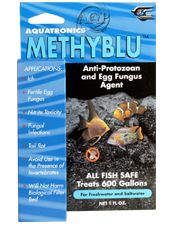
A heterocyclic aromatic chemical compound with molecular formula: C16H18ClN3S.
Methylene Blue Aquarium Treatment, for Baths, DipsMethylene Blue is widely used a Redox indicator in chemistry. Solutions of this substance are blue when in an oxidizing environment, but will turn colorless if exposed to a reducing agent.
Since Methylene blue is a redox dye and raises the oxygen consumption of cells, this causes the hydrogen oxidized to be passed on to the oxygen.
Each molecule of the dye is oxidized and reduced about 100 times per second. Thus, while disinfection results from this, methylene blue is also excellent against methemoglobin intoxication.
The therapeutic action of methylene blue on bacteria and other parasites is probably due to its binding effect with cytoplasmic structures within the cell and also its interference with oxidation-reduction processes.
Methylene Blue is very similar to anti parasite/malarial drug Chloroquine (MB: C16H18ClN3S / Chloroquine: C18H26ClN3).
Also due to its oxidative reduction properties at therapeutic doses (it is an oxidizing agent occur only at very high doses), MB can also be used as an indicator to determine if a cell alive or not or if the slime coat (which is ESSENTIAL for fish) is healthy or not. The blue indicator turns colorless in the presence of most healthy cells, slime coat, or active enzymes, HOWEVER the fish will stain blue where injury has occurred, especially to the slime coat (which the loss of would compare to a human have skin peeled off).
Methylene blue is used as a medication for the treatment of methemoglobinemia.
Methemoglobinemia can be caused by high nitrites (and ammonia) in the blood, which happens in fish respiration in water high in ammonia or nitrites. Methemoglobinemia is treated with the use of methylene blue, which restores the hemoglobin to its normal oxygen-carrying state.
The anti-malarial drug chloroquine was developed in part from Methylene Blue. Malaria is a protozoan similar to the protozoan that causes ich (Ichthyophthirius multifilius) and oodinium, which is why Methylene Blue is useful for parasite and fungal treatments.
As a side note (& this is not to advocate for the use of Methylene Blue in this way), it has now been shown to help Alzheimer's patients slow the progression of Alzheimer's disease for as long as 19 months used in 60 mg. doses three times daily.
Reference: Tau-Targeted Therapy Slows Alzheimer's Progression
USE:
For use to treat Fungus on eggs, Ich, Saprolegnia and some bacteria (although generally not for use in bacterial infections other than as a bath/dip/quarantine therapy).
MB is effective in treatment of some gill diseases, especially from injury such as ammonia burns (or cyanide poisoning sometimes used in capture of some marine fish) or fluke damage as it transports oxygen allowing for more gill efficiency and as well aiding in some healing of tissue.
This is backed up the use of Methylene Blue in humans as an antidote for carbon monoxide and cyanide poisoning
Probably one of the best “first response” treatments when used as part of a fish bath or even dripped directly on a fish for both internal and internal injuries and infections.
Generally used as a 30 minute bath/dip at double dose, in fact Methylene Blue has a wide safety margin and is nontoxic when used as recommended. Fish tolerate relatively high dosages of Methylene Blue without side effects.
Very effective when used as a dip for topical treatment of parasites, fungal, and some infections. When Dylox is not available, this can a useful treatment for anchor worm (especially in goldfish); first carefully remove the anchor worm with tweezers, then dip the affected fish in Methylene blue. When used with a UV sterilizer to kill the swimming stage of the female anchor worm (the female is the parasite), this can be an effective treatment. (Tank can also be treated with Malachite green or malachite green combination during this time for improved effectiveness).
Methylene Blue can also treat some protozoa (such as Oodinium, although only a mild treatment for this but it can be more effective when combined with other chemical treatments such as in Medicated Wonder Shells).
A source for:
Medicated Wonder Shells
Methylene Blue is generally safe when used in the presence of snails, crabs, and most shrimps; however cautions should be used.
Methylene Blue is best not used in the presence of most freshwater plants, although short term use will allow most plants to bounce back quickly.
Methylene Blue is also very useful for;
A dip/bath for potassium cyanide, ammonia, and nitrite poisoning due to Methylene Blue’s affect on Methemoglobinemia (nitrite poisoning).
Effective as an antidote for other forms of poisoning including damage to the liver and kidneys caused from poisoning (assuming damage is not past the point normal regeneration) due to being reduced by components of the electron transport chain (a chemical reaction between an electron donor and an electron acceptor to the transfer of H+ ions across a membrane, via a set of mediating biochemical Redox reactions).
For transfer of fish when moving or temporary storage of fish in crowded conditions.
Treatment of new fish arrivals in a hospital tank, again due to methylene blue’s affect on Methemoglobinemia, bacteria, and protozoa.
As a medicated bath for Dropsy or any other internal malady such as Swim Bladder problems (as MB is easily tissue absorbed). For many external infections Potassium Permanganate is sometimes a better choice for a bath.
To prevent egg in breeding tanks (best used in bare bottom breeding tanks)
Effective as an antimicrobial swab for sores, tissue damage caused by bacterial pathogens such as Aeromonas or Columnaris, and even as swab following a minor fish surgery to remove tumors or similar.
A test for Redox Potential in aquariums, as methylene blue will lose color in a reducing environment (you can test this with some powdered Wonder Shell dissolved in water).
Further Reference:
THE REDOX POTENTIAL IN AQUARIUMS & PONDS
The bottom line is Methylene Blues is one aquarium treatment/medication NO aquarium keeper should be without, it should always be part of ones basic on hand aquarium keeping tools!
DOSAGE: 1 teaspoon of a 2.303% solution per 10 gallons every other day for 10 days with water changes before each treatment. BEST USED IN A HOSPITAL TANK or bath as previously noted. Methylene blue can destroy nitrifying bacteria and plants in the display aquarium.
My preferred use of Methylene Blue is a bath.
To prepare this bath I use 1 teaspoon 2.303% solution per 5 gallons (double dose) in a bath of aquarium water from the tank the fish you wish to treat came from, I usually use about a ½ gallon of water, however you may use less.
Measurement of the Methylene Blue does not need to be precise as this bath should be used for about 30 minutes (although do not grossly overdose).
You may also add salts to your bath to improve effectiveness for certain problems when preparing baths for freshwater fish (such as swim bladder, dropsy or unknown problems). Generally I would use 1 teaspoon of sodium chloride (regular salt) per gallon and occasionally ¼ teaspoon of Epsom Salts (Magnesium Sulfate) per gallon.
Make sure you keep the water in a warm area, as in a cold room the water temperature can drop rapidly which would stress the fish. Do NOT pour this water back into your display aquarium when finished. This can be performed twice per day. This bath is useful for fresh AND saltwater fish.
For more about Fish Baths, please refer to this article:
Fish Baths, Dips; How to Perform
This bath is VERY effective for ammonia/nitrite poisoning, Swim Bladder problems, and is helpful for many other internal/systemic infections. MB baths are a good treatment when nothing else is working and/or little is known as to why as fish is acting abnormally (the MB bath does not always work, but it is a relatively safe method vs. indiscriminately dumping other medications into a display aquarium).
In the case of swim bladder infection or problems the MB bath is often the only treatment required other than possible correcting diet and adding more electrolytes (calcium, magnesium, etc. to your aquarium.
When there are multiple external issues (fin rot, frayed fins, sores), the better choice for a bath (or especially for in tank treatment) is "AAP Nitrofuracin Green" which combines Nitrofurazone with Methylene Blue along with Sulfathiazole, & Sodium.
An alternative to Methylene Blue for adding to your aquarium or for fish transport is SeaChem StressGuard.
StressGuard contains active colloidal protein agents that actively seeks out any wounds, abrasions, or places where exposed proteins are and attaches to this area to help directly deliver the disinfectant in the product and start the healing process.
This is excellent for fish that are injured and can be used full strength in bath as well without the harmful side effect of bio filter destruction that is possible with Methylene Blue.
HOWEVER, it does not have the anti-parasitic, and oxygen carrying abilities of Methylene Blue and should not be used if these properties are needed.
Product Resources:
*AAP MethyBlu Premium Concentrated Methylene Blue (recommended)
*Kordon Methylene Blue
*AAP Nitrofuracin Green; Synergistic Nitrofurazone, Sulfathiazole Sodium, & Methylene Blue Full Spectrum Treatment
*SeaChem StressGuard
*AAP Medicated Wonder Shell
References:
*Salt use in freshwater aquariums
*Aquarium Chemistry; Calcium, Magnesium, and more
Contraindications:
*Do NOT use with Tetracycline or Erythromycin
*Do NOT use in an aquarium system without an established healthy bio filter, and even then use with caution.
*Wait 30 minutes to add after use of any Redox Reducing water conditioner, which is most any including SeaChem Prime, Kordon Novaqua, Kordon Amquel, Jungle Start Right, API Stress Coat, etc., as these can partially remove MB.
*Do NOT use in the presence of Marine Aquarium Anemones, Corals, or Cephlapods (Octopus, etc).
NOTES: Methylene Blue is removed by activated carbon filtration. It will also be absorbed by porous materials such as rock, coral and wood.
Caution should be used in a display tank at full dose (not usually a problem when part of buffered chemical formulations such as Medicated Wonder Shells when used as directed).
Further references:
https://ag.arizona.edu/azaqua/ista/ista6/ista6web/pdf/188.pdf
Methylene Blue Aquarium Treatment, for Baths, DipsMethylene Blue is widely used a Redox indicator in chemistry. Solutions of this substance are blue when in an oxidizing environment, but will turn colorless if exposed to a reducing agent.
Since Methylene blue is a redox dye and raises the oxygen consumption of cells, this causes the hydrogen oxidized to be passed on to the oxygen.
Each molecule of the dye is oxidized and reduced about 100 times per second. Thus, while disinfection results from this, methylene blue is also excellent against methemoglobin intoxication.
The therapeutic action of methylene blue on bacteria and other parasites is probably due to its binding effect with cytoplasmic structures within the cell and also its interference with oxidation-reduction processes.
Methylene Blue is very similar to anti parasite/malarial drug Chloroquine (MB: C16H18ClN3S / Chloroquine: C18H26ClN3).
Also due to its oxidative reduction properties at therapeutic doses (it is an oxidizing agent occur only at very high doses), MB can also be used as an indicator to determine if a cell alive or not or if the slime coat (which is ESSENTIAL for fish) is healthy or not. The blue indicator turns colorless in the presence of most healthy cells, slime coat, or active enzymes, HOWEVER the fish will stain blue where injury has occurred, especially to the slime coat (which the loss of would compare to a human have skin peeled off).
Methylene blue is used as a medication for the treatment of methemoglobinemia.
Methemoglobinemia can be caused by high nitrites (and ammonia) in the blood, which happens in fish respiration in water high in ammonia or nitrites. Methemoglobinemia is treated with the use of methylene blue, which restores the hemoglobin to its normal oxygen-carrying state.
The anti-malarial drug chloroquine was developed in part from Methylene Blue. Malaria is a protozoan similar to the protozoan that causes ich (Ichthyophthirius multifilius) and oodinium, which is why Methylene Blue is useful for parasite and fungal treatments.
As a side note (& this is not to advocate for the use of Methylene Blue in this way), it has now been shown to help Alzheimer's patients slow the progression of Alzheimer's disease for as long as 19 months used in 60 mg. doses three times daily.
Reference: Tau-Targeted Therapy Slows Alzheimer's Progression
USE:
For use to treat Fungus on eggs, Ich, Saprolegnia and some bacteria (although generally not for use in bacterial infections other than as a bath/dip/quarantine therapy).
MB is effective in treatment of some gill diseases, especially from injury such as ammonia burns (or cyanide poisoning sometimes used in capture of some marine fish) or fluke damage as it transports oxygen allowing for more gill efficiency and as well aiding in some healing of tissue.
This is backed up the use of Methylene Blue in humans as an antidote for carbon monoxide and cyanide poisoning
Probably one of the best “first response” treatments when used as part of a fish bath or even dripped directly on a fish for both internal and internal injuries and infections.
Generally used as a 30 minute bath/dip at double dose, in fact Methylene Blue has a wide safety margin and is nontoxic when used as recommended. Fish tolerate relatively high dosages of Methylene Blue without side effects.
Very effective when used as a dip for topical treatment of parasites, fungal, and some infections. When Dylox is not available, this can a useful treatment for anchor worm (especially in goldfish); first carefully remove the anchor worm with tweezers, then dip the affected fish in Methylene blue. When used with a UV sterilizer to kill the swimming stage of the female anchor worm (the female is the parasite), this can be an effective treatment. (Tank can also be treated with Malachite green or malachite green combination during this time for improved effectiveness).
Methylene Blue can also treat some protozoa (such as Oodinium, although only a mild treatment for this but it can be more effective when combined with other chemical treatments such as in Medicated Wonder Shells).
A source for:
Medicated Wonder Shells
Methylene Blue is generally safe when used in the presence of snails, crabs, and most shrimps; however cautions should be used.
Methylene Blue is best not used in the presence of most freshwater plants, although short term use will allow most plants to bounce back quickly.
Methylene Blue is also very useful for;
A dip/bath for potassium cyanide, ammonia, and nitrite poisoning due to Methylene Blue’s affect on Methemoglobinemia (nitrite poisoning).
Effective as an antidote for other forms of poisoning including damage to the liver and kidneys caused from poisoning (assuming damage is not past the point normal regeneration) due to being reduced by components of the electron transport chain (a chemical reaction between an electron donor and an electron acceptor to the transfer of H+ ions across a membrane, via a set of mediating biochemical Redox reactions).
For transfer of fish when moving or temporary storage of fish in crowded conditions.
Treatment of new fish arrivals in a hospital tank, again due to methylene blue’s affect on Methemoglobinemia, bacteria, and protozoa.
As a medicated bath for Dropsy or any other internal malady such as Swim Bladder problems (as MB is easily tissue absorbed). For many external infections Potassium Permanganate is sometimes a better choice for a bath.
To prevent egg in breeding tanks (best used in bare bottom breeding tanks)
Effective as an antimicrobial swab for sores, tissue damage caused by bacterial pathogens such as Aeromonas or Columnaris, and even as swab following a minor fish surgery to remove tumors or similar.
A test for Redox Potential in aquariums, as methylene blue will lose color in a reducing environment (you can test this with some powdered Wonder Shell dissolved in water).
Further Reference:
THE REDOX POTENTIAL IN AQUARIUMS & PONDS
The bottom line is Methylene Blues is one aquarium treatment/medication NO aquarium keeper should be without, it should always be part of ones basic on hand aquarium keeping tools!
DOSAGE: 1 teaspoon of a 2.303% solution per 10 gallons every other day for 10 days with water changes before each treatment. BEST USED IN A HOSPITAL TANK or bath as previously noted. Methylene blue can destroy nitrifying bacteria and plants in the display aquarium.
My preferred use of Methylene Blue is a bath.
To prepare this bath I use 1 teaspoon 2.303% solution per 5 gallons (double dose) in a bath of aquarium water from the tank the fish you wish to treat came from, I usually use about a ½ gallon of water, however you may use less.
Measurement of the Methylene Blue does not need to be precise as this bath should be used for about 30 minutes (although do not grossly overdose).
You may also add salts to your bath to improve effectiveness for certain problems when preparing baths for freshwater fish (such as swim bladder, dropsy or unknown problems). Generally I would use 1 teaspoon of sodium chloride (regular salt) per gallon and occasionally ¼ teaspoon of Epsom Salts (Magnesium Sulfate) per gallon.
Make sure you keep the water in a warm area, as in a cold room the water temperature can drop rapidly which would stress the fish. Do NOT pour this water back into your display aquarium when finished. This can be performed twice per day. This bath is useful for fresh AND saltwater fish.
For more about Fish Baths, please refer to this article:
Fish Baths, Dips; How to Perform
This bath is VERY effective for ammonia/nitrite poisoning, Swim Bladder problems, and is helpful for many other internal/systemic infections. MB baths are a good treatment when nothing else is working and/or little is known as to why as fish is acting abnormally (the MB bath does not always work, but it is a relatively safe method vs. indiscriminately dumping other medications into a display aquarium).
In the case of swim bladder infection or problems the MB bath is often the only treatment required other than possible correcting diet and adding more electrolytes (calcium, magnesium, etc. to your aquarium.
When there are multiple external issues (fin rot, frayed fins, sores), the better choice for a bath (or especially for in tank treatment) is "AAP Nitrofuracin Green" which combines Nitrofurazone with Methylene Blue along with Sulfathiazole, & Sodium.
An alternative to Methylene Blue for adding to your aquarium or for fish transport is SeaChem StressGuard.
StressGuard contains active colloidal protein agents that actively seeks out any wounds, abrasions, or places where exposed proteins are and attaches to this area to help directly deliver the disinfectant in the product and start the healing process.
This is excellent for fish that are injured and can be used full strength in bath as well without the harmful side effect of bio filter destruction that is possible with Methylene Blue.
HOWEVER, it does not have the anti-parasitic, and oxygen carrying abilities of Methylene Blue and should not be used if these properties are needed.
Product Resources:
*AAP MethyBlu Premium Concentrated Methylene Blue (recommended)
*Kordon Methylene Blue
*AAP Nitrofuracin Green; Synergistic Nitrofurazone, Sulfathiazole Sodium, & Methylene Blue Full Spectrum Treatment
*SeaChem StressGuard
*AAP Medicated Wonder Shell
References:
*Salt use in freshwater aquariums
*Aquarium Chemistry; Calcium, Magnesium, and more
Contraindications:
*Do NOT use with Tetracycline or Erythromycin
*Do NOT use in an aquarium system without an established healthy bio filter, and even then use with caution.
*Wait 30 minutes to add after use of any Redox Reducing water conditioner, which is most any including SeaChem Prime, Kordon Novaqua, Kordon Amquel, Jungle Start Right, API Stress Coat, etc., as these can partially remove MB.
*Do NOT use in the presence of Marine Aquarium Anemones, Corals, or Cephlapods (Octopus, etc).
NOTES: Methylene Blue is removed by activated carbon filtration. It will also be absorbed by porous materials such as rock, coral and wood.
Caution should be used in a display tank at full dose (not usually a problem when part of buffered chemical formulations such as Medicated Wonder Shells when used as directed).
Further references:
https://ag.arizona.edu/azaqua/ista/ista6/ista6web/pdf/188.pdf
Mebromin (AKA Wound Control)
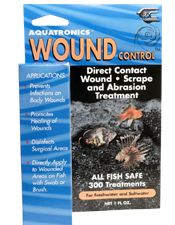
USE: A topical antiseptic and oxidizer used for injuries, exposed wounds & open sores (with both bacterial and fungal infections), and exposed multi cell parasites such as Anchor Worm.
Due to its anionic character, it is often an excellent choice for exposed EXTERNAL bacterial or fungal pathogens (including some parasites or at least secondary infections there of).
However for this same reason if much living tissue is exposed or for gills, Methylene Blue would be a better choice.
Products containing merbromin have been difficult to find in the USA because of its mercury content (although this has never been scientifically established to be a problem). Merbromin was originally sold by Aquatronics as a fish care swab.
AAP has been able to get this back in stock as this was one "fish care tool" I was never without in my aquarium maintenance and "fish doctor" days as I had success with it where other products failed including Methylene Blue!!
Product Resources:
AAP Mebromin (Wound Control)
AAP Paracide (Excellent replacement for Quick Cure which is no longer produced)
Due to its anionic character, it is often an excellent choice for exposed EXTERNAL bacterial or fungal pathogens (including some parasites or at least secondary infections there of).
However for this same reason if much living tissue is exposed or for gills, Methylene Blue would be a better choice.
Products containing merbromin have been difficult to find in the USA because of its mercury content (although this has never been scientifically established to be a problem). Merbromin was originally sold by Aquatronics as a fish care swab.
AAP has been able to get this back in stock as this was one "fish care tool" I was never without in my aquarium maintenance and "fish doctor" days as I had success with it where other products failed including Methylene Blue!!
Product Resources:
AAP Mebromin (Wound Control)
AAP Paracide (Excellent replacement for Quick Cure which is no longer produced)
Acriflavin/ Acriflavine
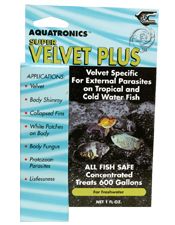
USE: An antiseptic agent for the skin and mucous membranes. It is known to inhibit mitochondriogenesis.
Generally used for treatment of external fungal infections such as mouth fungus, fin and tail rot, fungus, saprolegnia, and mild egg fungus (not as strong as Methylene Blue for egg fungus, but safer for main display tank use).
Poor internet searches bring up an article stating that Acriflavin is not indicated for fungal infections, this unfortunately flys in the face of professional aquarium history where it has been an effective part of external fungus/saprolegnia treatments assuming causes of the infection are removed
Further Reading:
Aquarium Fungus/Saprolegnia; Treatment, Prevention
Mildly effective for skin parasites such as oodinium (velvet), sliminess of skin, and ich (although a very mild treatment for Ich, FW or SW).
Acriflavin is effective for mild non systemic gram negative bacterial infections.
DOSAGE: 1 teaspoon of a 3.84% solution per 10 gallons every other day for 10 days. Combines well with copper sulfate and malachite green.
Acriflavin is found in:
*AAP Super Velvet Plus
*Medicated Wonder Shells; ONLY at AAP (these are NOT available in the Weco Wonder Shells sold elsewhere)
Contraindications:
*Wait 30 minutes to add after use of any Redox Reducing water conditioner, which is most any including SeaChem Prime, Kordon Novaqua, Kordon Amquel, Jungle Start Right, API Stress Coat, etc.
*Not generally safe for many crabs, snails, and shrimp at full dose. However Acriflavin can be used with caution in smaller doses with crustaceans and should be buffered (as with Medicated Wonder Shells) and water changes are advised after use
Generally used for treatment of external fungal infections such as mouth fungus, fin and tail rot, fungus, saprolegnia, and mild egg fungus (not as strong as Methylene Blue for egg fungus, but safer for main display tank use).
Poor internet searches bring up an article stating that Acriflavin is not indicated for fungal infections, this unfortunately flys in the face of professional aquarium history where it has been an effective part of external fungus/saprolegnia treatments assuming causes of the infection are removed
Further Reading:
Aquarium Fungus/Saprolegnia; Treatment, Prevention
Mildly effective for skin parasites such as oodinium (velvet), sliminess of skin, and ich (although a very mild treatment for Ich, FW or SW).
Acriflavin is effective for mild non systemic gram negative bacterial infections.
DOSAGE: 1 teaspoon of a 3.84% solution per 10 gallons every other day for 10 days. Combines well with copper sulfate and malachite green.
Acriflavin is found in:
*AAP Super Velvet Plus
*Medicated Wonder Shells; ONLY at AAP (these are NOT available in the Weco Wonder Shells sold elsewhere)
Contraindications:
*Wait 30 minutes to add after use of any Redox Reducing water conditioner, which is most any including SeaChem Prime, Kordon Novaqua, Kordon Amquel, Jungle Start Right, API Stress Coat, etc.
*Not generally safe for many crabs, snails, and shrimp at full dose. However Acriflavin can be used with caution in smaller doses with crustaceans and should be buffered (as with Medicated Wonder Shells) and water changes are advised after use
Malachite Green (& Myxazin)
|
|
A bacteriological stain and topical antiseptic or to treat parasites, and fungal infections in fish and fish eggs. As well Malachite Green has some anti-viral properties.
The chemical formula is C23H25ClN2
Despite similar elements to Methylene Blue, Malachite Green is VERY different in its properties, effects on fish, disease and aquatic environment compared to Methylene Blue.
Malachite green is generally much more effective in treatment of external & even some internal parasites than MB, it is generally equal to MB in cases of Saprolegnia (Fungus).
Malachite Green is much harsher on many sensitive fish (such as catfish) than MB and does not have the blood oxygen enhancing capabilities of Methylene Blue nor is it useful as an antiseptic, however Malachite Green does NOT have the gram positive bacteriostatic properties Methylene Blue has and thus is not hard on nitrifying bacteria, despite some claims to the contrary which is of worth while note when treating an established aquarium with Malachite Green.
It is noteworthy that Malachite Green will stain your aquarium silicone (usually permanently), but this is not damaging to the silicone nor does it leech back out (which is the reason the stain is permanent).
Malachite Green is also quickly absorbed by organic matter in an aquarium or pond, so it is usually rendered in effective in a low bio load aquarium within 48 hours and in as little as 12-24 hours in a high bio-load pond.
Product Source:
Premium Aquarium Repair Silicone
USE:
For treatment and control of various external parasites of freshwater and marine fishes.
Also as noted earlier, Malachite Green has some anti-viral properties and I've found some limited effectiveness for external viruses such as warts.
When used as directed the medication will control or prevent the following common protozoan parasites:
Ichthyophthinus (freshwater Ich) exhibited as fine “salt like” white spots that usually first appear on the fins.
Costia (Ichthyobodo). Not to be confused with ich, is a parasite that can live dormant on healthy fish (primarily their gills), then under certain conditions (poor water conditions, stress, etc.), reproduce rapidly.
Symptoms of an outbreak include Heavy and labored “breathing” flashing and rubbing, skin cloudiness caused by excess mucus.
Chilodonella, *Ambiphyra, *Cryptocaryon (Marine Ich), *Epistylis, *Oodinium and Trichodina, *Plistophora (best combined with formalin at 1/2 strength)
Malachite Green is also effective against common external fungal infections of fishes and eggs which include Achlya and Saprolegnia.
The Malachite Green can and is occasionally used for marine ich (Cryptocaryon), this is usually a poor choice for effectiveness and toxicity to many invertebrate (I have never seen fish toxicity demonstrated at normal treatment levels).
DOSAGE: 1 teaspoon of a 0.038% solution per 10 gallons every other day for 10-14 days. Or 1 drop of .50% solution per gallon every other day for 10- 14 days. 25% water changes are recommended before each dose. Use half dose for scale-less and delicate fish such as Clown Loaches and Neon Tetras. Double dose for marine aquariums.
As well, the use of Triple Sulfa or Nitrofurazone with Malachite Green (or combinations products with Malachite Green as the primary ingredient) can buffer the effects of Malachite Green in sensitive fish such as Clown Loaches and many Catfish.
The use of Triple Sulfa or Nitrofurazone with Malachite Green also provides the benefit of increased secondary infection protection; especially Fungus (Saprolegnia) & Columnaris (both are common secondary infections to Ich).
Note; Malachite green is more toxic at lower ph and low hardness, and is best used with a KH of 50 and GH of 100 ppm OR HIGHER.
Also it should be noted that older formulas of Malachite Green that contain high amounts of zinc are also much more toxic (most newer products have much less or 0).
Medicated Wonder Shells contain Malachite Green (and other chemical treatments) in a buffered form that is ideal for mild to moderate ich infections especially where low pH, KH, & GH are a problem.
Product Reference:
AAP/SeaChem Sulfaplex/Sulfathiazole
AAP Yellow Powder (Premium Nitrofurazone)
Finally, as to often thrown around anecdotal comments about the carcinogenic properties of Malachite Green, these are at best inconclusive, especially at normal therapeutic doses.
This scientific research article deals with this in detail: Toxicology and Carcinogenesis studies of Malachite Green-
http://ntp-server.niehs.nih.gov/files/527-C_LowRes_Bookmark.pdf (Link is no longer valid)
In the one study used to state that Malachite Green is dangerous has this statement: "The data relating to the carcinogenicity of malachite green are extremely limited"
More importantly that amount of MG used to achieve the most toxic results was 1,200 ppm fed daily for 28 days.
THIS IS 24 TIMES THE HIGHEST THERAPEUTIC DOSE USED FOR FISH, USUALLY PERFOMED FOR ONLY 10 DAYS!
To draw the conclusions many draw from this study is ludicrous, yet many in the hobby have cut and paste this so much, most now believe that Malachite Green is highly toxic and carcinogenic at the low doses used for fish treatments.
Many will also cite the US governments ban on Malachite Green for food fish use as proof of toxicity of Malachite Green, however this is not proof rather precautionary as the above referenced article points out that most toxic effects from MG come from vastly higher than normal doses (although I would not bath yourself in Malachite Green, but who does). Please read the facts!!!!
One also might compare this to the State of California’s ban on Piranha out of fear they will accidentally find their way into lakes and reproduce, unfortunately there is absolutely no evidence for this whatsoever, yet the ban persists.
Further Reference:
Toxicity Studies of Malachite Green Chloride
Malachite Green can be combined with Formalin or Acriflavin.
AAP Aquatronics Greenex, saltwater fish Cryptocaryon Ich and parasite treatmentHere are few recommended products containing Malachite Green:
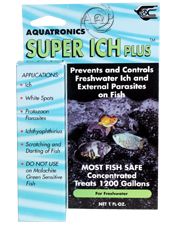
AAP Super Ich Plus
A very effective combination of Malachite Green and Quinine Hydrochloride.
Probably one of the strongest combinations, however this product is generally not safe malachite green sensitive fish
Another excellent product with malachite green is:
ParaGuard
ParaGuard employs a proprietary, synergistic blend of aldehydes, malachite green and fish protective polymers.
An excellent replacement for Quick Cure which is no longer produced:
AAP Paracide
For Marine Ich (actually Cryptocaryon), a product with malachite green is:
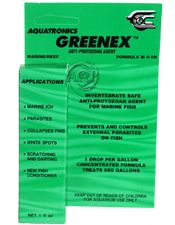
AAP Greenex
AAP Greenex combines Malachite green & Quinine Hydrochloride in an all saltwater fish & FOWLR tank safe formula.
And the safest method, albeit a much lower therapeutic dose, is via the Medicated Wonder Shell which combines in small doses Malachite Green, Acriflavin, Methylene Blue and ionic safe copper along with (and most importantly) a buffered mineral Cation formula that improves fish osmoregulation & Redox balance:
*Medicated Wonder Shells; ONLY at AAP
These contain Malachite Green, in a lower slow release formula that is safe for most fish and add essential minerals as well, however these medicated mineral blocks are best as a follow up or prevention treatment for Ich (they are a good first treatment for Velvet & often fungus as well as back up to medicated fish food soaks for internal parasites)
"Myxazin"
The product "Myxazin" commonly sold in Europe also contains Malachite Green (Malachite Green 0.17%, Formaldehyde 0.24%, Acriflavine 0.11%). This product is marketed as a bactericide, which these ingredients in this combination can perform as a bactericide.
HOWEVER for serious bacterial infections it does not and CANNOT perform as well as strong antibiotic combinations such as AAP Yellow Powder (Nitrofurazone) combined with AAP/SeaChem Kanaplex (Kanamycin).
"Myxazin" is similar to a Medicated Wonder Shell and would better be used as a "mop up" or in mild to maybe moderate bacterial infections where much of the problem can be remedied by correcting water parameters/stressors.
Also be aware that Formaldehyde found in "Myxazin" can harm open wounds commonly found in bacterial infections and impede healing.
Contraindications
*Wait 30 minutes to add after use of any Redox Reducing water conditioner, which is most any including SeaChem Prime, Kordon Novaqua, Kordon Amquel, Jungle Start Right, API Stress Coat, etc.
*Do not use full strength with sensitive fish such as Loaches and most catfish (Buffering with Triple Sulfa is recommended)
*Do not use with Tetracycline or Erythromycin
*For external use only, do not use products containing Malachite Green for internal use including fish food soaks
Recommended Reading:
IDENTIFICATION & TREATMENT FRESHWATER AND SALTWATER ICH
The chemical formula is C23H25ClN2
Despite similar elements to Methylene Blue, Malachite Green is VERY different in its properties, effects on fish, disease and aquatic environment compared to Methylene Blue.
Malachite green is generally much more effective in treatment of external & even some internal parasites than MB, it is generally equal to MB in cases of Saprolegnia (Fungus).
Malachite Green is much harsher on many sensitive fish (such as catfish) than MB and does not have the blood oxygen enhancing capabilities of Methylene Blue nor is it useful as an antiseptic, however Malachite Green does NOT have the gram positive bacteriostatic properties Methylene Blue has and thus is not hard on nitrifying bacteria, despite some claims to the contrary which is of worth while note when treating an established aquarium with Malachite Green.
It is noteworthy that Malachite Green will stain your aquarium silicone (usually permanently), but this is not damaging to the silicone nor does it leech back out (which is the reason the stain is permanent).
Malachite Green is also quickly absorbed by organic matter in an aquarium or pond, so it is usually rendered in effective in a low bio load aquarium within 48 hours and in as little as 12-24 hours in a high bio-load pond.
Product Source:
Premium Aquarium Repair Silicone
USE:
For treatment and control of various external parasites of freshwater and marine fishes.
Also as noted earlier, Malachite Green has some anti-viral properties and I've found some limited effectiveness for external viruses such as warts.
When used as directed the medication will control or prevent the following common protozoan parasites:
Ichthyophthinus (freshwater Ich) exhibited as fine “salt like” white spots that usually first appear on the fins.
Costia (Ichthyobodo). Not to be confused with ich, is a parasite that can live dormant on healthy fish (primarily their gills), then under certain conditions (poor water conditions, stress, etc.), reproduce rapidly.
Symptoms of an outbreak include Heavy and labored “breathing” flashing and rubbing, skin cloudiness caused by excess mucus.
Chilodonella, *Ambiphyra, *Cryptocaryon (Marine Ich), *Epistylis, *Oodinium and Trichodina, *Plistophora (best combined with formalin at 1/2 strength)
Malachite Green is also effective against common external fungal infections of fishes and eggs which include Achlya and Saprolegnia.
The Malachite Green can and is occasionally used for marine ich (Cryptocaryon), this is usually a poor choice for effectiveness and toxicity to many invertebrate (I have never seen fish toxicity demonstrated at normal treatment levels).
DOSAGE: 1 teaspoon of a 0.038% solution per 10 gallons every other day for 10-14 days. Or 1 drop of .50% solution per gallon every other day for 10- 14 days. 25% water changes are recommended before each dose. Use half dose for scale-less and delicate fish such as Clown Loaches and Neon Tetras. Double dose for marine aquariums.
As well, the use of Triple Sulfa or Nitrofurazone with Malachite Green (or combinations products with Malachite Green as the primary ingredient) can buffer the effects of Malachite Green in sensitive fish such as Clown Loaches and many Catfish.
The use of Triple Sulfa or Nitrofurazone with Malachite Green also provides the benefit of increased secondary infection protection; especially Fungus (Saprolegnia) & Columnaris (both are common secondary infections to Ich).
Note; Malachite green is more toxic at lower ph and low hardness, and is best used with a KH of 50 and GH of 100 ppm OR HIGHER.
Also it should be noted that older formulas of Malachite Green that contain high amounts of zinc are also much more toxic (most newer products have much less or 0).
Medicated Wonder Shells contain Malachite Green (and other chemical treatments) in a buffered form that is ideal for mild to moderate ich infections especially where low pH, KH, & GH are a problem.
Product Reference:
AAP/SeaChem Sulfaplex/Sulfathiazole
AAP Yellow Powder (Premium Nitrofurazone)
Finally, as to often thrown around anecdotal comments about the carcinogenic properties of Malachite Green, these are at best inconclusive, especially at normal therapeutic doses.
This scientific research article deals with this in detail: Toxicology and Carcinogenesis studies of Malachite Green-
http://ntp-server.niehs.nih.gov/files/527-C_LowRes_Bookmark.pdf (Link is no longer valid)
In the one study used to state that Malachite Green is dangerous has this statement: "The data relating to the carcinogenicity of malachite green are extremely limited"
More importantly that amount of MG used to achieve the most toxic results was 1,200 ppm fed daily for 28 days.
THIS IS 24 TIMES THE HIGHEST THERAPEUTIC DOSE USED FOR FISH, USUALLY PERFOMED FOR ONLY 10 DAYS!
To draw the conclusions many draw from this study is ludicrous, yet many in the hobby have cut and paste this so much, most now believe that Malachite Green is highly toxic and carcinogenic at the low doses used for fish treatments.
Many will also cite the US governments ban on Malachite Green for food fish use as proof of toxicity of Malachite Green, however this is not proof rather precautionary as the above referenced article points out that most toxic effects from MG come from vastly higher than normal doses (although I would not bath yourself in Malachite Green, but who does). Please read the facts!!!!
One also might compare this to the State of California’s ban on Piranha out of fear they will accidentally find their way into lakes and reproduce, unfortunately there is absolutely no evidence for this whatsoever, yet the ban persists.
Further Reference:
Toxicity Studies of Malachite Green Chloride
Malachite Green can be combined with Formalin or Acriflavin.
AAP Aquatronics Greenex, saltwater fish Cryptocaryon Ich and parasite treatmentHere are few recommended products containing Malachite Green:
AAP Super Ich Plus
A very effective combination of Malachite Green and Quinine Hydrochloride.
Probably one of the strongest combinations, however this product is generally not safe malachite green sensitive fish
Another excellent product with malachite green is:
ParaGuard
ParaGuard employs a proprietary, synergistic blend of aldehydes, malachite green and fish protective polymers.
An excellent replacement for Quick Cure which is no longer produced:
AAP Paracide
For Marine Ich (actually Cryptocaryon), a product with malachite green is:
AAP Greenex
AAP Greenex combines Malachite green & Quinine Hydrochloride in an all saltwater fish & FOWLR tank safe formula.
And the safest method, albeit a much lower therapeutic dose, is via the Medicated Wonder Shell which combines in small doses Malachite Green, Acriflavin, Methylene Blue and ionic safe copper along with (and most importantly) a buffered mineral Cation formula that improves fish osmoregulation & Redox balance:
*Medicated Wonder Shells; ONLY at AAP
These contain Malachite Green, in a lower slow release formula that is safe for most fish and add essential minerals as well, however these medicated mineral blocks are best as a follow up or prevention treatment for Ich (they are a good first treatment for Velvet & often fungus as well as back up to medicated fish food soaks for internal parasites)
"Myxazin"
The product "Myxazin" commonly sold in Europe also contains Malachite Green (Malachite Green 0.17%, Formaldehyde 0.24%, Acriflavine 0.11%). This product is marketed as a bactericide, which these ingredients in this combination can perform as a bactericide.
HOWEVER for serious bacterial infections it does not and CANNOT perform as well as strong antibiotic combinations such as AAP Yellow Powder (Nitrofurazone) combined with AAP/SeaChem Kanaplex (Kanamycin).
"Myxazin" is similar to a Medicated Wonder Shell and would better be used as a "mop up" or in mild to maybe moderate bacterial infections where much of the problem can be remedied by correcting water parameters/stressors.
Also be aware that Formaldehyde found in "Myxazin" can harm open wounds commonly found in bacterial infections and impede healing.
Contraindications
*Wait 30 minutes to add after use of any Redox Reducing water conditioner, which is most any including SeaChem Prime, Kordon Novaqua, Kordon Amquel, Jungle Start Right, API Stress Coat, etc.
*Do not use full strength with sensitive fish such as Loaches and most catfish (Buffering with Triple Sulfa is recommended)
*Do not use with Tetracycline or Erythromycin
*For external use only, do not use products containing Malachite Green for internal use including fish food soaks
Recommended Reading:
IDENTIFICATION & TREATMENT FRESHWATER AND SALTWATER ICH
Formalin
USE: For treatment and control of the diseases caused by protozoan and monogenetic trematodes of freshwater and marine aquarium fishes.
Formalin will control or help prevent diseases of fishes caused by the following disease organisms:
*Ichthyophthirius (freshwater "ich"), *Costia (Ichthyobodo), *Chilodonella, *Ambiphyra, *Cryptocaryon (marine "ich"), *Epistylis, *Oodinium, *Amyloodinium, and *Trichodina.
Formalin is the first choice treatment or should be in a medication mix for Costia:
Reference:
Costia in Fish
Formalin is also often effective against the common external fungal infections of fishes and their eggs caused by fungus (Saprolegnia).
Reference:
Saprolegnia
Formalin or Formalin based products can also be effective in bacterial infections, although primarily gram positive, which make up a small percentage of aquatic bacterial infections.
DOSAGE: 1 teaspoon of a 3% solution per 10 gallons every other day for 10 days. Formalin combines well with malachite green and I recommend this combination for a more effective treatment.
Formalin can deplete oxygen in an aquarium (or pond) with a high bio load, so consider adding an air stone or a power head with an air diffuser.
Formalin can be harsh on gill tissue, so be careful to not overdose.
Further Reference:
Bio Load in Aquarium or Pond
As a bath 0.50 to 0.95 mLs per gallon (0.15 to 0.25 mLs per liter) for up to 60 minutes is an effective bath treatment (with less danger to the nitrifying bacterial bed).
Formalin is more toxic in soft, acidic water so buffering the water with a MINIMUM KH and GH of 50 ppm and 100 ppm respectively (or higher) is recommended. Regular Wonder Shells are an effective means to buffer a freshwater aquarium.
I have seen some anecdotal comments about formalin lowering dissolved oxygen levels, especially in ponds. This statement is based on a large die off minute life forms in the pond from treatment.
This is incorrectly based on formalin being the only treatment that can cause this.
ANY treatment that kills protozoans or other similar life forms as well as many anti-bacterials can cause similar effects when the bio load is past what the pond can support. This is no more a problem with formalin than with any other treatment in a high bio load/ plankton environment.
Quick Cure is a very effective combination of Malachite Green and Formalin.
A newer and in my opinion (& experience) formulation that contains a formalin product is SeaChem ParaGuard which contains a proprietary, synergistic blend of aldehydes which is less toxic than other formalin/formaldehyde formulas. The form of Formalin used in ParaGuard is the safest/most effective formalin I have used to date (also many of my colleagues have noted similar results).
Product Resource:
*Regular Wonder Shells; unique version only from AAP
*Quick Cure
*SeaChem ParaGuard
Another product that contains formalin is "Myxazin", but beware of using it for serious bacterial infection as it is marketed for. See "Myxazin" for further reading.
Contraindications
*Do no use with fresh open wounds in fish
Often many will use Formalin or products containing Formalin on fish with open sores/wounds and then kill their already weak fish. This improper use of the medication then results in the medication getting blamed when in fact it was used improperly
Formalin will control or help prevent diseases of fishes caused by the following disease organisms:
*Ichthyophthirius (freshwater "ich"), *Costia (Ichthyobodo), *Chilodonella, *Ambiphyra, *Cryptocaryon (marine "ich"), *Epistylis, *Oodinium, *Amyloodinium, and *Trichodina.
Formalin is the first choice treatment or should be in a medication mix for Costia:
Reference:
Costia in Fish
Formalin is also often effective against the common external fungal infections of fishes and their eggs caused by fungus (Saprolegnia).
Reference:
Saprolegnia
Formalin or Formalin based products can also be effective in bacterial infections, although primarily gram positive, which make up a small percentage of aquatic bacterial infections.
DOSAGE: 1 teaspoon of a 3% solution per 10 gallons every other day for 10 days. Formalin combines well with malachite green and I recommend this combination for a more effective treatment.
Formalin can deplete oxygen in an aquarium (or pond) with a high bio load, so consider adding an air stone or a power head with an air diffuser.
Formalin can be harsh on gill tissue, so be careful to not overdose.
Further Reference:
Bio Load in Aquarium or Pond
As a bath 0.50 to 0.95 mLs per gallon (0.15 to 0.25 mLs per liter) for up to 60 minutes is an effective bath treatment (with less danger to the nitrifying bacterial bed).
Formalin is more toxic in soft, acidic water so buffering the water with a MINIMUM KH and GH of 50 ppm and 100 ppm respectively (or higher) is recommended. Regular Wonder Shells are an effective means to buffer a freshwater aquarium.
I have seen some anecdotal comments about formalin lowering dissolved oxygen levels, especially in ponds. This statement is based on a large die off minute life forms in the pond from treatment.
This is incorrectly based on formalin being the only treatment that can cause this.
ANY treatment that kills protozoans or other similar life forms as well as many anti-bacterials can cause similar effects when the bio load is past what the pond can support. This is no more a problem with formalin than with any other treatment in a high bio load/ plankton environment.
Quick Cure is a very effective combination of Malachite Green and Formalin.
A newer and in my opinion (& experience) formulation that contains a formalin product is SeaChem ParaGuard which contains a proprietary, synergistic blend of aldehydes which is less toxic than other formalin/formaldehyde formulas. The form of Formalin used in ParaGuard is the safest/most effective formalin I have used to date (also many of my colleagues have noted similar results).
Product Resource:
*Regular Wonder Shells; unique version only from AAP
*Quick Cure
*SeaChem ParaGuard
Another product that contains formalin is "Myxazin", but beware of using it for serious bacterial infection as it is marketed for. See "Myxazin" for further reading.
Contraindications
*Do no use with fresh open wounds in fish
Often many will use Formalin or products containing Formalin on fish with open sores/wounds and then kill their already weak fish. This improper use of the medication then results in the medication getting blamed when in fact it was used improperly
Copper Sulfate; Citrate, Ionized, Aquarisol
USE: For treatment of freshwater and marine ich (Cryptocaryon), Oodinium, external parasites, fungus, shimmy, and even algae (especially in ponds).
Copper Sulfate in various forms can be effective when used properly and carefully.
Aquarisol is an aquarium treatment standby many long time aquarium keepers have used as both a preventative and treatment for many years; HOWEVER this particular product is no longer available
Although not a first choice for freshwater ich (malachite green/formalin is generally more effective), Copper Sulfate is a very effective quarantine choice for ich and velvet prevention for new freshwater fish, especially when combined with Methylene Blue AND used in a bare (no gravel) tank.
Copper used properly does not generally harm biological filters as quinine based treatments can (that are often used a copper substitutes in treating Marine Oodinium, Brooklynella, Cryptocaryon), however studies have shown bactericidal properties of Copper Sulfate on certain gram positive pathogens, so for this reason Copper should be used with care (or not at all in thanks that are not fully cycled.
See: Control of Listeria & other Bacteria in facilities utilizing copper drains.
While often not requiring constant testing for levels as with other forms of copper, Chelated Copper Sulfate products can be difficult to remove from marine aquariums that have crushed coral and coral based rock as coral skeletons and crushed coral readily absorb copper and then slowly leech it back out.
For this reason chelated copper sulfate based medications are often best used in hospital tanks when it comes to saltwater use.
For freshwater use, this is not as much a problem in my experience.
HOWEVER Ionized Copper such as SeaChem Cupramine is more easily removed, even with Carbon (which cannot remove chelated copper treatments). Ionized Copper being much more stable and more easily removed would be the copper treatment of choice in marine/saltwater aquariums, especially if a copper must be used in the main display aquarium. Cupramine does require the use of a copper test kit so as to maintain therapeutic levels.
Correct levels: The therapeutic range for Cupramine is 0.35-0.5mg/L (.35 - .50 ppm). Reference:
• Dosing Cupramine
• How to read the API copper test kit Color Card
Product Sources:
*SeaChem Cupramine
*Fritz/Mardel CopperSafe
*Copper Test Kit
One the more effective treatments for freshwater Velvet (Piscinoodinium pillulare), as copper will attack both swimming stage and the dormant stage (as this is when the parasite uses its chloroplasts to produce nutrients, and the copper destroys these).
Copper is the treatment of choice as far as effectiveness goes for Marine Ich (Cryptocaryon) and to a lessor degree for Marine Oodinium. Unfortunately it cannot be used with invertebrates and often takes up to a month to remove traces from a marine display tank treated with copper before it is safe for invertebrates.
For an alternative, Metronidazole has been shown to be an antibiotic that is generally effective for marine ich (although not as effective as copper and even less so against Oodinium).
For Oodinium, a combination of Chloroquine Phosphate/Pyrimethamine is not only more effective, but much quicker acting for this often fast moving infestation of marine fish
Copper Sulfate (such as Mardel CopperSafe) is also effective for treatment of Shimmy in livebearers, especially mollies that are kept in low salt freshwater aquariums (the addition if positive mineral ions is also essential for the treatment of Livebearer Shimmy).
Since Mardel CopperSafe is chelated, it does not require much (if any) testing when used as directed and is often the better choice for beginners and for use in freshwater treatments such as the before mentioned "Shimmies" in livebearers.
Product Resource:
AAP Marex; Chloroquine Phosphate/Pyrimethamine
DOSAGE: Treat according to your solution to bring your copper level to .15 -.20 ppm for Oodinium/Brooklynella (and most freshwater applications) and .20- .25 ppm for Crytocaryon.
Generally chelated copper is easier to maintain these levels without repeated testing and follow up dosing.
Soluble copper salts work well in freshwater only.
For use with charachins, in particular silver bodied fish such as Silver Dollars (as well as Tinfoil Barbs & Silver Arowana), a dosage of .15 ppm is advised.
However based on literally 100s of treatments using copper on silver dollars and similar, it is another anecdotal/cut & paste/urban myth that ANY amount of copper will kill these fish (I've used it up to .25 ppm with no problems, but this said, I've also had an occasional problem at .25 with these fish too).
It is also noteworthy as to the use of copper in marine aquariums (especially tanks with any calcium based rock or substrate) that the amount of copper you will need to add will be high initially, but go down over subsequent days as no more copper is absorbed by the coral or even the minerals suspended in the water.
This is important to note in treating display tanks, but is not as notable in bare hospital tanks; and for this reason copper should never be used in saltwater without a copper test kit on hand!
Please note that copper, basically kills the parasite by poisoning it more than the fish, so never overdose.
Do not use with snails and other invertebrates, do not use in reef aquariums, and note; when used as an algaecide, the copper is absorbed by the algae then released when it dies.
Removal of chelated copper can be difficult, only EDTA (Ethylene Diamine Tetra Acidic Acid) and water changes remove it, NOT carbon.
For an effective treatment for ich, fungus, and especially Velvet, Medicated Wonder Shells are extremely for Velvet & Livebearer Shimmy in particular as they have three of the most effective ingredients for the treatment of Velvet & Shimmy; Copper Sulfate, Acriflavin, & Methylene Blue. They also add electrolytes and calcium, essential for proper healing and osmoregulation
See this article for the importance of calcium cations:
Aquarium Chemistry, GH, pH, KH, Calcium.
Contraindications
*Wait 2-4 hours to add after use of any Redox Reducing water conditioner, which is most any including SeaChem Prime, Kordon Novaqua, Kordon Amquel, Jungle Start Right, API Stress Coat, etc.
*Do NOT use in an aquarium system without an established healthy bio filter.
*Do not mix with Sulfa based treatments/medications
*Do not use copper based treatments with any iron oxide containing products
Copper Sulfate in various forms can be effective when used properly and carefully.
Aquarisol is an aquarium treatment standby many long time aquarium keepers have used as both a preventative and treatment for many years; HOWEVER this particular product is no longer available
Although not a first choice for freshwater ich (malachite green/formalin is generally more effective), Copper Sulfate is a very effective quarantine choice for ich and velvet prevention for new freshwater fish, especially when combined with Methylene Blue AND used in a bare (no gravel) tank.
Copper used properly does not generally harm biological filters as quinine based treatments can (that are often used a copper substitutes in treating Marine Oodinium, Brooklynella, Cryptocaryon), however studies have shown bactericidal properties of Copper Sulfate on certain gram positive pathogens, so for this reason Copper should be used with care (or not at all in thanks that are not fully cycled.
See: Control of Listeria & other Bacteria in facilities utilizing copper drains.
While often not requiring constant testing for levels as with other forms of copper, Chelated Copper Sulfate products can be difficult to remove from marine aquariums that have crushed coral and coral based rock as coral skeletons and crushed coral readily absorb copper and then slowly leech it back out.
For this reason chelated copper sulfate based medications are often best used in hospital tanks when it comes to saltwater use.
For freshwater use, this is not as much a problem in my experience.
HOWEVER Ionized Copper such as SeaChem Cupramine is more easily removed, even with Carbon (which cannot remove chelated copper treatments). Ionized Copper being much more stable and more easily removed would be the copper treatment of choice in marine/saltwater aquariums, especially if a copper must be used in the main display aquarium. Cupramine does require the use of a copper test kit so as to maintain therapeutic levels.
Correct levels: The therapeutic range for Cupramine is 0.35-0.5mg/L (.35 - .50 ppm). Reference:
• Dosing Cupramine
• How to read the API copper test kit Color Card
Product Sources:
*SeaChem Cupramine
*Fritz/Mardel CopperSafe
*Copper Test Kit
One the more effective treatments for freshwater Velvet (Piscinoodinium pillulare), as copper will attack both swimming stage and the dormant stage (as this is when the parasite uses its chloroplasts to produce nutrients, and the copper destroys these).
Copper is the treatment of choice as far as effectiveness goes for Marine Ich (Cryptocaryon) and to a lessor degree for Marine Oodinium. Unfortunately it cannot be used with invertebrates and often takes up to a month to remove traces from a marine display tank treated with copper before it is safe for invertebrates.
For an alternative, Metronidazole has been shown to be an antibiotic that is generally effective for marine ich (although not as effective as copper and even less so against Oodinium).
For Oodinium, a combination of Chloroquine Phosphate/Pyrimethamine is not only more effective, but much quicker acting for this often fast moving infestation of marine fish
Copper Sulfate (such as Mardel CopperSafe) is also effective for treatment of Shimmy in livebearers, especially mollies that are kept in low salt freshwater aquariums (the addition if positive mineral ions is also essential for the treatment of Livebearer Shimmy).
Since Mardel CopperSafe is chelated, it does not require much (if any) testing when used as directed and is often the better choice for beginners and for use in freshwater treatments such as the before mentioned "Shimmies" in livebearers.
Product Resource:
AAP Marex; Chloroquine Phosphate/Pyrimethamine
DOSAGE: Treat according to your solution to bring your copper level to .15 -.20 ppm for Oodinium/Brooklynella (and most freshwater applications) and .20- .25 ppm for Crytocaryon.
Generally chelated copper is easier to maintain these levels without repeated testing and follow up dosing.
Soluble copper salts work well in freshwater only.
For use with charachins, in particular silver bodied fish such as Silver Dollars (as well as Tinfoil Barbs & Silver Arowana), a dosage of .15 ppm is advised.
However based on literally 100s of treatments using copper on silver dollars and similar, it is another anecdotal/cut & paste/urban myth that ANY amount of copper will kill these fish (I've used it up to .25 ppm with no problems, but this said, I've also had an occasional problem at .25 with these fish too).
It is also noteworthy as to the use of copper in marine aquariums (especially tanks with any calcium based rock or substrate) that the amount of copper you will need to add will be high initially, but go down over subsequent days as no more copper is absorbed by the coral or even the minerals suspended in the water.
This is important to note in treating display tanks, but is not as notable in bare hospital tanks; and for this reason copper should never be used in saltwater without a copper test kit on hand!
Please note that copper, basically kills the parasite by poisoning it more than the fish, so never overdose.
Do not use with snails and other invertebrates, do not use in reef aquariums, and note; when used as an algaecide, the copper is absorbed by the algae then released when it dies.
Removal of chelated copper can be difficult, only EDTA (Ethylene Diamine Tetra Acidic Acid) and water changes remove it, NOT carbon.
For an effective treatment for ich, fungus, and especially Velvet, Medicated Wonder Shells are extremely for Velvet & Livebearer Shimmy in particular as they have three of the most effective ingredients for the treatment of Velvet & Shimmy; Copper Sulfate, Acriflavin, & Methylene Blue. They also add electrolytes and calcium, essential for proper healing and osmoregulation
See this article for the importance of calcium cations:
Aquarium Chemistry, GH, pH, KH, Calcium.
Contraindications
*Wait 2-4 hours to add after use of any Redox Reducing water conditioner, which is most any including SeaChem Prime, Kordon Novaqua, Kordon Amquel, Jungle Start Right, API Stress Coat, etc.
*Do NOT use in an aquarium system without an established healthy bio filter.
*Do not mix with Sulfa based treatments/medications
*Do not use copper based treatments with any iron oxide containing products
Potassium Permanganate/ Potassium Dichromate
The permanganate ion is a strong oxidizing agent.
Potassium Permanganate is a strong oxidizer that when added to water will give a deep purple color that will slowly turn brown/yellow as it oxidizes. The more dissolved organics, the more quickly the change of color to brown/yellow which indicates the oxidation properties are mostly spent.
Potassium dichromate is similar.
Potassium dichromate an inorganic compound having the chemical formula K2Cr2O7. The compound has a bright, red-orange appearance. Also, Potassium dichromate is an oxidizing agent. Therefore, there are many applications of this compound in fish baths too. However, as like many chromium containing compounds, potassium dichromate is acutely harmful when used internally and with long term exposure (definitely NOT a product for use with internal infections such as Septicemia caused by Aeromonas).
USE:
Being an oxidizer, Potassium Permanganate is useful for water clarification and odor elimination; often where a bacterial cloud is present.
Potassium Permanganate should only be used in established cycled aquariums.
Potassium Permanganate can be used to reduce dangerous high organic levels in freshwater ponds and aquariums, especially “Bacterial Blooms” (Grey cloudy tanks).
It can be used as a special-purpose freshwater conditioner for ponds and aquariums, because of its ability to improve water quality by oxidation of excessive dissolved and suspended organics. The chronic presence of excessive dissolved organics in the water promotes the growth of potential disease-causing bacteria such as Aeromonas, and as well lower KH and pH.
However it should be noted that initial oxidation produces Carbon Dioxide which will initially lower pH/KH and I recommend a water change a day after the use of Potassium Permanganate for the purpose of oxidation of organics in ponds or aquariums.
Probably the best use for Potassium Permanganate is for fish baths or swabbing infections caused by bacterium such as Columnaris.
For these uses, a fish keeper would use in a bath at double recommended tank strength for 30 minutes.
Product Resource:
Potassium Permanganate
Do NOT combine with Methylene Blue in baths.
MB is a better choice where stress has occurred or ammonia and nitrite poisoning has occurred. Whereas Potassium Permanganate is the better choice for Flukes, external nematodes, Anchor worms, Columnaris or Aeromonas/Vibrio infections.
HOWEVER, even the use for Columnaris and the other before mentioned "diseases', it should be noted that is the fish are weakened severely or if the fish is very sensitive fish (such as scaleless fish like Knife fish), Methylene Blue may still be the better choice even if less effective, as the oxidizing properties of Potassium Permanganate may be too much for these fish (1/2 strength may be another option).
Please see this article for more about fish baths/dips:
“How to Perform a Medicated Fish Bath or Dip”
Potassium Permanganate can be used as a plant dip for snails at double recommended tank strength for 10 -20 minutes. In the tank it can be used for Fluke treatment and is mildly effective for snail eradication (not a recommended snail removal method from my experience).
Potassium Permanganate is the best choice for a net dip, as it is both effective, yet not nearly as dangerous as other effective alternatives such as bleach if some accidentally finds its way into the aquarium.
A second quick dip in water containing any chlorine removing water conditioner such as Start Right or Prime is suggested (not 100% required) to remove excess PP prior to use in the aquarium.
Potassium Permanganate is also an excellent “second choice” for direct (full strength) application to fish eye infections (cloudy eyes, “Fish Cataracts”).
Hospital tank treatment with Erythromycin is also recommended.
Silver Nitrate is the first choice for eye problems, however this product should be followed by Potassium Dichromate.
Resource for Silver Nitrate:
AAP Eye Funges; Silver Nitrate/Potassium Dichromate
The strong oxidizing properties of Potassium Permanganate makes it useful for a one time applications for some serious wounds where you want to “seal” the wound, such as a fish with a missing eye, but do NOT use on open 'bloody' wounds as well as where Septicemia is present.
IN FACT the use of potassium permanganate or worse, Potassium Dichromate (commonly sold by misinformed discounters as Tetra Fungus Guard) for several days with open bloody wounds or septicemia can result in long term toxic affects and death of the fish (which the toxic affects will sometimes will show by changes in coloration).
For most wounds, Merbromin found in AAP Wound Control is a much better choice.
Resource:
AAP Wound Control, Merbromin
Another use is for mild Fluke (Trematode) infestations.
Reference: “Trematodes & Nematodes in Fish”)
If preparing your own (dry) Potassium Permanganate treatment, use 2 ppm per liter of water for in tank (pond) treatments and up to 10 ppm per liter for 10 -30 minute baths.
For already prepared Potassium Permanganate (in liquid form) such as Jungle's Clear Water, use double the recommended normal tank dosage for a bath.
Product Source:
Jungle Clear Water
Care must be exercised when using this product, whatever level dosage is used. The action of Potassium Permanganate proceed more rapidly under acidic water conditions and higher temperatures, while the action is less rapid at higher pH and water hardness.
Also do not combine with de-chlorinators as these products are reducers (usually container Sodium Thiosulfate or other reducers) that will immediately remove Potassium Permanganate since it is an oxidizer.
Please keep in mind that this is an oxidizer than can and will destroy beneficial bacteria, so use with care if you must treat a main display tank (which is why I prefer baths or hospital tanks).
An aquarist/Pond Keeper should also note that Potassium Permanganate suppresses photosynthesis in plants in the water, although this can be beneficial, especially in ponds with large amounts of decomposing organics as this will increase oxygen levels in the pond, particularly at night. In this process Potassium Permanganate reduces biological oxygen demand, and improves water quality and clarity.
In case of accidental overdose with Potassium Permanganate, a 2 to 3x dose of Prime in the tank will immediately remove this, or if a fish reacts adversely after swabbing a sore, lesion, etc. an immediate dip into water treated with Prime (or similar water conditioners such as Start Right, Amquel, Stress Coat, etc.) at 3 x strength will immediately stop the reaction.
*Potassium Permanganate can also be used for an experiment of testing you water conditioners chlorine removal properties. Add a double strength solution to a container of water, then add your water conditioner at recommended dose; the purple color of the Potassium Permanganate should immediately disappear indicating the effectiveness of your water conditioner and demonstrating how quickly it can remove chlorine (which is an oxidizer like Potassium Permanganate, while the water conditioner is a reducer often containing Sodium Thiosulfate).
Further References:
*SeaChem Prime water conditioner
*Jungle Start Right
*Aquarium Water Conditioner Information
Two products that contain Potassium Permanganate are found in this Jungle Product:
Jungle Clear Water/Potassium Permanganate
Contraindications
*DO NOT combine with Sulfuric Acid as this can produce explosive gases that can spontaneously combust alcohol nearby.
*Do NOT use/mix with ANY other medication treatment including Methylene Blue other than sodium chloride (salt)
*Potassium Permanganate degrades quickly, especially with high amounts of organics present, so if used in an aquarium with high organics in the water column, a higher does may be needed or it may not be effective. Turning brown almost instantly is a sign that it is being degraded quickly.
*Wait 2 to 4 hours to add after use of any Redox Reducing water conditioner, which is most any including SeaChem Prime, Kordon Novaqua, Kordon Amquel, Jungle Start Right, API Stress Coat, etc.
*Care should used that any direct application does not get in fish gills or any serious necrosis of fish tissue as potassium permanganate will burn the gills and further exasperate any necrosis of tissue.
As noted earlier, do not use with open wounds or when Septicemia is present.
Reference:
*Difference Between Potassium Permanganate and Potassium Dichromate
Potassium Permanganate is a strong oxidizer that when added to water will give a deep purple color that will slowly turn brown/yellow as it oxidizes. The more dissolved organics, the more quickly the change of color to brown/yellow which indicates the oxidation properties are mostly spent.
Potassium dichromate is similar.
Potassium dichromate an inorganic compound having the chemical formula K2Cr2O7. The compound has a bright, red-orange appearance. Also, Potassium dichromate is an oxidizing agent. Therefore, there are many applications of this compound in fish baths too. However, as like many chromium containing compounds, potassium dichromate is acutely harmful when used internally and with long term exposure (definitely NOT a product for use with internal infections such as Septicemia caused by Aeromonas).
USE:
Being an oxidizer, Potassium Permanganate is useful for water clarification and odor elimination; often where a bacterial cloud is present.
Potassium Permanganate should only be used in established cycled aquariums.
Potassium Permanganate can be used to reduce dangerous high organic levels in freshwater ponds and aquariums, especially “Bacterial Blooms” (Grey cloudy tanks).
It can be used as a special-purpose freshwater conditioner for ponds and aquariums, because of its ability to improve water quality by oxidation of excessive dissolved and suspended organics. The chronic presence of excessive dissolved organics in the water promotes the growth of potential disease-causing bacteria such as Aeromonas, and as well lower KH and pH.
However it should be noted that initial oxidation produces Carbon Dioxide which will initially lower pH/KH and I recommend a water change a day after the use of Potassium Permanganate for the purpose of oxidation of organics in ponds or aquariums.
Probably the best use for Potassium Permanganate is for fish baths or swabbing infections caused by bacterium such as Columnaris.
For these uses, a fish keeper would use in a bath at double recommended tank strength for 30 minutes.
Product Resource:
Potassium Permanganate
Do NOT combine with Methylene Blue in baths.
MB is a better choice where stress has occurred or ammonia and nitrite poisoning has occurred. Whereas Potassium Permanganate is the better choice for Flukes, external nematodes, Anchor worms, Columnaris or Aeromonas/Vibrio infections.
HOWEVER, even the use for Columnaris and the other before mentioned "diseases', it should be noted that is the fish are weakened severely or if the fish is very sensitive fish (such as scaleless fish like Knife fish), Methylene Blue may still be the better choice even if less effective, as the oxidizing properties of Potassium Permanganate may be too much for these fish (1/2 strength may be another option).
Please see this article for more about fish baths/dips:
“How to Perform a Medicated Fish Bath or Dip”
Potassium Permanganate can be used as a plant dip for snails at double recommended tank strength for 10 -20 minutes. In the tank it can be used for Fluke treatment and is mildly effective for snail eradication (not a recommended snail removal method from my experience).
Potassium Permanganate is the best choice for a net dip, as it is both effective, yet not nearly as dangerous as other effective alternatives such as bleach if some accidentally finds its way into the aquarium.
A second quick dip in water containing any chlorine removing water conditioner such as Start Right or Prime is suggested (not 100% required) to remove excess PP prior to use in the aquarium.
Potassium Permanganate is also an excellent “second choice” for direct (full strength) application to fish eye infections (cloudy eyes, “Fish Cataracts”).
Hospital tank treatment with Erythromycin is also recommended.
Silver Nitrate is the first choice for eye problems, however this product should be followed by Potassium Dichromate.
Resource for Silver Nitrate:
AAP Eye Funges; Silver Nitrate/Potassium Dichromate
The strong oxidizing properties of Potassium Permanganate makes it useful for a one time applications for some serious wounds where you want to “seal” the wound, such as a fish with a missing eye, but do NOT use on open 'bloody' wounds as well as where Septicemia is present.
IN FACT the use of potassium permanganate or worse, Potassium Dichromate (commonly sold by misinformed discounters as Tetra Fungus Guard) for several days with open bloody wounds or septicemia can result in long term toxic affects and death of the fish (which the toxic affects will sometimes will show by changes in coloration).
For most wounds, Merbromin found in AAP Wound Control is a much better choice.
Resource:
AAP Wound Control, Merbromin
Another use is for mild Fluke (Trematode) infestations.
Reference: “Trematodes & Nematodes in Fish”)
If preparing your own (dry) Potassium Permanganate treatment, use 2 ppm per liter of water for in tank (pond) treatments and up to 10 ppm per liter for 10 -30 minute baths.
For already prepared Potassium Permanganate (in liquid form) such as Jungle's Clear Water, use double the recommended normal tank dosage for a bath.
Product Source:
Jungle Clear Water
Care must be exercised when using this product, whatever level dosage is used. The action of Potassium Permanganate proceed more rapidly under acidic water conditions and higher temperatures, while the action is less rapid at higher pH and water hardness.
Also do not combine with de-chlorinators as these products are reducers (usually container Sodium Thiosulfate or other reducers) that will immediately remove Potassium Permanganate since it is an oxidizer.
Please keep in mind that this is an oxidizer than can and will destroy beneficial bacteria, so use with care if you must treat a main display tank (which is why I prefer baths or hospital tanks).
An aquarist/Pond Keeper should also note that Potassium Permanganate suppresses photosynthesis in plants in the water, although this can be beneficial, especially in ponds with large amounts of decomposing organics as this will increase oxygen levels in the pond, particularly at night. In this process Potassium Permanganate reduces biological oxygen demand, and improves water quality and clarity.
In case of accidental overdose with Potassium Permanganate, a 2 to 3x dose of Prime in the tank will immediately remove this, or if a fish reacts adversely after swabbing a sore, lesion, etc. an immediate dip into water treated with Prime (or similar water conditioners such as Start Right, Amquel, Stress Coat, etc.) at 3 x strength will immediately stop the reaction.
*Potassium Permanganate can also be used for an experiment of testing you water conditioners chlorine removal properties. Add a double strength solution to a container of water, then add your water conditioner at recommended dose; the purple color of the Potassium Permanganate should immediately disappear indicating the effectiveness of your water conditioner and demonstrating how quickly it can remove chlorine (which is an oxidizer like Potassium Permanganate, while the water conditioner is a reducer often containing Sodium Thiosulfate).
Further References:
*SeaChem Prime water conditioner
*Jungle Start Right
*Aquarium Water Conditioner Information
Two products that contain Potassium Permanganate are found in this Jungle Product:
Jungle Clear Water/Potassium Permanganate
Contraindications
*DO NOT combine with Sulfuric Acid as this can produce explosive gases that can spontaneously combust alcohol nearby.
*Do NOT use/mix with ANY other medication treatment including Methylene Blue other than sodium chloride (salt)
*Potassium Permanganate degrades quickly, especially with high amounts of organics present, so if used in an aquarium with high organics in the water column, a higher does may be needed or it may not be effective. Turning brown almost instantly is a sign that it is being degraded quickly.
*Wait 2 to 4 hours to add after use of any Redox Reducing water conditioner, which is most any including SeaChem Prime, Kordon Novaqua, Kordon Amquel, Jungle Start Right, API Stress Coat, etc.
*Care should used that any direct application does not get in fish gills or any serious necrosis of fish tissue as potassium permanganate will burn the gills and further exasperate any necrosis of tissue.
As noted earlier, do not use with open wounds or when Septicemia is present.
Reference:
*Difference Between Potassium Permanganate and Potassium Dichromate
Hydrogen Peroxide
Hydrogen Peroxide is a strong oxidizer with a Redox of +1.82.
Hydrogen peroxide is commonly used as a disinfectant for cleaning wounds in people.
For Aquarium/Pond use, Hydrogen peroxide has been used in aquaculture to add oxygen to water (often prior to shipping) or as an immersion (bath) treatment against many different disease-causing organisms, including external parasites, bacteria, and fungi, on different species and life-stages of fish.
Algae control is another use for Hydrogen Peroxide, in particular Blue/Green and Black Beard algae
Algae Resource:
Blue/Green Cyanobateria Control, Eradication
BBA Algae Control, Eradication
Since fish (& other vertebrate animal) cells produce one or another form of catalase (which is a Redox Reducer) for protection against effects of free radicals (which an oxidizer such as Hydrogen Peroxide is), dilute H2O2 is rapidly decomposed by catalase into oxygen and water, before it can do damage to the fish cell. That is the reason H2O2 will bubble when applied to an open cut.
However many lower animals such as shrimp do not appear to produce this catalase in enough quantity (if at all), so the use Hydrogen Peroxide in the presence of invertebrates such as Shrimp should be avoided.
Hydrogen Peroxide decomposes rapidly into water and oxygen, however in concentrations of Hydrogen Peroxide (not generally household), this can be explosive in a sealed container (due to concentrated oxygen buildup, not from hydrogen).
This rapid decomposition into water and oxygen is what makes the use of Hydrogen Peroxide plausible considering its high oxidation properties.
This is also how Hydrogen Peroxide is useful in adding oxygen to fish prior to shipping (although care MUST be exercised so as to not over dose, which would be lethal.
As well continued use of Hydro Peroxide can stunt growth and result in more damage to a fish in the form of lower immunity offsetting any help from oxidation of disease pathogens (due to high Redox Oxidation).
Household Hydrogen Peroxide is generally a solution of about 3%, while PEROX-AID® (Eka Chemicals, Marietta, Georgia) is 35%.
USE/DOSAGE
Hydrogen Peroxide being a strong oxidizer as with chlorine, can damage gills and other epidermal tissues on fish, especially adults.
Gouramis and other Labyrinth fish seem to be especially sensitive to Hydrogen Peroxide and use with these fish should be avoided.
The use with eggs to prevent Saprolegnia is generally the safest, although baths for Saprolegnia and Columnaris treatment is another use, although not as safe based on my experience and research.
The table below shows dosages of the Hydrogen Peroxide product; 35% PEROX-AID®
(from Use of Hydrogen Peroxide in Finfish Aquaculture)
Hydrogen peroxide is commonly used as a disinfectant for cleaning wounds in people.
For Aquarium/Pond use, Hydrogen peroxide has been used in aquaculture to add oxygen to water (often prior to shipping) or as an immersion (bath) treatment against many different disease-causing organisms, including external parasites, bacteria, and fungi, on different species and life-stages of fish.
Algae control is another use for Hydrogen Peroxide, in particular Blue/Green and Black Beard algae
Algae Resource:
Blue/Green Cyanobateria Control, Eradication
BBA Algae Control, Eradication
Since fish (& other vertebrate animal) cells produce one or another form of catalase (which is a Redox Reducer) for protection against effects of free radicals (which an oxidizer such as Hydrogen Peroxide is), dilute H2O2 is rapidly decomposed by catalase into oxygen and water, before it can do damage to the fish cell. That is the reason H2O2 will bubble when applied to an open cut.
However many lower animals such as shrimp do not appear to produce this catalase in enough quantity (if at all), so the use Hydrogen Peroxide in the presence of invertebrates such as Shrimp should be avoided.
Hydrogen Peroxide decomposes rapidly into water and oxygen, however in concentrations of Hydrogen Peroxide (not generally household), this can be explosive in a sealed container (due to concentrated oxygen buildup, not from hydrogen).
This rapid decomposition into water and oxygen is what makes the use of Hydrogen Peroxide plausible considering its high oxidation properties.
This is also how Hydrogen Peroxide is useful in adding oxygen to fish prior to shipping (although care MUST be exercised so as to not over dose, which would be lethal.
As well continued use of Hydro Peroxide can stunt growth and result in more damage to a fish in the form of lower immunity offsetting any help from oxidation of disease pathogens (due to high Redox Oxidation).
Household Hydrogen Peroxide is generally a solution of about 3%, while PEROX-AID® (Eka Chemicals, Marietta, Georgia) is 35%.
USE/DOSAGE
Hydrogen Peroxide being a strong oxidizer as with chlorine, can damage gills and other epidermal tissues on fish, especially adults.
Gouramis and other Labyrinth fish seem to be especially sensitive to Hydrogen Peroxide and use with these fish should be avoided.
The use with eggs to prevent Saprolegnia is generally the safest, although baths for Saprolegnia and Columnaris treatment is another use, although not as safe based on my experience and research.
The table below shows dosages of the Hydrogen Peroxide product; 35% PEROX-AID®
(from Use of Hydrogen Peroxide in Finfish Aquaculture)
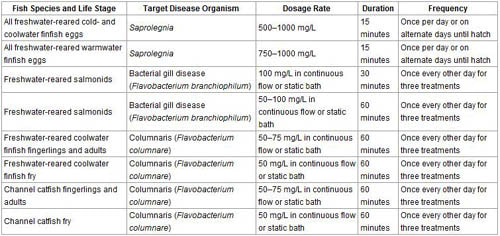
NOTE: There are 396,100 mg of hydrogen peroxide per L of 35%
PEROX-AID®.
NOTE: There are 1000 mL in 1 L. The liters are converted to milliliters to allow for easier measuring of the 35%
PEROX-AID® liquid for treatment.
For example, if you need to use a treatment concentration of 500 mg/L and will treat 150 liters of water in a closed system, then
PEROX-AID®.
NOTE: There are 1000 mL in 1 L. The liters are converted to milliliters to allow for easier measuring of the 35%
PEROX-AID® liquid for treatment.
For example, if you need to use a treatment concentration of 500 mg/L and will treat 150 liters of water in a closed system, then

For the use of 3% Household Hydrogen Peroxide (for ornamental fish ONLY), consider that it is only 3% so you would multiply dosages by a multiple of about 11 times.
As well here are a few other conversions to consider (use accurate teaspoons, not silverware):
*Teaspoon = 4.929 mL
*Tablespoon = .5 fl. oz. = 14.787 mL
*One cubic centimeter of water weighs one gram, and 1,000 grams of water makes a liter. This means that the cubic centimeter/milligram (cc or mg.) and the milliliter (1/1000 of a liter) (ml) are exactly the same thing - if you're measuring water (which Hydrogen Peroxide is pretty much the same weight as water).
As A Fish Swab
Sometimes h202 is recommended as a swab for external fish infections. When used diluted, h202 can be effective for noticeable infections. However if there is necrosis of tissue, Hydrogen Peroxide due to its strong oxidizing properties can actually make the problem worse.
In such cases, the use of products such as AAP Wound Control/Merbromin is advised.
Product Resource:
AAP Wound Control/Merbromin
As a Plant Dip for algae
Hydrogen Peroxide can be used as a plant dip or bath for algae such as BBA (Black Beard algae) or Cyanobacteria.
Some will add this directly to the tank as well at a rate of 2 oz. of 3% Hydrogen Peroxide per 10 gallons. HOWEVER this is best done without shrimp (such as Cherry Shrimp) present, as this will often kill them!
As well the use of a syringe of dropper with un-diluted 3% household HP can be used to directly apply to BBA or Cyanobacteria.
The same cautions should be exercised with shrimp present. If shrimp are present, I suggest moving them to another tank, if only temporarily for 1/2 day.
Please see the Algae Control section of this article: Aquarium Plants; Information from Basic to Advanced
Or these more in depth articles:
*Cyanobacteria in Aquariums or Ponds
*Aquarium Algae, Identification & Control
Please see this article from the University of Florida for MUCH more about Hydrogen Peroxide for use with fish: Use of Hydrogen Peroxide in Finfish Aquaculture
To Eradicate Dinoflagellate "Algae" growth
Hydrogen Peroxide can also be used for growths in marine aquariums, at a generally accepted rate of 1 mL per 10 gallons (38L) every day.
It should be noted that I have not used Hydrogen Peroxide for Dinoflagellate growths/blooms, but I know of colleagues that have with mixed results.
A method I have used and suggest is using a Micron Filter of at least 20 microns to trap any Dinoflagellates in the water column. Coarse pre-filtration before the micron filter would also be suggested.
As well, I would combine this with the use of a high dwell time UV Sterilizer such as the Vecton or Aqua UV after the micron filter (or in place of). This can also improve results.
Be aware that if you use a lower quality, low dwell time UV Sterilizer, especially the many commonly sold with medium pressure UV lamps, it will often take up to 4 times the wattage to do the same job.
Further Reference (from www.thereeftank.com)
Dosing H2O2 for Dino
More about UV Sterilizer Use:
UV Sterilization; Facts & Information
Further Helpful Information as to uses for Hydrogen Peroxide:
60+ Amazing Hydrogen Peroxide Uses and Benefits
Contraindications
*Do NOT use/mix with ANY other medication treatment other than sodium chloride (salt)
*Not advised to use directly in aquarium
*Do NOT use in the presence of shrimp & most snails
*Use in the presence of all other invertebrates should be avoided
As well here are a few other conversions to consider (use accurate teaspoons, not silverware):
*Teaspoon = 4.929 mL
*Tablespoon = .5 fl. oz. = 14.787 mL
*One cubic centimeter of water weighs one gram, and 1,000 grams of water makes a liter. This means that the cubic centimeter/milligram (cc or mg.) and the milliliter (1/1000 of a liter) (ml) are exactly the same thing - if you're measuring water (which Hydrogen Peroxide is pretty much the same weight as water).
As A Fish Swab
Sometimes h202 is recommended as a swab for external fish infections. When used diluted, h202 can be effective for noticeable infections. However if there is necrosis of tissue, Hydrogen Peroxide due to its strong oxidizing properties can actually make the problem worse.
In such cases, the use of products such as AAP Wound Control/Merbromin is advised.
Product Resource:
AAP Wound Control/Merbromin
As a Plant Dip for algae
Hydrogen Peroxide can be used as a plant dip or bath for algae such as BBA (Black Beard algae) or Cyanobacteria.
Some will add this directly to the tank as well at a rate of 2 oz. of 3% Hydrogen Peroxide per 10 gallons. HOWEVER this is best done without shrimp (such as Cherry Shrimp) present, as this will often kill them!
As well the use of a syringe of dropper with un-diluted 3% household HP can be used to directly apply to BBA or Cyanobacteria.
The same cautions should be exercised with shrimp present. If shrimp are present, I suggest moving them to another tank, if only temporarily for 1/2 day.
Please see the Algae Control section of this article: Aquarium Plants; Information from Basic to Advanced
Or these more in depth articles:
*Cyanobacteria in Aquariums or Ponds
*Aquarium Algae, Identification & Control
Please see this article from the University of Florida for MUCH more about Hydrogen Peroxide for use with fish: Use of Hydrogen Peroxide in Finfish Aquaculture
To Eradicate Dinoflagellate "Algae" growth
Hydrogen Peroxide can also be used for growths in marine aquariums, at a generally accepted rate of 1 mL per 10 gallons (38L) every day.
It should be noted that I have not used Hydrogen Peroxide for Dinoflagellate growths/blooms, but I know of colleagues that have with mixed results.
A method I have used and suggest is using a Micron Filter of at least 20 microns to trap any Dinoflagellates in the water column. Coarse pre-filtration before the micron filter would also be suggested.
As well, I would combine this with the use of a high dwell time UV Sterilizer such as the Vecton or Aqua UV after the micron filter (or in place of). This can also improve results.
Be aware that if you use a lower quality, low dwell time UV Sterilizer, especially the many commonly sold with medium pressure UV lamps, it will often take up to 4 times the wattage to do the same job.
Further Reference (from www.thereeftank.com)
Dosing H2O2 for Dino
More about UV Sterilizer Use:
UV Sterilization; Facts & Information
Further Helpful Information as to uses for Hydrogen Peroxide:
60+ Amazing Hydrogen Peroxide Uses and Benefits
Contraindications
*Do NOT use/mix with ANY other medication treatment other than sodium chloride (salt)
*Not advised to use directly in aquarium
*Do NOT use in the presence of shrimp & most snails
*Use in the presence of all other invertebrates should be avoided